I remember my first season ice fishing without a floor in my shelter. The cold seeped up from the ice like it had a personal grudge against my toes. Every gust of wind found its way through the gap between the tent wall and the ice. It was functional, barely. Then I switched to a proper ice fishing tent with a sewn-in, insulated floor. The difference wasn't just noticeable; it was transformative. We're talking about moving from surviving the cold to genuinely enjoying a day on the ice. This isn't about a minor upgrade; it's about changing the fundamental experience of winter fishing.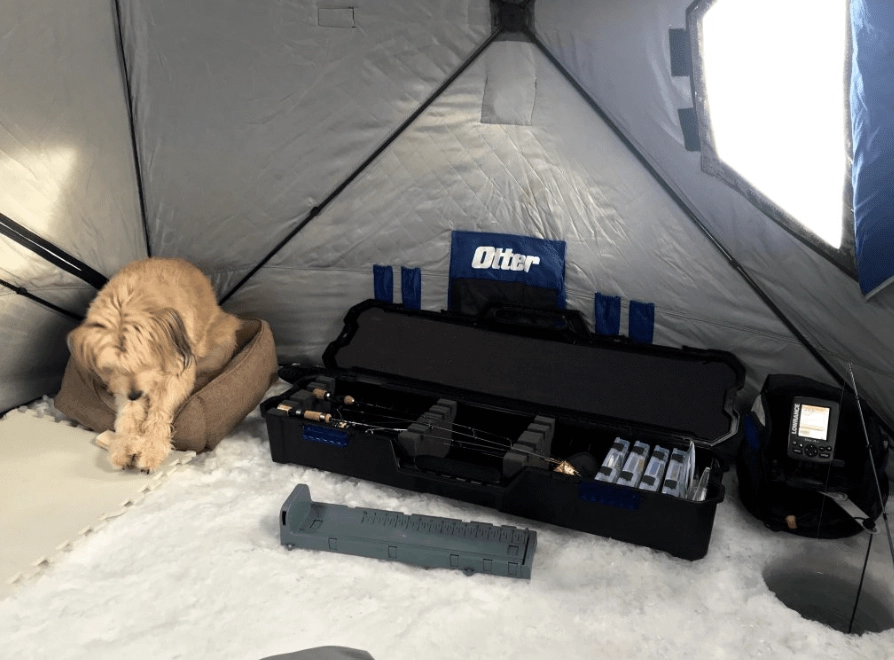
What’s Inside This Guide?
- Why a Floor Makes All the Difference
- How to Choose the Right Ice Fishing Tent with Floor
- Setting Up Your Ice Fishing Tent with Floor: A Step-by-Step Guide
- Mastering the Art of Fishing from Your Shelter
- Top 3 Ice Fishing Tents with Floor: A Quick Comparison
- Your Ice Fishing Shelter Questions, Answered
Why a Floor Makes All the Difference
Let's cut past the marketing. A floor isn't just a piece of fabric. It's a complete thermal and environmental barrier. Think of it as the foundation of your warm micro-climate.
First, insulation. Air is a great insulator, but cold ice conducts heat away from your body brutally efficiently. A raised, insulated floor (often with a reflective layer) creates a dead air space. This single feature can raise the temperature inside by 10-15 degrees Fahrenheit compared to a floorless shelter, according to thermal comfort studies referenced by outdoor equipment reviewers. Your heater works less, your propane lasts longer, and you stay warmer.
Second, wind and moisture sealing. That notorious gap is gone. Snow melt, slush, and wind don't creep in. You contain your heat perfectly. It also keeps your gear dry. I've seen too many tackle boxes and gloves ruined by pooled meltwater in a floorless hub.
Third, stability and privacy. A sewn-in floor acts as an anchor, especially when paired with ice anchors. It reduces billowing in high winds. It also gives you a private, clean space. You can take your boots off, organize your gear without worrying about it sliding into a hole, and create a real "base camp" feel.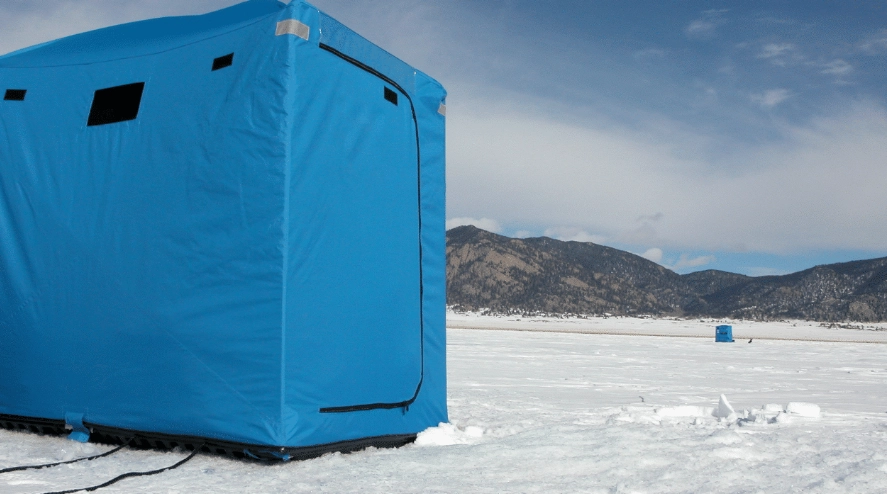
How to Choose the Right Ice Fishing Tent with Floor
Not all floor-equipped shelters are created equal. Picking one is about matching features to your specific fishing style. Here’s what to scrutinize beyond just the price tag.
Size and Capacity: Be Realistic
Manufacturers love to claim "3-person" or "4-person" capacity. A "3-person" tent typically means three people sitting on buckets, elbow to elbow, with little room for gear. For comfortable fishing with a heater and gear for two, look at least at a "4-person" model. My rule: subtract one person from the advertised capacity for a realistic, comfortable fishing party. Solo anglers can get away with a 2-person, but the extra space for a small table or more gear is worth the slight bulk.
Material and Durability
The denier rating (D) of the fabric matters. For the shell, 300D polyester is a good, durable starting point. Higher denier means thicker, more abrasion-resistant fabric. The floor should be a heavy-duty, waterproof, and thermally rated material—often a 600D or higher polyester with a TPU or PVC coating. Check the stitching, especially where the floor meets the walls. Reinforced corners and double-stitched seams are signs of quality.
Weight and Portability
A tent with a floor is inherently heavier. A quality 4-person insulated hub can weigh 40-60 lbs. Does it come with a carry bag? Are the sled-style shelters an option for you? Sled models (like the Clam Nanook Thermal) have the floor integrated into a hard plastic sled you pull. Hub-style models pack into a bag. Your decision hinges on how you transport your gear: by ATV/snowmobile (weight matters less) or by dragging manually (sled style is better).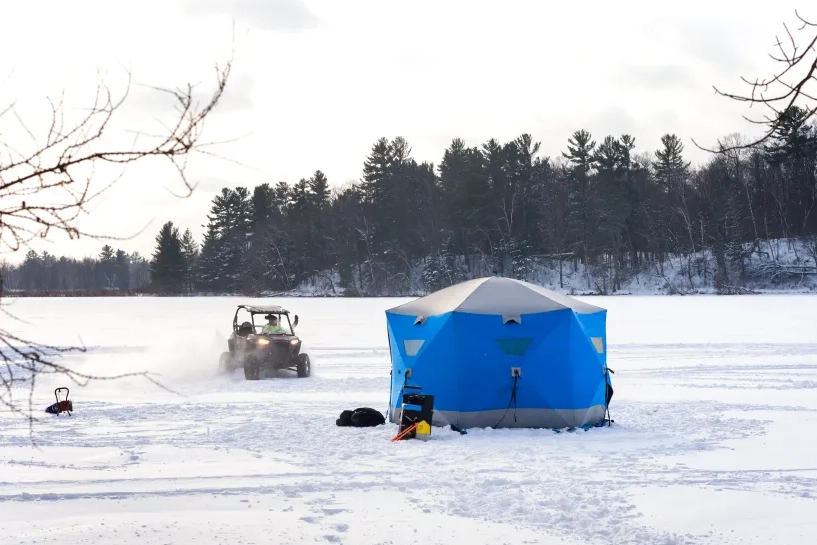
Ventilation is Non-Negotiable
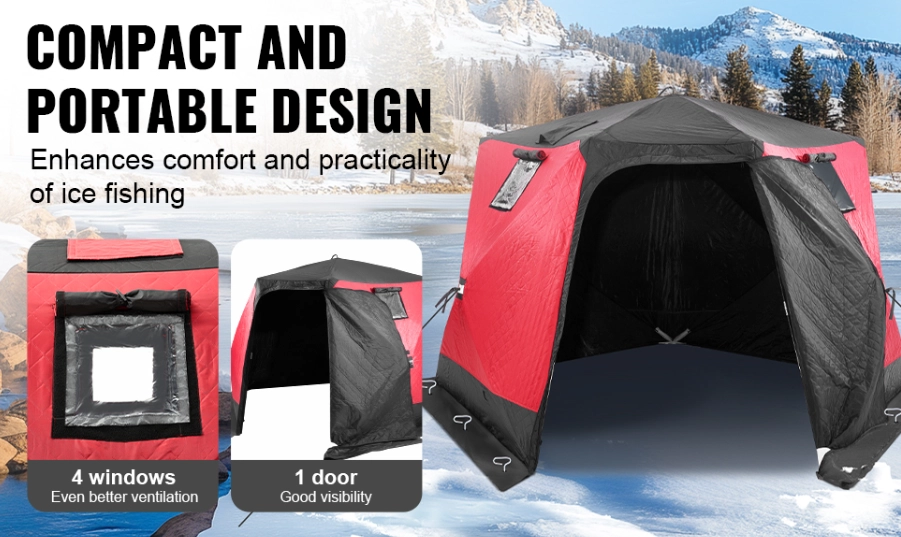
This is critical and often overlooked. When you run a heater in a sealed space, humidity from your breath and melting ice builds up. This moisture condenses on the cold walls and ceiling, raining back down on you—defeating the purpose of a dry floor. Look for tents with adjustable roof vents and/or mesh-backed windows. The ability to create a 1-inch gap at the top to let moist air escape while retaining heat is a game-changer.
Setting Up Your Ice Fishing Tent with Floor: A Step-by-Step Guide
Practice in your driveway first. Trust me. Fumbling on the ice in -10°F wind is no fun. Here’s the efficient method.
Step 1: Site Selection & Prep. Find a flat area clear of major snow drifts. Use your ice skimmer to clear away loose snow and slush from an area slightly larger than your tent's footprint. This gives the floor a clean surface to sit on.
Step 2: Deploy the Hub. Lay the tent bag on the cleared ice. Unpack and lay the tent out flat, floor-side down. Identify the hub corners. Extend the poles until the hubs "pop" into place. Most modern hubs do this with a pull from the center. Get the frame standing before worrying about the floor.
Step 3: Anchor, Then Flip. This is my preferred order. With the frame up but the tent still floor-up, attach your ice anchors (at least one per corner) through the designated anchor loops on the *walls*. Tighten them just enough to take slack out of the tent. Now, walk around the tent and flip the entire structure over so the floor is on the ice. The anchors will keep it from blowing away during the flip.
Step 4: Secure the Floor. Once flipped, go inside. Stretch the floor out to its full corners. Many tents have grommets in the floor corners for additional ice screws. Use them, especially on windy days. This prevents the floor from pulling up and creating a draft.
Step 5: Final Adjustments. Go back outside and tighten all wall anchors firmly. Install your wind straps if provided. Brush any accumulated snow off the roof before entering. Now, cut your holes from the inside, using a mat or piece of carpet to catch the ice shavings and protect the floor material from sharp auger blades.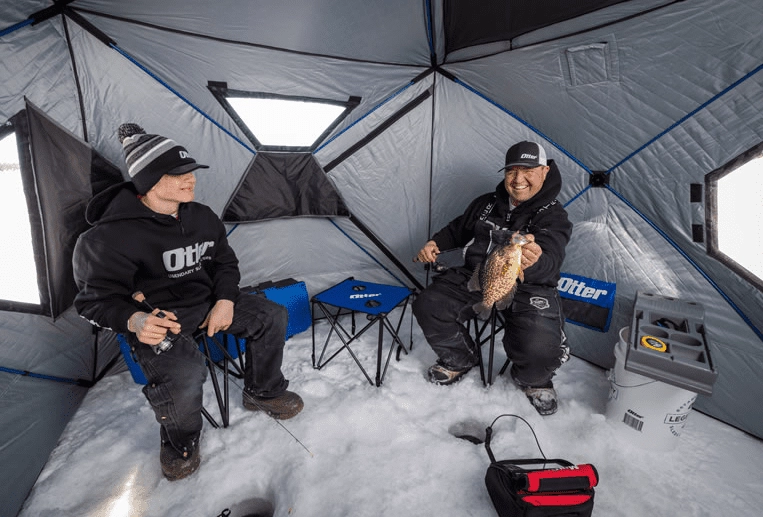
Mastering the Art of Fishing from Your Shelter
You're set up. Now, optimize the space.
Heater Placement: Never place it directly against a wall or under the roof vent. A small, portable propane heater on a stable, level surface near the center is ideal. Always ensure proper ventilation—crack a window or the roof vent opposite the heater's airflow. Carbon monoxide is a silent threat. A battery-powered CO detector is a wise $30 investment.
Floor Protection: The floor is tough, but auger chips, hooks, and cleats are tougher. Bring a small, removable rubber mat or a square of indoor-outdoor carpet for the area around your holes. It absorbs spills, protects the floor, and feels warmer underfoot.
Gear Organization: Use the vertical space. Gear hooks or hangers that clip onto the frame poles keep rods, pliers, and towels off the floor and within reach. A small, foldable camp table keeps your electronics, snacks, and bait off the ice.
Lighting: Headlamps are great for tasks, but for ambient light, a battery-powered LED lantern hung from the center hub creates a cozy, shadow-free environment for the whole shelter.
Top 3 Ice Fishing Tents with Floor: A Quick Comparison
Based on years of use and talking to guides, here are three standout models that represent different approaches. Prices are approximate and fluctuate.
td>The angler who fishes in extreme cold (-20°F and below) and values maximum heat retention above all. The insulation is top-tier.| Model & Type | Key Features | Best For | Price Range |
|---|---|---|---|
| Eskimo Outbreak 450i (Insulated Hub) |
Full thermal insulation (walls, roof, floor), 600D floor, 4-person size, large door, excellent roof vent system. | $500 - $650 | |
| Clam Nanook Thermal X (Insulated Sled Shelter) |
Integrated thermal sled (floor), flip-over design for ultra-fast setup, excellent wind profile, built-in seat. | The mobile angler who moves frequently. Perfect for solo or duo fishing. Setup is under 60 seconds. | $600 - $750 |
| Otter X-Over Lodge (Hybrid Hub) |
Unique "hub-and-a-half" design, massive space (true 6-person), 300D shell with 600D floor, huge windows. | Groups or families who want a spacious, social cabin-like feel on the ice. It's a palace, but heavier to transport. | $700 - $850 |
The Eskimo is my go-to for brutal, all-day sits. The Clam is what I use when I'm hole-hopping for panfish. The Otter is fantastic for a social trip with buddies. Notice I didn't pick the cheapest options. In this category, skimping often means poor zippers, weak hubs, and thin floors that fail when you need them most.
One negative? The premium thermal models are heavy. That Eskimo 450i bag is a beast to haul by hand over deep snow. There's a real trade-off between comfort and portability.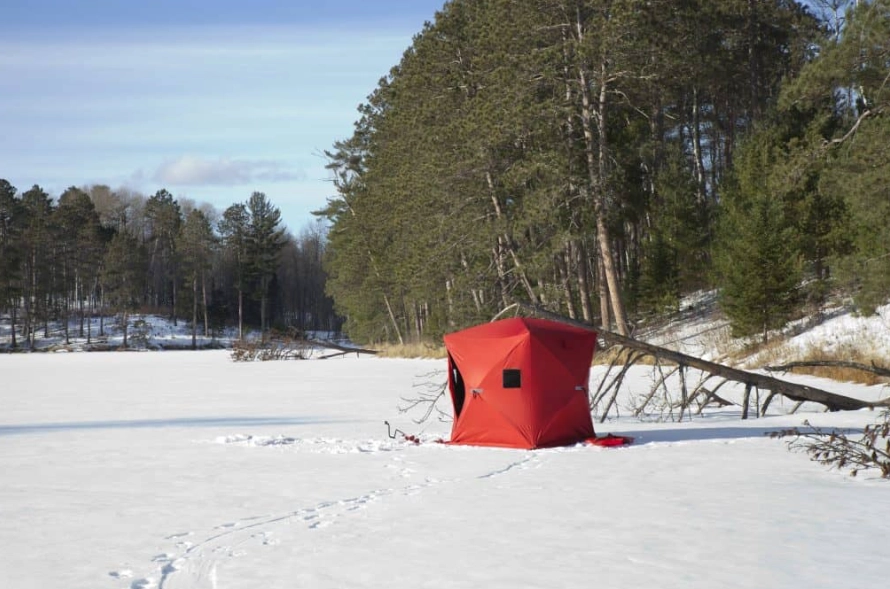
Your Ice Fishing Shelter Questions, Answered
 How do I prevent my tent floor from freezing to the ice?
Reader Comments