Let's be honest. Standing on a frozen lake in January is only fun for about five minutes if you're exposed. That biting wind cuts right through you. A good 4 person ice fishing tent isn't just a piece of gear; it's your mobile cabin, your shelter from the storm, and the difference between a miserable, cut-short trip and a full, comfortable day on the ice with your friends or family. I've spent more winters in these portable hubs than I can count, and I've seen all the mistakes—from flimsy tents cartwheeling across the ice to cozy, well-setup bases where the fish seem to bite better. This guide is everything I wish I knew before buying my first four-person shelter.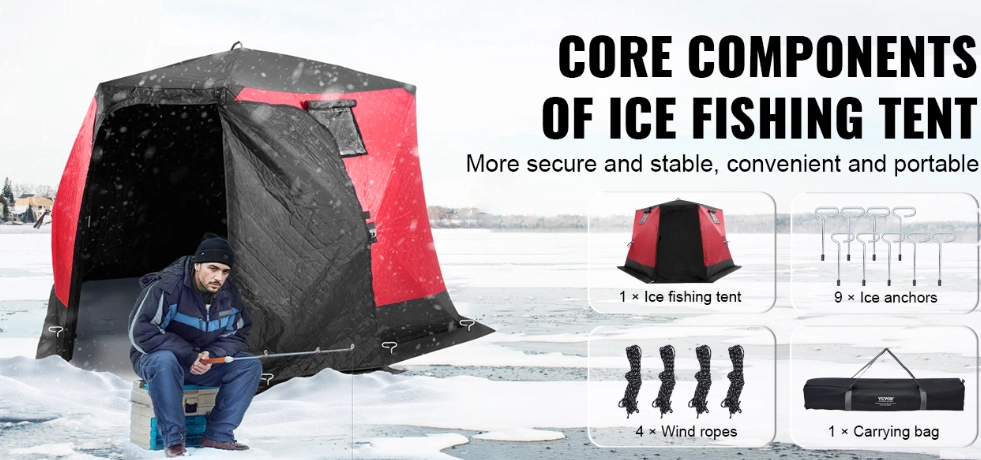
What's Inside This Guide
- What Exactly Is a 4 Person Ice Fishing Tent?
- How to Choose the Best 4 Person Ice Fishing Shelter
- Setting Up Your Tent: A Step-by-Step Guide & Critical Safety Tips
- Essential Gear to Bring Inside Your Ice Fishing Hub
- Top 4 Person Ice Fishing Tent Models Compared
- Expert Answers to Your Ice Fishing Tent Questions
What is a 4 Person Ice Fishing Tent?
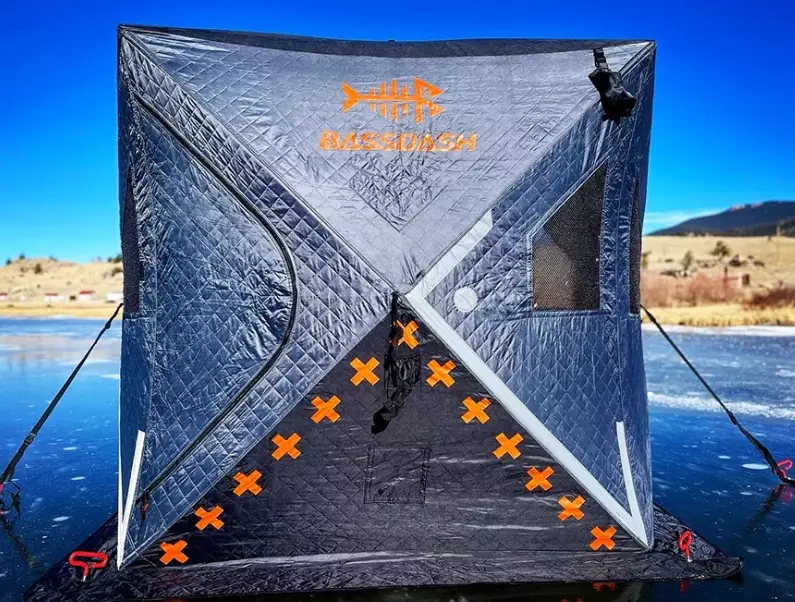
It's a portable, insulated shelter designed specifically for drilling holes and fishing through the ice. The "4 person" label is a manufacturer's suggestion, and we'll get into the reality of that later. Most modern models are "hub-style"—they pop up like an umbrella from a central hub, creating a spacious square or hexagonal room. You'll also find flip-over sled-style shelters, but for four people, the hub is king for space and social fishing.
The core materials matter. The fabric is usually a 300D or 600D polyester, often with a thermal layer (like foam or reflective lining) to trap heat. The frame is steel or reinforced fiberglass. Windows are crucial for light and visibility, and a heavy-duty zippered door is your entry point. The floor might be sewn-in (fully insulated) or a removable skirt that sits on the ice.
Pro Tip: Don't get hung up on "fully insulated" as the only option. A well-heated tent with a standard fabric can be plenty warm. The real game-changer is a windproof design. A slight breeze inside will steal heat faster than a thin wall.
How to Choose the Best 4 Person Ice Fishing Shelter
Walking into a store or browsing online, the choices can be overwhelming. Focus on these four things, in this order.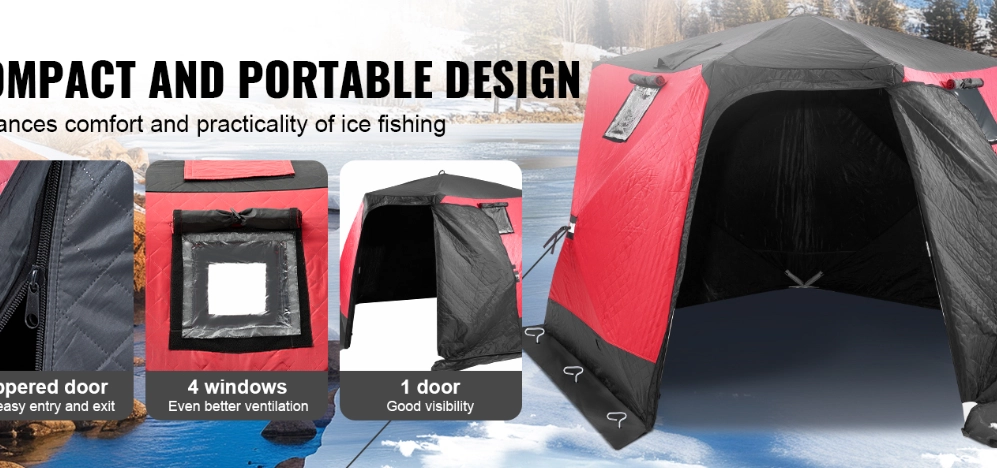
1. Real-World Capacity and Packed Size
A "4 person" tent fits four adults sitting on buckets around holes. That's it. There's zero extra space for gear bags, a large heater, or a dog. If you want comfort—space to move, store gear, and not elbow your buddy—look for a "6+ person" hub. It will be labeled for more people but is perfect for four. Check the packed dimensions. Can it fit in your vehicle's trunk or backseat? My first tent barely squeezed into my SUV with the seats down.
2. Portability and Weight
You have to carry this from your truck to the spot. A 60-pound bag is a lot different from a 40-pound one after a 200-yard walk in snow. Lighter usually means thinner materials. It's a trade-off. Consider a sled if you have a lot of gear to haul; you can strap the bag to it.
3. Material Durability and Wind Rating
Look for a denier rating (D). 300D is standard, 600D is more durable against abrasion and wind. The Ice Safety Committee notes that wind is a major factor in ice fishing incidents. A tent rated for 30+ mph winds will have stronger poles and reinforced stitching. This isn't a place to cheap out.
4. Features That Actually Matter
- Blackout vs. Clear Windows: Blackout panels (often on one side) reduce glare on sunny days, making it easier to see down your hole. Clear panels let in more light on gloomy days.
- Storage Pockets: Interior pockets for pliers, phones, and lures keep the floor clean.
- Anchor System: Does it include robust ice anchors? The cheap screw-in ones often break. Good ones are wide and metal.
- Vents: Adjustable roof vents are non-negotiable for safety to prevent carbon monoxide buildup from heaters.
Setting Up Your Tent: A Step-by-Step Guide & Critical Safety Tips
I learned this the hard way on a windy Lake Superior bay. Practice in your yard first.
Step 1: Pick Your Spot. Clear snow from a flat area. Think about wind direction—position the door away from the prevailing wind.
Step 2: Unpack & Layout. Lay the bag down, unzip, and pull the tent out flat on the ice. Identify the hub and the door.
Step 3: The Pop-Up. Grab the central hub and lift. The tent should spring into shape. If it's stubborn, a gentle shake helps. Don't force it.
Step 4: Anchor IMMEDIATELY. This is the most common mistake. The second it's up, screw in at least two ice anchors on the windward side. Then do the rest. I use a cordless drill with a hex adapter to speed this up immensely.
Step 5: Secure the Skirt/Floor. Pile snow or ice chunks on the skirt to seal out drafts. If it has a sewn-in floor, make sure it's flat.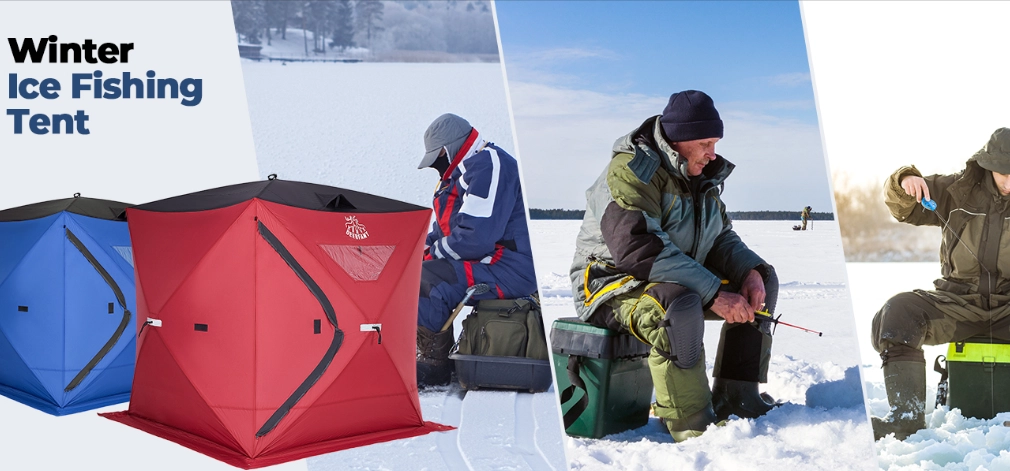
Critical Safety Rule: Always, always crack a window or use the roof vent when running a propane heater. Carbon monoxide is silent and deadly. The U.S. Consumer Product Safety Commission has reports of fatalities in ice shelters. Use a battery-powered CO detector inside. It's a $30 device that saves lives.
Essential Gear to Bring Inside Your Ice Fishing Hub
The tent is just the shell. Here’s what makes it functional and comfortable for four people.
- Heater: A portable propane heater like a Mr. Heater Buddy is the standard. For a 4-person space, a single-burner model is often enough. Bring extra propane tanks.
- Seating: Folding chairs with backs are far better than buckets for long sessions. They store flat.
- Lighting: LED lanterns or rope lights. Headlamps are great for hands-free hole checking.
- Ice Auger & Scoop: Drill your holes before setting up the tent. A slotted scoop clears ice shavings.
- Traction Cleats: The ice inside your tent can get wet and slick. Yaktrax or similar cleats prevent falls.
- Small Rug or Mat: Placed by the door, it catches snow and water, keeping the main floor drier.
Top 4 Person Ice Fishing Tent Models Compared
Based on durability, features, and real-user feedback, here are three standout models. Remember, many are marketed as 4-6 person.
| Model Name | Key Features | Best For | Considerations |
|---|---|---|---|
| Eskimo QuickFish 4i | Insulated fabric, 60-second setup, 4-way hub, large D-shaped door. | Anglers in consistently cold climates who prioritize warmth. | The insulation adds weight and bulk when packed. |
| Clam Nanook Thermal X | Thermal-Core insulation, heavy-duty 600D fabric, panoramic windows, gear loft. | Serious anglers who fish in windy conditions and want premium durability. | Higher price point. One of the heavier options in its class. |
| Otter Vortex Pro Cabin | Vortex glass windows (extremely clear), Blackout options, reinforced frame, excellent venting. | Those who value visibility and light control, and fish in variable conditions. | Can be trickier to find in stock compared to other major brands. |
The Eskimo QuickFish 4i is a workhorse. That insulation is real—you can feel the difference on a -10°F day. The setup is brainless, which is great when your fingers are cold. The downside? The bag feels tight when repacking, a common gripe.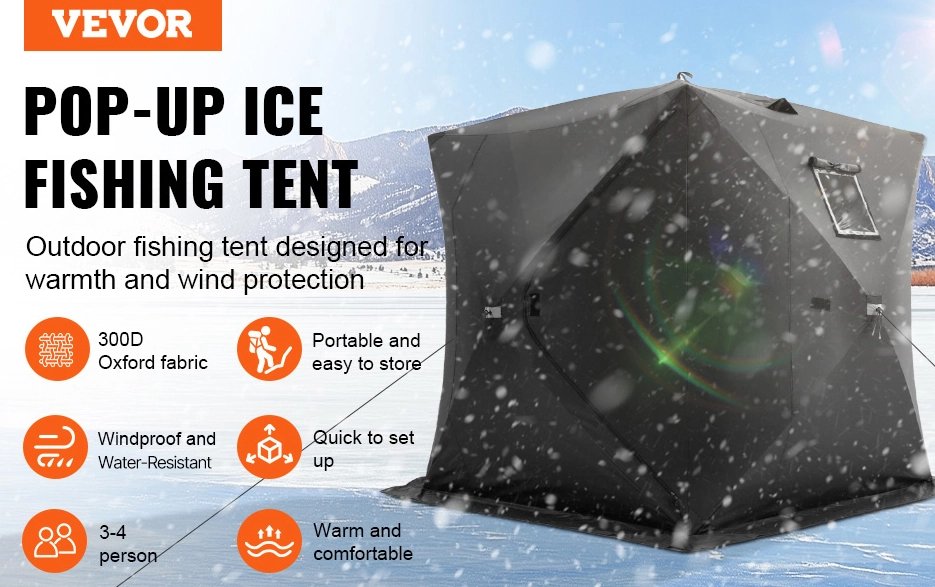
The Clam Nanook feels like a tank. The zippers are beefy, the fabric doesn't flap loudly in the wind, and it feels like it will last a decade. It's my go-to for exposed, windy lakes. You pay for that toughness, though.
The Otter Vortex windows are in a league of their own. It's like having a glass wall on the ice. If sight-fishing or enjoying the view is part of your day, this is the one. Their attention to venting design is also top-notch.
Expert Answers to Your Ice Fishing Tent Questions
 How do I prevent condensation from soaking everything inside?
Reader Comments