Let's be honest. Most of us head out on the water for the peace, the challenge, and the catch. We don't go out to get a sunburn that peels for a week or to get drenched in a sudden downpour. Yet, that's exactly what happens more often than not. I spent years squinting, sweating, and getting soaked before I finally invested in a proper boat fishing umbrella. It wasn't just an accessory; it transformed my entire fishing experience from a battle against the elements into a comfortable, focused, and longer-lasting session. This guide cuts through the marketing fluff and gives you the straight talk on choosing, installing, and using a fishing umbrella for your boat.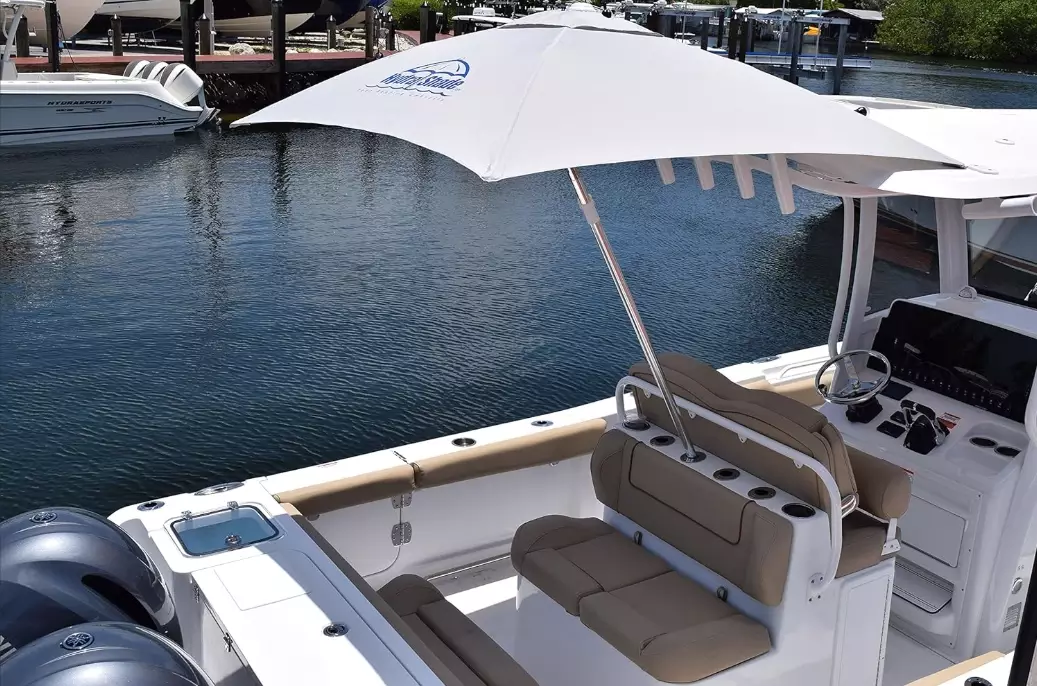
What's Inside This Guide
Why You Absolutely Need a Fishing Umbrella on Your Boat
Think of it as your mobile base camp. It's not just about shade. A quality marine bimini top or fishing umbrella addresses the three biggest comfort-killers on the water.
Sun protection is the obvious one. Skin cancer is real, and hours of direct exposure on a reflective water surface is a recipe for damage. But beyond health, glare is a silent fish thief. Squinting for hours leads to eye strain and fatigue, making it harder to spot subtle bites or read your electronics. A good umbrella cuts the glare, letting you see your line and the water clearly.
Rain. It doesn't have to mean packing up. A sudden shower with a proper fishing boat sun shelter overhead means you can keep fishing. You stay dry, your gear stays dry, and you can ride out a passing storm without a mad scramble for the rain gear.
Then there's the comfort factor that extends your day. Less heat stress means you drink more water, stay sharper, and can fish from dawn well into the afternoon without feeling wiped out. I've found my productive hours on the water increased by at least 30% because I wasn't constantly seeking relief.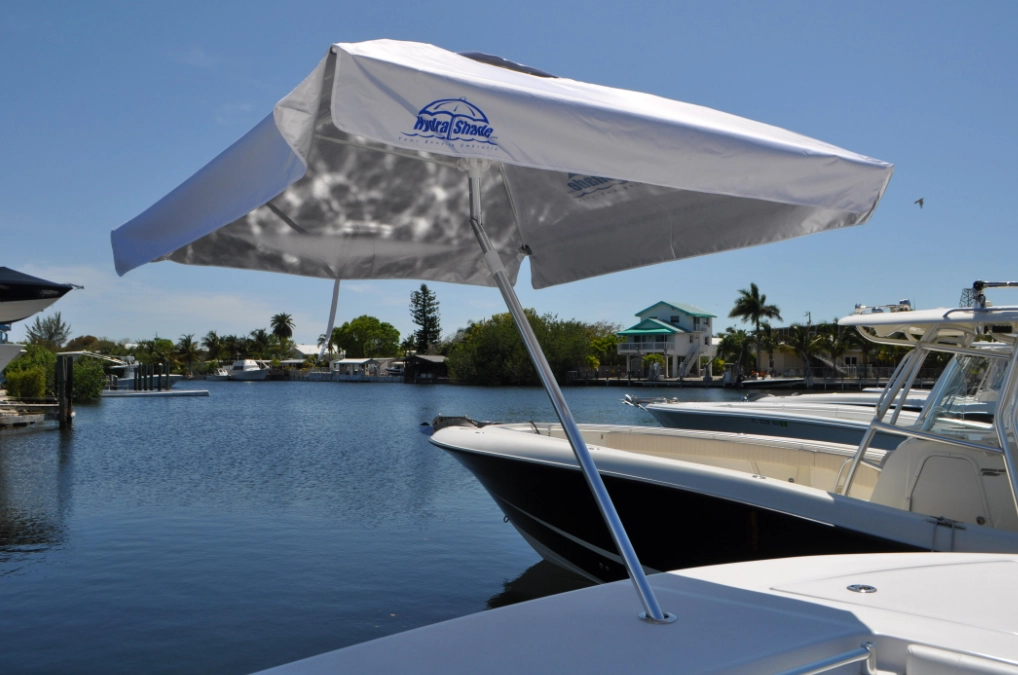
Pro Tip Most Miss: The umbrella creates a 'micro-climate'. On hot days, a light mist from a spray bottle under the canopy can cool the air significantly more than out in the open sun, a little trick I learned from tournament anglers in the South.
How to Choose the Right Fishing Umbrella for Your Boat
Not all umbrellas are created equal. Picking up a cheap patio umbrella from a big-box store is a mistake I see too often. They aren't built for wind, UV degradation, or the constant vibration of a boat. Here’s what to look for.
Material & Build: The Foundation
The canopy fabric must be marine-grade. Look for high-denier polyester with a UV-resistant coating. A rating of 600D or higher is good. The frame is critical. Aluminum is lightweight and rust-proof, which is excellent. Steel is stronger but can rust if the powder coating chips. Fiberglass ribs offer fantastic flexibility in wind but check the joint quality.
The biggest failure point is always the joints and hinges. Press down on a display model. If it feels flimsy or squeaks, walk away. Reinforced stitching at stress points and robust pivot mechanisms are signs of quality.
Size & Shape: Coverage is King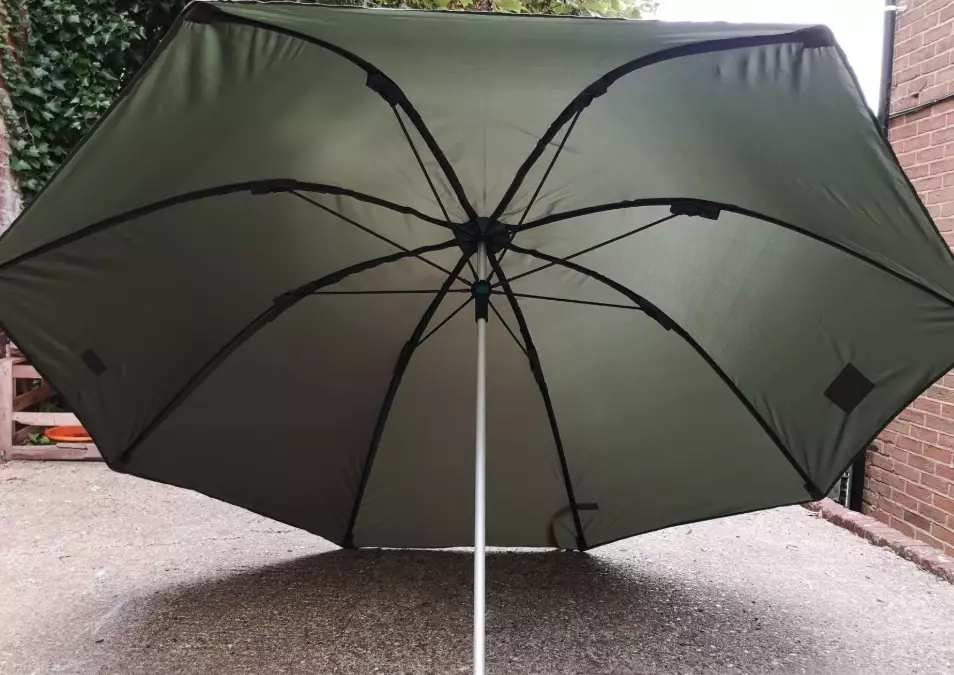
Diameter is key. A 6-foot umbrella is a common minimum, but for two anglers, an 8-foot model is far better. Don't just think diameter—think shape. A square or rectangular marine canopy often provides more usable coverage over a console or seating area than a round one. Consider the 'drop'—the height from the mounting point to the edge of the canopy. A longer drop provides better low-angle sun coverage in morning and evening.
| Boat Size & Anglers | Recommended Umbrella Size | Key Consideration |
|---|---|---|
| Small Jon Boat (1-2 anglers) | 6-foot diameter | Weight and simple mount; avoid overpowering a small craft. |
| Bass Boat or Center Console (2-3 anglers) | 8-foot diameter or 6'x8' rectangle | Coverage for console and key fishing positions; sturdy mount needed. |
| Larger Family/Offshore Boat | 9-foot+ or multiple umbrellas | Permanent hardtop (bimini) may be better; consider track systems for flexibility. |
Tilt and Rotation: The Game-Changers
A fixed umbrella is only useful when the sun is directly overhead. A tilt function is non-negotiable. This allows you to angle the canopy to block the sun as it moves. A 360-degree rotation is equally important. Being able to swing the entire assembly to block sun or wind from any direction is what makes the setup truly versatile. Look for models with easy-to-use lever locks, not just wing nuts that can loosen with vibration.
Mounting Options: A Deep Dive
How you attach it is as important as the umbrella itself. A poor mount is a safety hazard.
Clamp-On Mounts: These are the most popular for a reason. They clamp onto your boat's gunwale, rail, or console. Look for models with wide, padded jaws to prevent damage to your boat's finish. The best ones have a through-bolt tightening mechanism, not just a screw handle, for a rock-solid grip. Perfect for smaller to medium boats where you might want to remove it.
Permanent Pedestal Mounts: You bolt a base plate to your deck or console, and the umbrella pole inserts into it. This is the most secure option, ideal for larger boats or if you rarely remove the umbrella. It requires drilling, so you need to be sure of the location. Consider installing a flush mount socket to keep the deck clear when the umbrella is stowed.
Track Systems: The premium solution. You install a track along your gunwale, and the mount slides into it. This lets you position the umbrella anywhere along the track, giving you incredible flexibility. It's common on newer bass boats and dedicated fishing platforms. Brands like Berkley and others offer specialized track-compatible accessories.
My personal setup on my 18-foot center console is a heavy-duty clamp mount on the gunwale next to the helm. I chose this after a permanent mount on my old boat ended up being in the wrong spot after I reconfigured my gear. The clamp gives me the flexibility I need.
Setup Tips & Tricks from the Water
Okay, you've got your gear. Here's how to make it work in the real world, where wind and waves don't care about your plans.
Pre-Launch Check: Always open and close the umbrella at home or in the driveway first. Familiarize yourself with the mechanism. Is there a pin to secure it? How does the tilt lock work? Doing this on a rocking boat for the first time is frustrating.
The Wind Rule: Never open or close it while the boat is moving. Always do it when you're stopped or at very slow trolling speed. When deploying, point the boat into the wind. Open the umbrella with the canopy facing downwind, then lift and lock it into position. This prevents the wind from catching it like a sail and damaging it.
Angle for Stability: In breezy conditions, don't deploy the umbrella flat. Use the tilt function to angle it into the wind slightly. This allows wind to flow over it rather than catching underneath and trying to lift it. Think of it like an airplane wing—you want to spoil the lift.
The Downrigger Ball Trick: In really gusty conditions, a simple hack is to tie a spare downrigger ball or a small anchor to the center of the umbrella's ribs (inside) with a short cord. This adds downward weight and dampens the bouncing motion significantly. It's a tournament trick that works wonders.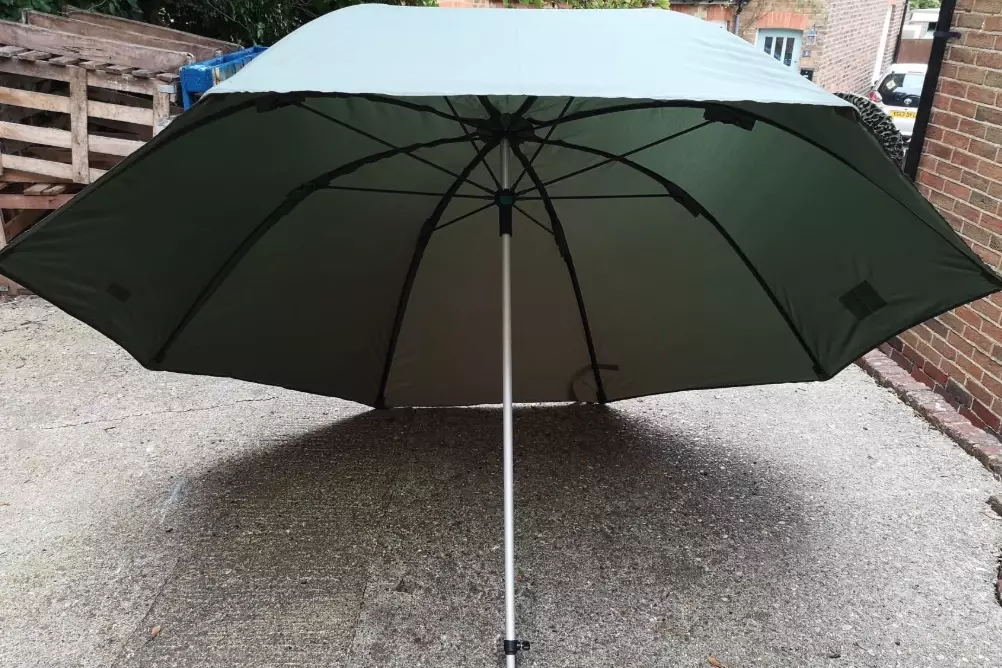
Keeping It Working Season After Season
A little care goes a long way. Rinse the canopy with fresh water after every saltwater trip to prevent corrosion on the frame stitches and to wash off salt crystals that degrade fabric. Let it dry completely before storing it in its bag—mildew is the enemy.
Every few months, spray the moving joints and hinges with a dry lubricant like silicone spray. Avoid WD-40 as it attracts dirt. Check all the bolts and locking levers for tightness; boat vibration is notorious for loosening them.
At season's end, give it a proper clean with a mild soap and water solution, let it dry fully, and store it in a cool, dry place. Don't just chuck it in a damp corner of the garage.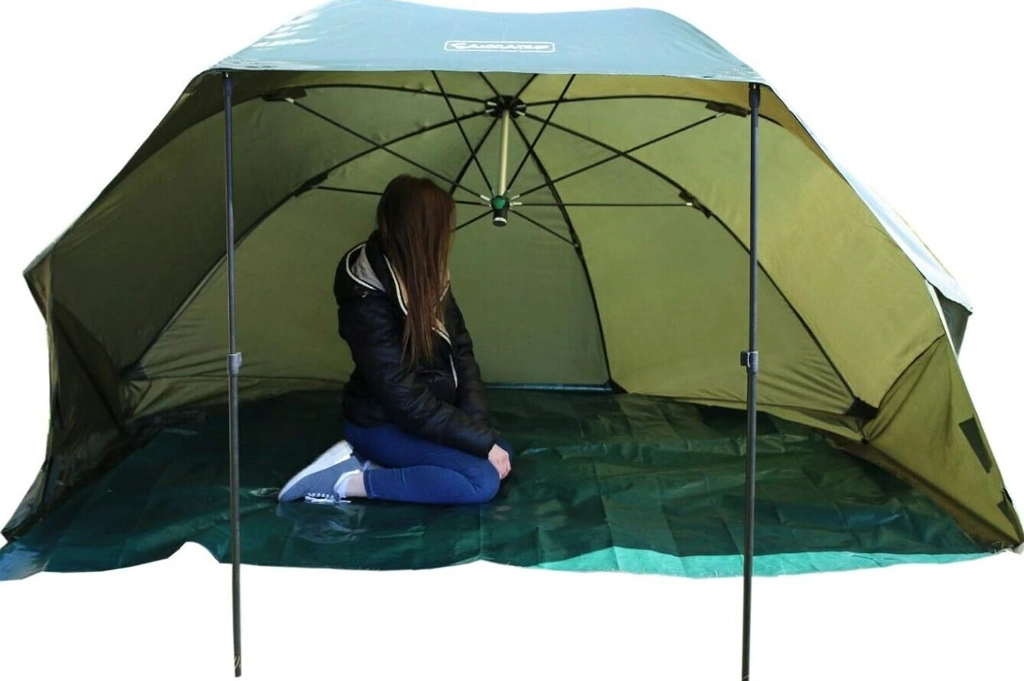
Your Top Questions, Answered
 What's the difference between a "fishing umbrella" and a standard boat bimini top?
Reader Comments