Fishing Tool Kit: Your Ultimate Guide to Building a Winning Gear Collection
Feeling overwhelmed by fishing gear choices? This complete guide breaks down exactly what belongs in your fishing tool kit, from essential basics to pro-level upgrades, tailored for beginners and seasoned anglers alike.
Let's be honest. Walking into a tackle shop or browsing online can feel like information overload. You see walls of lures, racks of rods, bins of gadgets. Where do you even start? The secret isn't buying everything. It's about building a smart, personalized fishing tool kit that actually works for you. Forget the pre-packaged junk with flimsy tools you'll replace in a month. A real kit is a curated collection of reliable gear that solves problems on the water before they ruin your day. I've spent years guiding and fishing everything from mountain streams to offshore reefs, and I've seen more trips saved by a well-stipped kit than by the fanciest rod. This is the foundation. Leave home without these, and you're asking for frustration. We're not talking about rods and reels here—those are a separate conversation. This is the supporting cast that lets your main tackle perform. I keep these core items in a small, waterproof pouch that goes into every single bag or box I own. It's muscle memory now. The one thing I see beginners skip most often? The hook sharpener. They blame the fish for spitting the lure, when 80% of the time it's a dull point. My Kit Reality Check: I used to buy those all-in-one "fishing multi-tools." You know the ones—pliers, knife, cutters, bottle opener, 10 things you'll never use. They're heavy, the joints get gritty, and if one part breaks, the whole tool is junk. I switched to dedicated, quality tools years ago. My pliers are just pliers. My cutters are just cutters. They work better, last longer, and I'm not carrying dead weight. Once your core is locked down, these items transition you from "getting by" to "efficiently solving problems." They address specific, common headaches. Saltwater is corrosive. Sand gets everywhere. A tiny bottle of reel oil and a small silicone cloth can quiet a squeaky reel bail or prevent corrosion on a guide after a splash. It takes 30 seconds and adds years to your gear's life. Beyond your hands, a knot-tying tool (like a Booms Fishing Knot Tool) is a game-changer in cold weather, with stiff line, or if your dexterity isn't great. It ensures consistent, tight knots every time. Also, keep a small headlamp with a red light mode. Tying a Palomar knot in the dark at 5 AM is miserable without one. The red light preserves your night vision and attracts fewer bugs. A compact digital scale (up to 50 lb capacity) and a soft measuring tape settle bets and provide real data. Is that bass really 5 pounds? (Spoiler: it's usually 3). Knowing the exact length/weight of fish in a specific lake helps you pattern sizes. Don't rely on the ruler printed on your cooler—it's often inaccurate. Your kit isn't just for the fish. It's for you. A miserable angler is an impatient angler, and that leads to mistakes. Your kit should morph based on where and how you fish. Here’s how I build mine for three common trips. Focus: Versatility, durability, lots of lure changes. My Kit Loadout: Core essentials pouch goes in the boat's glove box. A second, larger tackle box tray holds bulkier items: heavy-duty bolt cutters (for big hooks), scale, measuring tape, multiple spools of leader (12, 17, 20 lb fluoro), a small towel, extra sunscreen. I keep my pliers on a retractable leash clipped to my belt—no more dropping them overboard. The headlamp stays in the dry storage, just in case. Focus: Ultra-lightweight, minimal, accessible. My Kit Loadout: Everything must fit in a chest pack or sling bag. Core essentials pouch. Small, fine-tipped hemostats instead of bulky pliers. 4X, 5X, 6X tippet spools. Floatant and sinkant for dry flies. Tiny hook hone. A ziplock bag for my phone. The goal is to move fast and light, not be digging in a backpack. Focus: Corrosion resistance, power, handling toothy critters. My Kit Loadout: Saltwater-specific pliers (aluminum or coated stainless). Hook cutter capable of handling 4/0 hooks. A dehooker for quick, safe releases. Heavy fluorocarbon leaders (20-30 lb). A small can of corrosion inhibitor spray. All tools get a freshwater rinse at the end of the day, no exceptions. After watching countless anglers, here are the subtle errors that cripple a good kit. Mistake 1: The "Everything in One Giant Box" Approach. You haul a 50-lb tackle box to the bank, but 90% of what's inside isn't right for today. You waste time digging. Fix: Modularize. Have a core kit pouch. Then have smaller, scenario-specific boxes: "Bass Jigs," "Topwater," "Trout Flies." Grab the core pouch and the one or two small boxes you need. Your back will thank you. Mistake 2: Ignoring Line Management. You have cutters, but where does the old line go? Too many people just drop it on the ground or in the water. Fix: Get a line spool or just use an old plastic bottle. Wind used line around it and dispose of it properly at home. Birds and turtles get tangled in discarded line. It's bad for the environment and your karma. Mistake 3: Buying Gear for the "Ideal" Trip, Not Your Actual Trips. You watch a tarpon video and buy heavy-duty saltwater tools, but you fish farm ponds 45 weekends a year. Fix: Be honest about your fishing life. Start with a kit that solves the problems you actually have 80% of the time. Build out from there as your adventures grow. A hook sharpener, hands down. New anglers focus on lures and rods, assuming the hook is ready. It's not. A quick pass with a file on every new hook and after every few fish will convert more bites into fish in the boat. It costs less than a cup of coffee and has a bigger impact on your success than a $30 lure. Prioritize durability in the core items. Skip the fancy packaging and buy individual tools. A pair of decent stainless steel needle-nose pliers from a hardware store often costs less than "fishing" branded ones and is just as good. Use nail clippers as cutters. A simple diamond file card is a fine sharpener. For a container, a used plastic food container or a small, repurposed pencil case works perfectly. Spend your money on the leader material—cheap line breaks. You're probably not drying them thoroughly. Rinsing removes salt, but water left in the joint will cause rust from the inside out. After rinsing, shake them hard, work the jaws open and closed to push water out, then leave them open in a warm, dry place (not a closed tackle box). Once a month, put a single drop of light oil on the pivot pin. If you fish saltwater heavily, just accept that aluminum or titanium pliers are a worthwhile investment to end the rust battle. For deeply hooked fish, especially panfish or trout that swallow the hook, a dedicated dehooker (like a long, thin pair of hemostats or a specialized release tool) is far better than pliers. It's less invasive, faster, and causes less injury to the fish, which is crucial for catch-and-release. Pliers can crush delicate gill structures. For bass with a lure in the lip, pliers are fine. For anything deeper, the right tool makes a big difference for the fish's survival. Do a quick check before every major trip. Do a full teardown and reassessment at the change of seasons. That's when you're switching techniques and locations. Replace used first-aid items, check for rust, refill leader spools, and remove any junk that accumulated. This 20-minute ritual prevents you from discovering your line cutters are jammed when you're holding a fish.What's Inside This Guide
The Non-Negotiable Core of Your Fishing Tool Kit
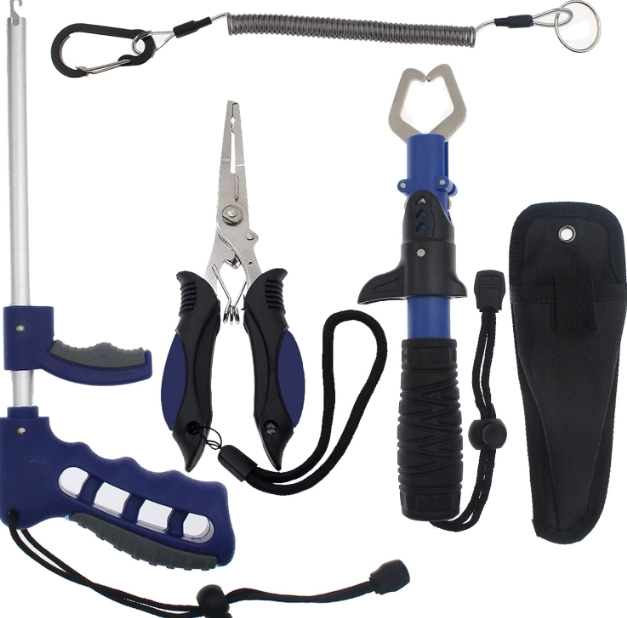
Item
Why It's Essential
What to Look For / Pro Tip
Line Cutters
Fingernails and teeth are unreliable and dangerous. You need a clean, instant cut.
**Nail clippers** are cheap and great for light line. For braid and heavy mono, get **fishing-specific pliers with cutters** or a **hook cutter**. Don't buy the absolute cheapest; they dull fast.
Pliers (Needle-Nose)
Removing hooks, especially from toothy fish or deep swallows. Crimping split shot, bending wires.
**Stainless steel with a spring**. 6-7 inch length is versatile. A built-in line cutter is a bonus. Rinse them after saltwater use.
Hook Sharpener
Factory hooks are rarely razor-sharp. A sharp hook penetrates easier, leading to more solid hooksets.
A small diamond file or pocket stone. Test a hook by dragging the point lightly across your thumbnail—if it skips, it's dull. If it digs in and starts to scrape, it's sharp.
Leader & Tippet Material
Connects your main line to your lure/hook. Provides abrasion resistance and stealth.
Carry a few strengths. For general freshwater, 8-12 lb fluorocarbon or mono. For bass with braid, 12-20 lb fluorocarbon. For trout, 4-6 lb fluorocarbon or nylon. Keep it in a dark, cool place to prevent UV degradation.
Split Ring Pliers
Trying to open a split ring with your fingernails is a recipe for pain and failure.
Get the kind with a fine, pointed tip to get inside the ring. This one tool makes changing lures on crankbaits or jigs a 5-second job.
First Aid Basics
Hooks, knife slips, sunburn. Small issues become big problems if untreated.
Waterproof bandages, antiseptic wipes, a small roll of medical tape, and a **hook removal tool** (like the Dr. Slick EMT Shears or a string-yank setup). Know how to use it before you need it.
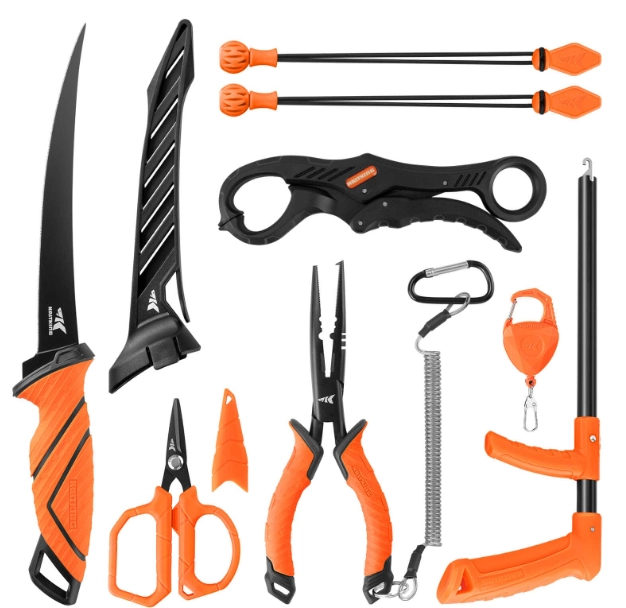
Level Up: Pro Additions for Your Fishing Tool Kit
Gear Maintenance on the Go
The Knot-Tying Advantage
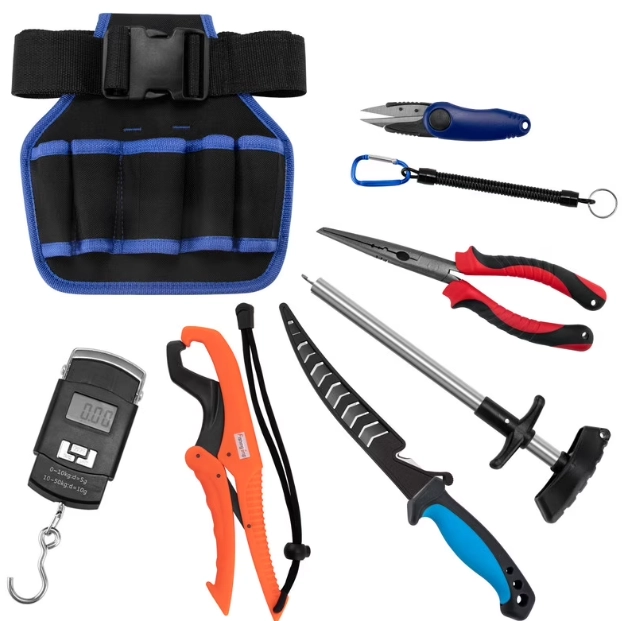
Weigh, Measure, Document
The Personal Touch: Comfort & Safety
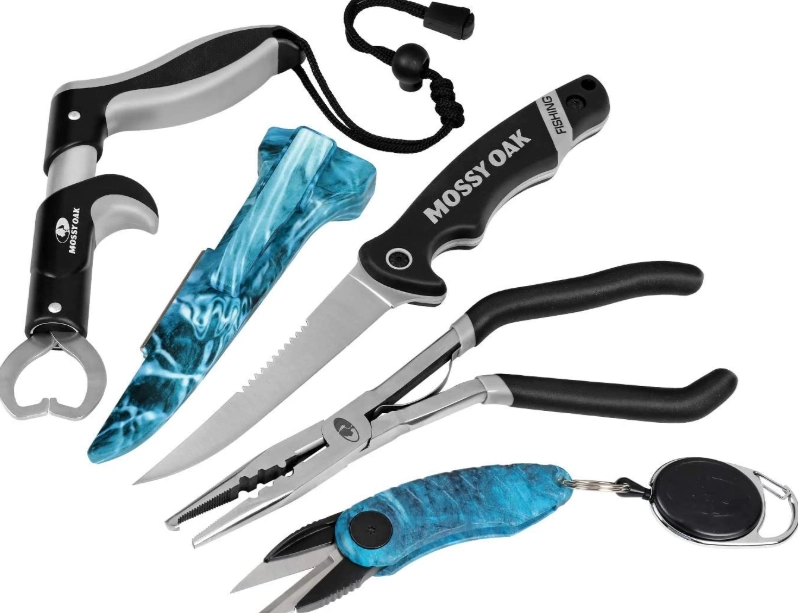
Building Kits for Real Fishing Scenarios
Scenario 1: The All-Day Bass Boat Trip
Scenario 2: Stream & River Wading (Trout, Smallmouth)
Scenario 3: Inshore Saltwater (Redfish, Speckled Trout)
What Most Anglers Get Wrong (And How to Fix It)
Your Fishing Kit Questions, Answered