Forget rods, reels, and fancy lures. Catfish noodling—the act of reaching into dark underwater holes and pulling out fish with your hands—is fishing stripped down to its most elemental form. It's a test of nerve, a lesson in reading a river, and a connection to an older way of interacting with nature that you just don't get from casting a line.
I've been doing this for over a decade, mostly in the muddy rivers of Oklahoma and Texas. The first time a 40-pound flathead clamped down on my wrist, the sheer, shocking power of it is something you never forget. It's not for everyone. It's messy, it's physical, and it demands a healthy respect for the water and its inhabitants. But if you're drawn to it, there's nothing else like it.
What You’ll Find in This Guide
- What Exactly Is Catfish Noodling?
- Safety First: The Non-Negotiable Rules
- The Gear You Actually Need (It's Not Much)
- Mastering the Technique: From Finding Holes to the Grab
- Where and When to Go: Timing and Location Are Everything
- The Legal and Ethical Side You Can't Ignore
- Your Common Questions, Answered
What Exactly Is Catfish Noodling?
At its core, noodling is hand-fishing for large, cavity-nesting catfish—primarily flathead and blue catfish. During the spawning season, these fish seek out dark, enclosed spaces in riverbanks, under rocks, or in submerged hollow logs to lay their eggs. The noodler finds these holes, reaches in, and lets the protective fish bite down on their hand or arm. Then, it's a battle of leverage and strength to pull the fish out.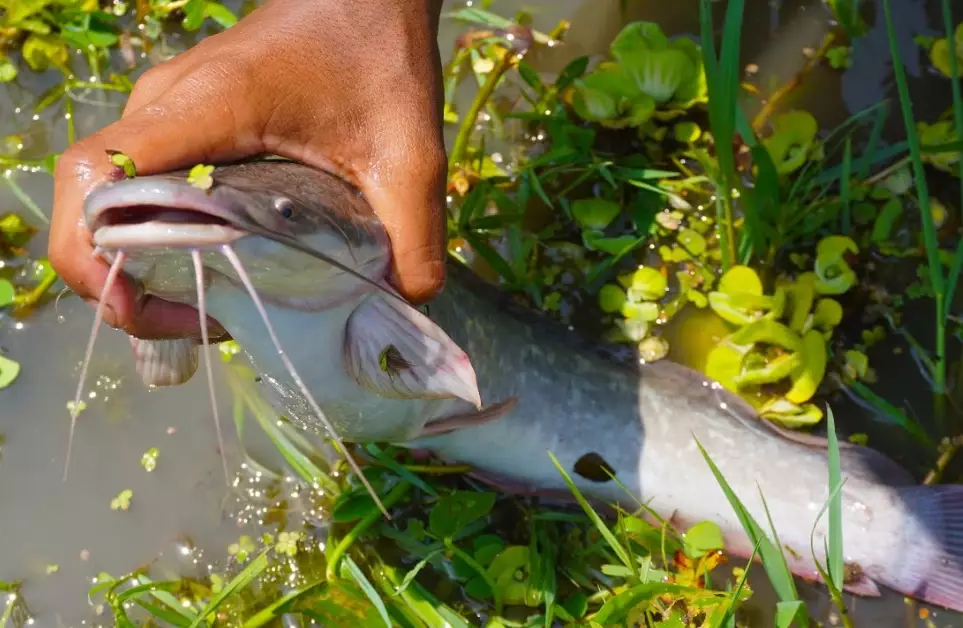
It's often called "hand-grabbing," "hogging," or "grabbling," depending on where you are. The term "noodling" itself supposedly comes from the idea of wiggling your fingers like noodles to attract the fish. I've found that's only part of the story.
A common misconception is that the fish just sits there and lets you grab its mouth. Not true. You're provoking a defensive strike from an animal that can weigh more than you do. The initial bite is fast and aggressive. Your job is to get a secure grip inside its mouth, usually behind the gills or under the jaw, before it can thrash free.
Safety First: The Non-Negotiable Rules
If you take nothing else from this guide, take this section seriously. Noodling is dangerous. People have drowned. The number one mistake beginners make is underestimating the power of a big catfish and the unpredictability of underwater environments.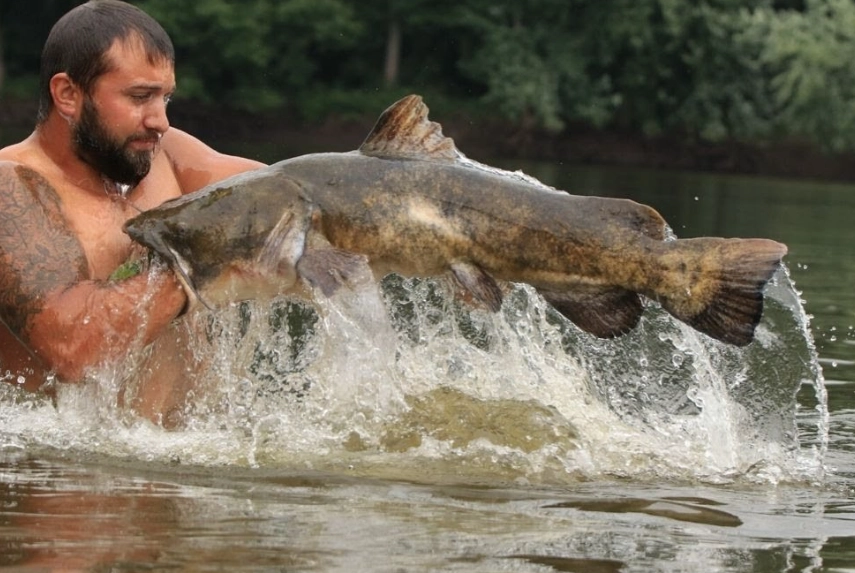
Never, ever go alone. This is rule zero. Your partner is your lifeline. They need to be strong, calm under pressure, and knowledgeable. Their job is to watch you, be ready to pull you out if you get stuck, and help secure the fish once it's out of the hole. A cell phone in a dry bag for emergencies is smart, but don't rely on a weak signal in a remote creek.
Beyond a partner, you have to be aware of what else might be in that hole. Snakes, turtles, beavers, and even alligators (in southern waters) use the same cavities. I've pulled my hand back to find a water moccasin coiled up where I thought a catfish should be. Probe carefully with a stick first if you're unsure.
Finally, know your own limits. If a hole goes back too far, if the current is too strong, or if you just have a bad feeling—walk away. No fish is worth your life. Start in clear, shallow water where you can see your feet and the bottom. Murky, deep water adds layers of risk a beginner has no business tackling.
The Gear You Actually Need (It's Not Much)
One of the appeals of noodling is its simplicity. You don't need thousands of dollars in equipment. But the right few items make a huge difference in safety and success.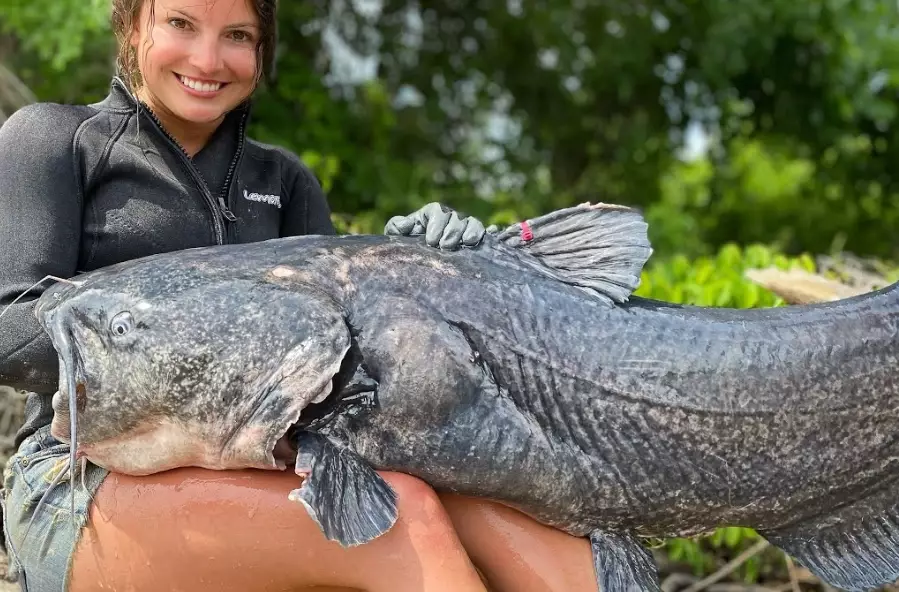
- Sturdy Gloves: This is debated. Some old-timers go bare-handed for better feel. I always wear heavy-duty, cut-resistant work gloves (like Mechanix Wear or similar). They protect against abrasions from rocks and logs, and more importantly, from the catfish's sandpaper-like teeth and powerful jaw pressure. The trade-off in tactile sensitivity is worth it.
- Durable Footwear: Old sneakers or river shoes with solid soles. You're walking on uneven, rocky, and potentially snag-filled bottoms. Bare feet are asking for a cut or a puncture wound.
- Swimwear & Layer: Quick-dry shorts and a shirt. The shirt protects your torso from sun and scrapes. In cooler water, a thin wetsuit top can help.
- Polarized Sunglasses: Crucial for spotting holes from the surface. They cut the glare and let you see into the water column to identify likely structures.
- A Heavy-Duty Mesh or Stringer: Once you catch a fish, you need to secure it. A strong stringer you can clip to your belt loop or a floating fish basket is essential. Don't just try to hold it or toss it on the bank—a big catfish can flip itself right back into the water.
Mastering the Technique: From Finding Holes to the Grab
This is where experience talks. You can't just jump in and start shoving your arm into every dark spot.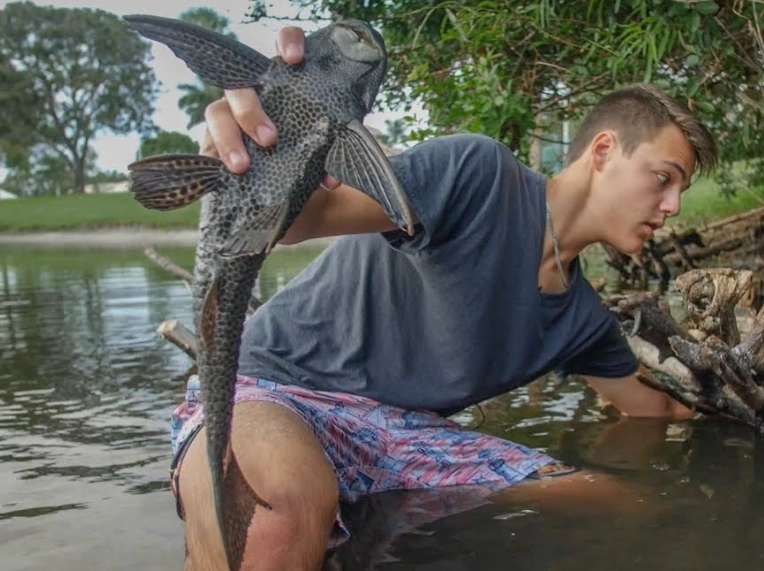
Reading the Water and Finding Likely Holes
Look for structure. Undercut banks with exposed root systems are catfish condos. Large, flat rocks that create a shelf over a sandy bottom. Hollow logs or washed-out tree stumps. The entrance should be big enough for a large fish—usually at least the size of a dinner plate.
A good sign is a clean, swept-out area in front of the hole. Catfish fan the area with their tails to keep it clear of silt. Fresh scratch marks or a slight cloudiness can indicate recent activity.
The Approach and the Grab
Move slowly and quietly. Excessive splashing sends vibrations that can spook fish. Have your partner in position, watching you.
Reach into the hole smoothly. Don't just jab your hand in. Slide it along the bottom or the roof of the cavity. You're feeling for the fish, but you're also letting it sense you. Often, you'll feel a subtle vibration or a sudden vacuum-like suction as the fish repositions or inhales.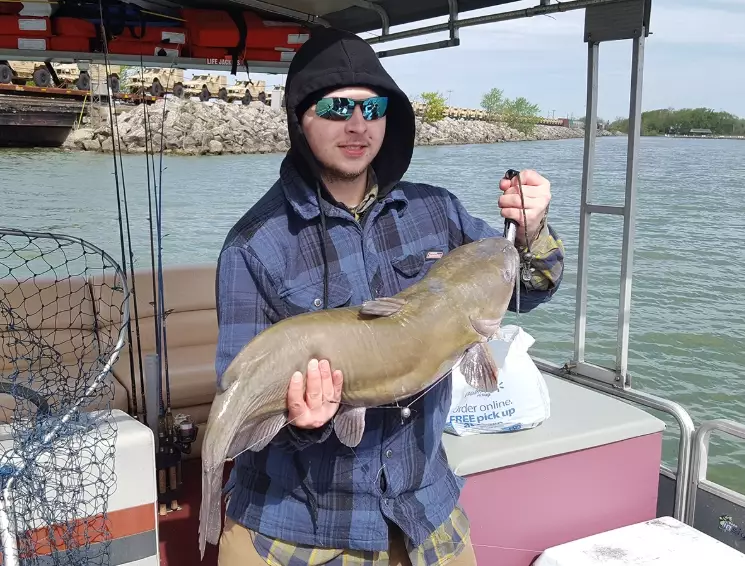
When it bites, don't panic and yank your hand back. Let it clamp down. The goal is to get your hand past its teeth and into the softer part of its mouth or, ideally, under its gill plate. Once you have a firm grip—I mean a death grip—you signal your partner and use your legs and body weight to pull. It's a steady, powerful extraction, not a frantic tug-of-war. The fish will wedge itself. You have to out-leverage it.
A subtle tip most guides won't mention: angle your body so you're pulling the fish down and out of the hole, not straight back. This uses the fish's own weight against the roof of the cavity and gives you more mechanical advantage.
Where and When to Go: Timing and Location Are Everything
Noodling is highly seasonal and regional. You can't do it effectively year-round.
Season: Late spring to early summer is prime time. You're targeting the spawn. Water temperatures need to be warm, typically between 70°F and 80°F (21°C to 27°C). In the Southern U.S., this might be May through July. Further north, the window is shorter. Once the spawn is over and water gets too hot, the fish leave the shallow cavities.
Location: Noodling is a tradition in the American South and Midwest. States like Oklahoma, Texas, Louisiana, Alabama, Mississippi, Tennessee, and parts of Missouri and Kansas have strong noodling cultures and legal frameworks for it. You need slow-moving or still waters: river backwaters, creek pools, oxbow lakes, and reservoirs with plenty of natural shoreline structure.
I've had my best luck on medium-sized rivers after a stable weather period. Floods can displace fish and make the water too treacherous. A falling but stable water level often concentrates fish into remaining cover.
The Legal and Ethical Side You Can't Ignore
This is critical. Noodling is illegal in many states. Do not assume it's okay. States like California, Michigan, and most of the Northeast prohibit it entirely.
Even where it's legal, regulations are strict and specific. You almost always need a standard fishing license. Beyond that, common rules include:
- Species Restrictions: Often, only flathead catfish are legal to take by hand. Blues and channels may be protected.
- Size and Creel Limits: There may be minimum or maximum size limits, and a daily bag limit (often just 1 fish per person).
- Permitted Structures: Some states only allow taking fish from natural structures, not man-made ones like culverts or tire reefs.
- Season Dates: A defined noodling season, shorter than the general fishing season.
Your absolute first step before planning a trip is to visit the website of the state's wildlife or natural resources department (like the Oklahoma Department of Wildlife Conservation or Texas Parks & Wildlife) and read the current fishing regulations booklet cover to cover. Call them if you're unsure.
Ethically, practice selective harvest. The biggest, oldest breeder fish are crucial for the population. Consider releasing the giants and keeping a mid-sized fish for the table if you want to eat it. Respect private property—always get landowner permission before accessing water across their land.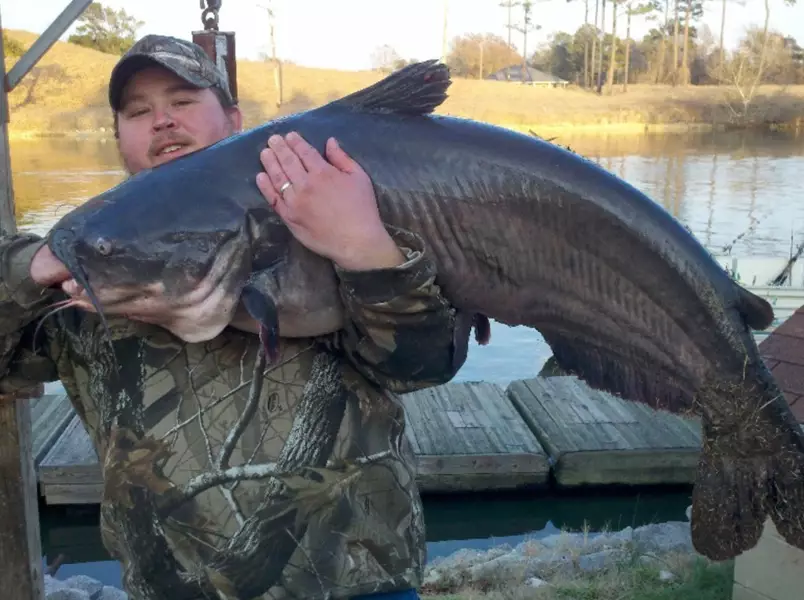
Your Common Questions, Answered
Noodling isn't the most efficient way to catch a catfish. A rod and reel will usually put more fish in the boat. But efficiency isn't the point. It's about the direct, physical challenge, the adrenaline, and the story you'll have forever. It connects you to the water in a way passive fishing never can. If you approach it with preparation, respect, and a focus on safety, it's an experience that gets in your blood.
Start with the rules. Find a mentor. Keep your expectations in check—your first few trips might just be learning to find holes. But when it all comes together, and you wrestle a powerful wild animal from its home with nothing but your own two hands, you'll understand why people have been doing this for generations.
Reader Comments