Beginner's Guide: How to Catch a Fish Step by Step (Complete Checklist)
Ever wondered how to catch a fish step by step for beginners? This complete guide walks you through everything from essential gear and finding spots to casting, reeling, and handling your first catch. Get ready for success on the water.
I remember my first time holding a fishing rod. The thing felt alien in my hands, like some weird, flexible spear. I had no clue about the line, the reel, the little hook—it was a mess of confusion. I stood there for what felt like hours, casting poorly, getting tangled, and catching absolutely nothing but frustration. Sound familiar? If you're staring at a search bar typing "how to catch a fish step by step for beginners," you've landed in the right spot. This isn't a fancy technical manual. It's the guide I wish I had, broken down into real, actionable steps that skip the jargon and get you to that magical moment of feeling a tug on your line. Let's be clear from the start. Fishing isn't about being perfect. It's about understanding a few core principles and then getting your hands dirty (or slimy). The goal here is to demystify the process. We'll walk through everything you need, from the basic gear that won't break the bank to the actual motions of casting and reeling. By the end, you'll have a clear mental checklist. You'll know how to find a spot, rig your line, present your bait, and most importantly, what to do when a fish actually bites. Think of this as your friendly, slightly weathered companion for your first few trips to the water's edge. Before you even think about water, you need some gear. Walk into a tackle shop or browse online, and the options are overwhelming. Spinning reels, baitcasters, monofilament, braid, a thousand lure shapes... it's enough to make you quit before you start. Forget most of it. For learning how to catch a fish step by step for beginners, you need a simple, reliable kit. A complex setup will just lead to tangles and tears. My personal take? Start cheap and simple. You don't need a $200 rod. A $40-$60 combo from a reputable brand is perfect. You're going to bang it on rocks, step on it, and generally abuse it. That's part of learning. Here’s a breakdown of your non-negotiable starter kit. I've put it in a table because seeing it all laid out helps. See? Not so bad. You can get all of this in one shopping trip. Forget the fancy vests and twenty boxes of lures for now. This kit is your foundation. One more critical piece: a fishing license. It's not optional. Regulations exist to protect fish populations, and getting fined is a sure way to ruin your day. You can usually buy one online from your state's wildlife agency. For example, you can get all the info and purchase licenses through the U.S. Fish & Wildlife Service website, which links to state agencies. It's a pain, but it's part of being a responsible angler. Okay, you've got your gear and your license. Now for the main event. This is the core of how to catch a fish step by step for beginners. We'll break it down into stages: before you cast, the cast itself, the waiting game, and the action. You can't catch fish if they aren't there. This seems obvious, but beginners often just pick the prettiest, most open spot. Fish don't care about the view. They care about food, oxygen, and cover from predators. Look for: Public parks with ponds, small lakes, or calm riverbanks are goldmines for beginners. Don't overlook them because they seem too simple. They're often stocked and hold hungry, easier-to-catch fish. This is where many first-timers get frustrated. "Rigging" just means attaching everything to your line. Let's do two basic, deadly setups. Rig A: The Bobber Rig (Your Training Wheels) Rig B: The Simple Worm-on-Bottom Rig The fear of the tangle. I get it. Here's the slow-motion breakdown for a spinning reel: Don't try to overpower it. Let the rod do the work. It's a flick of the wrist, not a baseball swing. Practice in your backyard with just a weight on the line (no hook!). Getting the feel for the release point is key. You will get tangled. Everyone does. Just take a deep breath, reel in the slack, and pick out the knot. It's a rite of passage. Your bait is in the water. Now what? If you're using a bobber, watch it like a hawk. Don't stare blankly—watch for any movement that isn't the wind. A little twitch, a sideways drift, then... a definitive pull under. That's your signal! If you're fishing on the bottom, this is more about feel. Hold the rod loosely or rest it on something, keeping a slight bit of tension on the line. You're feeling for a "tap tap" or a steady pull. Sometimes it feels like the line just got heavy. Other times it's a sharp thump. This is the most magical part of fishing—that connection through an almost invisible line to something alive below the surface. You see the bobber dive or feel a definite pull. Don't yank immediately! For a bobber, wait one second after it goes under. For a bottom bite, feel for a second or two of steady pressure. Then, set the hook. This isn't a massive Hollywood sweep. For the bobber rig, a firm lift of the rod tip to about 11 o'clock is enough. For the bottom rig, a short, sharp upward snap of the wrists does the trick. You're just driving the hook point into the fish's mouth. You'll feel resistance. The fish is on! Now, keep the rod tip up. This uses the rod's bend as a shock absorber. Let the fish run if it wants to. Your drag—the adjustable slipping mechanism on your reel—should be set so it gives line under heavy pressure. This prevents the line from snapping. Reel when you can, lower the rod if you need to gain line, then lift again. This is "pumping" the fish in. Work it steadily toward you. The fish is at your feet, tired. This is a critical moment for the fish's safety and yours. Now, decide: keep or release? If you're keeping it for dinner, know your local size and creel limits. If releasing, support the fish upright in the water until it swims away strongly on its own. Don't just toss it back. The folks at Take Me Fishing have great, simple resources on ethical catch-and-release practices that are worth a look. If you've decided to keep a fish for a meal, this is the final, satisfying step. It's simpler than it seems. You'll need a sharp fillet knife and a clean surface. For cooking, keep it simple. Pat the fillets dry, season with salt and pepper, dust with flour or cornmeal, and pan-fry in a little oil or butter over medium heat for 3-4 minutes per side until golden and flaky. The taste of a fish you caught and cleaned yourself is unbeatable. It's the full-circle reward for learning how to catch a fish step by step for beginners. Look, there will be skunked days—days you catch nothing. Everyone has them. But with this roadmap, those days will become fewer. You now have a process. Get the simple gear, find some structure, rig up a worm, cast patiently, watch and feel intently, set the hook with purpose, and handle your prize with care. That's the real, unvarnished path to catching your first fish. Now get out there, make some mistakes, untangle some knots, and get ready for that first unforgettable tug. The water's waiting.Quick Navigation
Gearing Up: What You Actually Need (And What You Don't)
Item
What to Look For
Beginner-Friendly Reason
Rod & Reel Combo
6 to 7 foot rod, Light/Medium-Light power, Spinning reel size 2500-3000.
Pre-matched, easy to use, good for a variety of fish like panfish and bass.
Fishing Line
6-10 lb test Monofilament (like Berkley Trilene). Ask the store to spool it on for you.
Cheap, stretchy (forgiving of mistakes), easy to tie knots with.
Hooks
Size 6 or 8 "Baitholder" hooks or Size 1/0 "Offset Worm" hooks for soft plastics.
Good for holding live bait or fake worms. Not too big, not too small.
Weights (Split Shot)
A small pack of split shot sinkers in various sizes (BB, #7).
You just pinch them on the line. They get your bait down where fish are.
Bobbers (Floats)
A couple of simple round red-and-white bobbers.
Visual bite indicator! You see it dunk under, you know something's interested.
Bait & Lures
Live worms (nightcrawlers) & a pack of 5" curly tail plastic worms (green pumpkin color).
Worms are universal fish candy. Plastic worms are durable and great for practice.
Pliers & Clippers
Needle-nose pliers and nail clippers or small line cutters.
For removing hooks safely and cutting line. Essential for safety and convenience.
The Step-by-Step Dance: From Shore to Catch
Step 1: Find Your Spot (Think Like a Fish)
Step 2: Rig It Up Right
This is the ultimate beginner setup. It keeps your bait off the bottom and gives you that classic "bobber goes down!" moment.
Sometimes fish want the bait on the lake floor. This is as simple as it gets.
Step 3: The Cast (It's a Flick, Not a Heave)
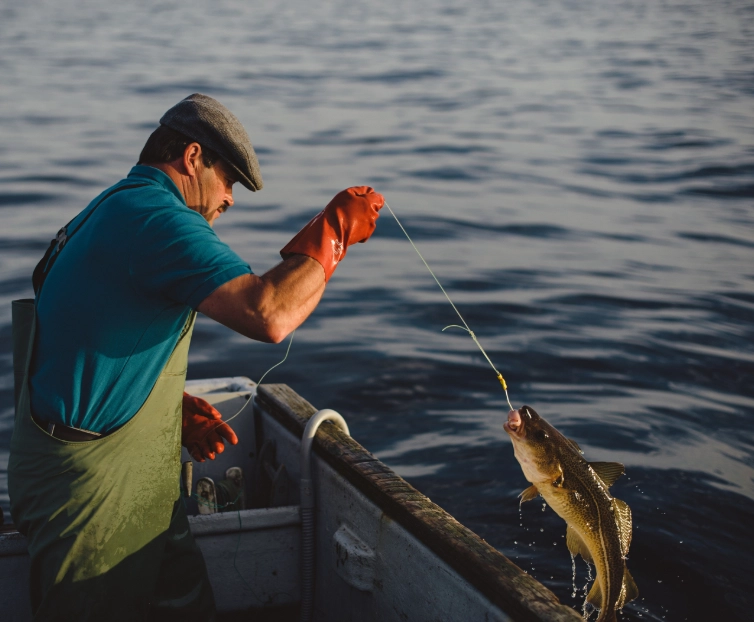
Step 4: The Wait & The Feel
Step 5: The Hookset & The Fight
Step 6: Landing and Handling Your Catch
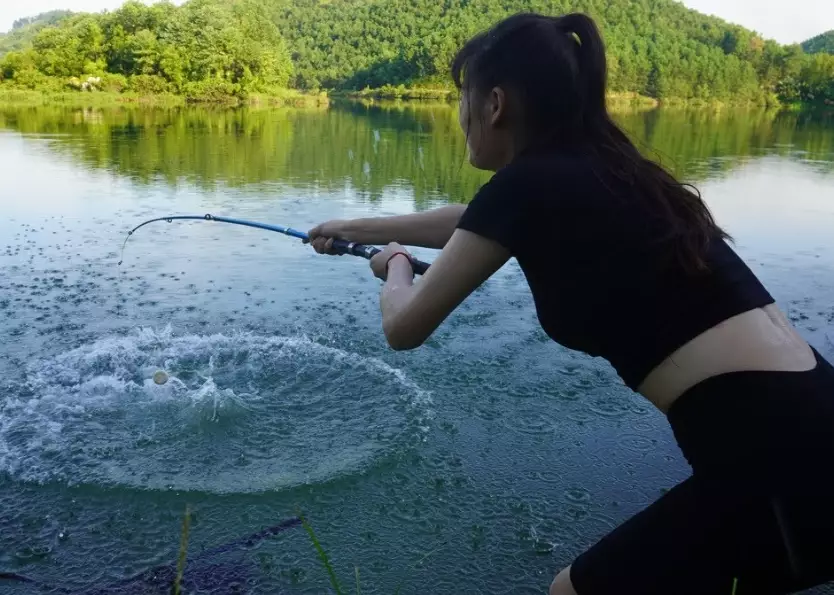
Beyond the First Catch: Common Beginner Questions Answered
Cleaning and Cooking Your First Fish (The Reward)