What is the 80/20 Rule in Fishing? A Practical Guide for Anglers
What is the 80/20 rule in fishing and how can it make you a more successful angler? This in-depth guide explains the concept, debunks myths, and provides actionable strategies to apply the principle to your time, location, and gear for consistently better results.
Let's be honest. We've all been there. You spend an entire Saturday on the water, from dawn till dusk. Your back is sore from casting, your fingers are pruned, and you've gone through half your tackle box. And what do you have to show for it? Maybe one or two decent fish, if you're lucky. Meanwhile, you hear about that one guy who showed up at 10 AM, fished for two hours in one spot, and limited out. It's enough to make you want to hang up your rod for good. What if I told you there's a simple concept, borrowed from economics and business, that can explain a huge part of this frustration and, more importantly, show you how to fix it? That concept is the 80/20 rule in fishing. I first stumbled upon this idea not in a fishing magazine, but while reading about business efficiency. The Pareto Principle, named after economist Vilfredo Pareto, noted that 80% of the land in Italy was owned by 20% of the population. The more I read, the more my mind drifted to the lake. Didn't 80% of my fish come from that one rocky point? Didn't I catch most of my bass on just a couple of lures in my overflowing box? The connection was instant and, frankly, a little frustrating. I'd been working hard, but not smart. This article isn't about theory. It's a down-to-earth, practical guide from someone who's applied this principle on muddy banks, in bouncing boats, and through frustrating skunks. We're going to break down exactly what the 80/20 rule in fishing means, where most anglers get it wrong, and how you can use it to catch more fish without necessarily fishing more hours. Before we get into the good stuff, we need to clear the air. There's a lot of misunderstanding floating around. Applying this rule blindly can be just as bad as ignoring it. The 80/20 rule means you should only fish 20% of the time or use 20% of your lures and ignore everything else. It's an excuse to be lazy and not explore. Nothing could be further from the truth. The rule is a diagnostic tool, not a prescription for limitation. Its purpose is to help you identify your most productive 20% so you can focus your effort there first and best. It's about strategic prioritization, not willful ignorance. You still need to explore to find that golden 20%! Think of it this way. You don't stop learning new knots or reading about seasonal patterns. Instead, you start paying fierce attention to what's actually working for you, right now, in your local waters. You double down on success instead of repeatedly doubling down on failure. Another misconception? That the ratio is always exactly 80/20. It might be 90/10. It might be 70/30. The core idea is the imbalance—the fact that a small slice of your effort yields a large slice of your results. Getting hung up on the numbers misses the point entirely. The real question to ask is: What is the 80/20 rule in fishing teaching me about my own habits? This is where we move from philosophy to practice. In my experience, and from talking to countless guides and tournament anglers, the principle manifests most powerfully in three areas. Nail these, and you'll outfish 80% of the people on the water without breaking a sweat. This one hits home for weekend warriors. You have limited hours. Applying the 80/20 rule here means recognizing that not all hours on the water are created equal. I used to pride myself on marathon sessions. "First one in, last one out" was my badge of honor. But my logbook told a different story. A brutal truth emerged: over 80% of my fish were caught in a 4-hour window. Sometimes it was the dawn bite. Sometimes it was an hour before a front moved in. Often, it was that weird, quiet period late in the afternoon when everyone else had gone home. The other 6-8 hours? Mostly just boat riding and hope. The Hack: Become a student of peak activity periods. This isn't just about sunup and sundown. It's about tide changes if you're saltwater fishing. It's about water release schedules on tailwaters. It's about the hour after a heavy rain flushes insects into a stream. Resources like the U.S. Fish and Wildlife Service website offer fantastic, science-based information on fish behavior and biology that can help you predict these windows. Focus your absolute best effort, your sharpest focus, and your prime bait during these predicted 20% windows. Use the other time for scouting, rigging, or—gasp—relaxing. Ask yourself: Can you restructure your trip? Instead of 8 mediocre hours, could you fish 2 phenomenal hours twice a week? The answer might surprise you. This is the big one. The classic 80/20 rule in fishing scenario. You know the lake holds fish. But they aren't evenly spread like butter on toast. They're clustered. I remember a specific cove on my home lake. It was large, maybe 200 yards across. I'd catch a fish here and there along its length. Then one day, after marking a huge school on my fishfinder, I realized every single bite for a month had come from a 10-yard stretch where a subtle underwater ditch met the old creek channel. That was my 20% within the 20% cove. The spot-on-the-spot. Your job is to find these concentration points. They are usually defined by a combination of factors, not just one. Platforms like Take Me Fishing's reservoir finder can be great starting points, but the real work is done with your eyes, your map, and your electronics. Fish the entire area to find the hotspot, then don't leave it. Milk it. This is the essence of understanding what is the 80/20 rule in fishing. Open your tackle box. Go ahead, I'll wait. How many of those lures have never caught a fish? How many have caught one fish, ever? Be honest. We are collectors and optimists. We buy the latest, greatest, most holographic swimbait promising to "trigger savage strikes." And it sits. Meanwhile, you have that one jig—the paint is chipped, the skirt is frayed—that you could probably catch fish in a parking lot puddle. That is your 20%. The 80/20 rule here forces a brutal but necessary inventory. It's not about having one lure. It's about identifying a small, versatile arsenal you have supreme confidence in. For freshwater bass, this might be a Texas-rigged soft plastic, a squarebill crankbait, and a topwater popper. For trout, it might be a handful of specific nymph patterns and a single dry fly. You master the presentation of these few, rather than being mediocre with dozens. This extends to knots, too. Do you really need to know 15 knots? Or will a Palomar, an Improved Clinch, and a Uni-Knot cover 99% of your needs? The Bass Anglers Sportsman Society (B.A.S.S.) features analysis from top pros who often talk about simplification and focus—they are living the 80/20 principle at the highest level. Okay, time for some real talk. This rule isn't a magic wand. If you apply it rigidly and without thought, it can backfire. I've seen it happen. The biggest pitfall is stagnation. You find a great spot and a great lure. You hammer it. And you catch fish... until you don't. Conditions change. Seasons change. Pressure changes. The 20% that worked in May is the 0% that works in August. Your productive 20% is a moving target. That's why the rule must be coupled with continuous learning. You use the 80/20 to build a solid, efficient foundation. But you must always be testing. Maybe 10% of your time should be dedicated to pure experimentation—trying that new spot, that weird lure, that technique you're bad at. That's how you discover your next 20%. Another limitation? It can make fishing feel a bit... clinical. Where's the romance in analyzing percentages? Sometimes you just want to cast a fly onto a glassy surface at sunset, fish be damned. And that's perfectly okay. The 80/20 rule in fishing is a tool for when your goal is catching. It's not the only way to enjoy the sport, and pretending it is would suck all the joy out of it for me. Let's wrap this up with something you can do right now. Don't just read this and forget it. Try this over your next four fishing trips. Pro Tip: When you find yourself in a slump, your log is your best friend. Go back to the last time you had success. What was the 20% then? Try to replicate those conditions as closely as possible. It's your personal playbook. Let's tackle some of the specific questions that pop up once you start thinking about what is the 80/20 rule in fishing. Absolutely, but how it looks changes. For offshore trolling, your 20% might be the specific temperature break or color of lure that day. For fly fishing for trout, it might be the one fly pattern matching the active hatch (often the emerger, not the adult). For ice fishing, it's overwhelmingly about location—drilling 100 holes to find the 2 that hold fish. The principle of disproportionate results is universal. This is where pre-trip research is your 20% of effort for 80% of the location-scouting result. Study bathymetric maps online. Look for obvious structure points, creek channel junctions, and significant depth changes. When you arrive, don't just start fishing the first pretty shoreline. Use your electronics to quickly scan the areas you identified on the map. Start fishing the place that looks most different—the unique feature in an otherwise uniform area. In hindsight, yes! But common sense isn't common practice. We get distracted by new gear, by the urge to explore, by the fear of missing out. The value of formally stating "what is the 80/20 rule in fishing" is that it gives a name and a framework to this common sense. It turns a vague feeling ("I should probably fish that point again") into a deliberate strategy ("My data shows that spot is in my productive 20%, so I will allocate my prime-time effort there"). They use it instinctively—it's the core of their success. A tournament pro doesn't have time to fish unproductive water. They use practice days to ruthlessly identify the 10% of the lake holding 90% of the competitive fish. Then they guard those spots with their lives. They have a small selection of lures they have absolute mastery over. They are the ultimate practitioners of the 80/20 rule in fishing; they've just internalized it to the point it's second nature. So, what is the 80/20 rule in fishing? It's the lens that helps you see past the clutter of options and effort. It's the reminder that fishing success is rarely about doing more things, but about doing the right things with more focus. It won't guarantee a fish every cast, but it will guarantee that your time on the water is spent strategically, not randomly. And in a sport where time is the ultimate currency, that might be the biggest catch of all. Now go look at your tackle box. I dare you.In This Guide
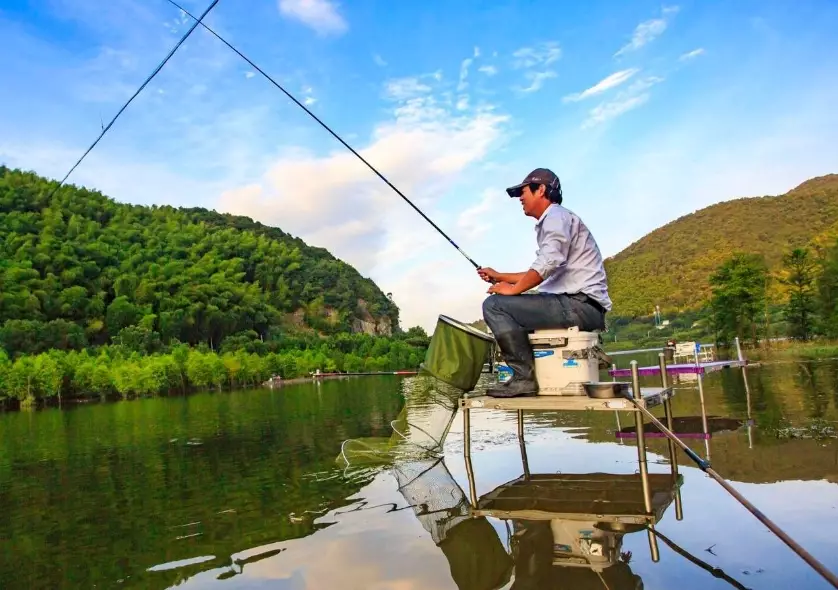
Debunking the Myth First: What the 80/20 Rule in Fishing Is NOT
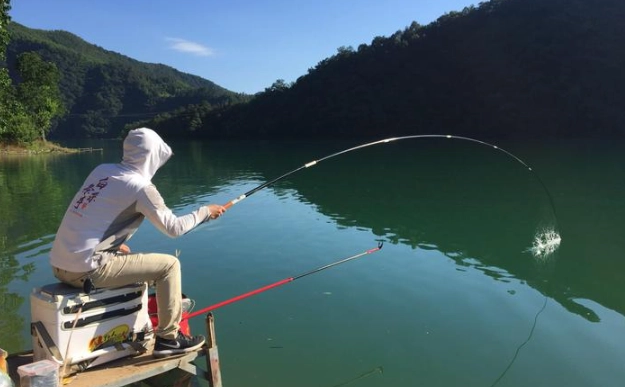
The Three Core Areas Where the 80/20 Rule in Fishing Applies (And How to Hack Them)
1. Time: When You Fish is Everything
2. Location: The Spot-on-the-Spot
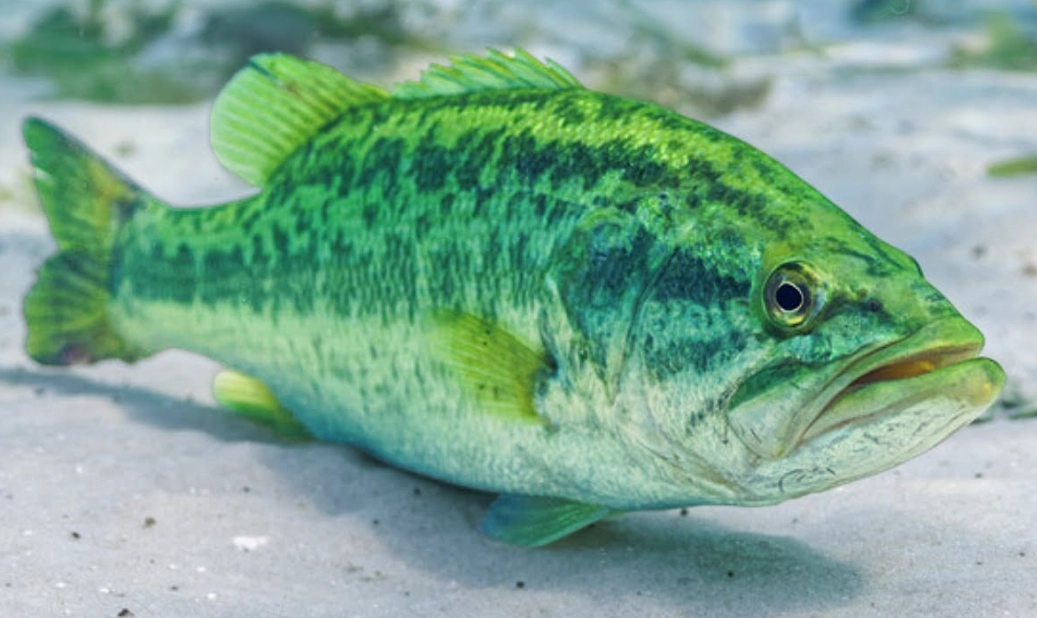
3. Gear and Technique: The Confidence Factor
Common Approach (Scattered 80%)
80/20 Optimized Approach (Focused 20%)
Carrying 5+ rod setups for "every possibility"
2-3 rods max: one for finesse, one for power, one topwater/spinnerbait.
Changing lures every 10 casts if no bite
Sticking with a proven confidence bait and changing presentation (depth, speed, cadence) first.
Buying the newest "hot" color each season
Knowing that 80% of fish are caught on natural colors (greens, browns, shad) and carrying 3 core colors.
Attempting every technique you see on YouTube
Mastering 2-3 techniques that match your local forage and conditions perfectly.
The Limitations and Pitfalls: When the 80/20 Rule in Fishing Needs a Tweaks
Your 80/20 Action Plan: From Reading to Catching
Frequently Asked Questions About the 80/20 Rule in Fishing
Does the 80/20 rule apply to all types of fishing?
How do I find the "20% spot" on a new body of water?
Isn't this just common sense?
Can guides and pros really use this, or is it just for beginners?