What's Inside
Let's be honest. Walking into a tackle shop or scrolling through an online store looking for fishing rods can feel completely overwhelming. You see walls of them. Graphite, fiberglass, fast action, medium power, 7-foot, one-piece, two-piece... it's enough to make your head spin. I remember my first time. I just pointed at something that looked "about right" and hoped for the best. It wasn't.
That rod was too stiff, too heavy, and completely wrong for the little pond fishing I was doing. I felt every peck from a bluegill like it was a freight train, and I'm pretty sure I scared more fish than I caught. A terrible start.
But here's the good news: it doesn't have to be that complicated. Once you understand a few core concepts, the whole world of fishing rods opens up. You stop seeing a confusing rack of sticks and start seeing precise tools, each designed for a specific job. This guide is here to cut through the jargon and help you find the perfect rod, whether you're a complete beginner or an angler looking to fill a gap in your arsenal.
What Are You Even Looking At? Understanding Rod Materials
The stuff your rod is made from defines its soul. It controls the feel, the weight, the sensitivity, and yes, the price tag. Get this part wrong, and you're fighting your gear from the get-go.
So, what are your options? Let's break down the big three.
Graphite (or Carbon Fiber)
This is the king of sensitivity and lightweight performance. Graphite rods are stiff for their weight, which means they transfer the tiniest vibrations from your line directly to your hand. Did that bass just suck in your plastic worm? You'll feel it. Is a perch nibbling on your bait? You'll know. This sensitivity is a game-changer, especially for techniques where you need to detect subtle bites, like using soft plastics for bass or jigging for walleye.
But (and there's always a but), this stiffness comes with a trade-off: they can be less forgiving. A graphite rod has a faster recovery rate, meaning it snaps back to straight quickly. This is great for hook sets, but it also means if you're too rough with a fish, you might pull the hook right out of its mouth or even snap your line. They also tend to be more brittle and can shatter if slammed in a car door or smacked against a boat gunnel. I've done it. It's a heartbreaking sound.
You'll see terms like "IM6," "IM8," or "30-ton," "40-ton" graphite. Higher numbers generally mean a higher modulus—fancier, tighter-weave graphite that's even lighter and more sensitive, but also more expensive and potentially more brittle. For most anglers, a mid-range graphite is the sweet spot.
Fiberglass
The old reliable. Fiberglass rods are the workhorses. They're flexible, durable, and incredibly forgiving. When a big fish makes a hard run, a fiberglass rod will bend deeply and absorb the shock, protecting your line and keeping constant pressure on the hook. This makes them fantastic for techniques where you need that parabolic bend, like trolling for big lake trout, throwing topwater lures for bass where you need to let the fish eat it, or for live-lining for striped rockfish.
The downside? They're heavier and much less sensitive than graphite. You might not feel those ultra-light bites. They're also slower, meaning the rod takes longer to return to its straight position after a cast or a bend. This isn't always bad—it can help with casting distance for certain lures—but it's a different feel.
Composite (The Best of Both Worlds?)
This is where manufacturers get clever. A composite rod blends graphite and fiberglass, usually by layering them or mixing the materials in specific sections of the blank. The goal is to create a rod with the sensitivity of graphite in the tip (for bite detection) and the powerful, forgiving backbone of fiberglass in the lower section (for fighting fish).
Are they the perfect compromise? Sometimes. They can be excellent all-around rods, especially for beginners or for anglers who want one rod to do several things reasonably well. But a dedicated graphite or fiberglass rod will usually outperform a composite in its specific niche. It's like a Swiss Army knife vs. a chef's knife.
The Heart of the Matter: Power and Action
If material is the rod's soul, then Power and Action are its brain and nervous system. This is the most important part of choosing a fishing rod. Get this right, and you're 90% of the way there.
Power (sometimes called "weight" or "line class") is how much force it takes to bend the rod. Think of it as the rod's backbone, its lifting strength. It's usually rated from Ultra-Light to Extra-Heavy.
Action is where the rod bends. A fast action rod bends mostly in the top third or quarter. A slow action rod bends all the way down into the handle.
People mix these up all the time. A rod's power doesn't tell you how fast or slow it is. You can have a Medium-Heavy power rod with a Slow action (bends deep but is still strong), or an Ultra-Light power rod with a Fast action (only the very tip bends, but it has almost no backbone).
So why does this matter? It's all about matching your rod to your target and your technique.
- Fast Action: Excellent sensitivity and quick hook sets. The rod loads (bends) quickly during the cast, which is great for accuracy with lighter lures. Ideal for single-hook techniques where you need to set the hook hard and fast: worm fishing, jigging, flipping, pitching.
- Moderate (or Medium) Action: The all-arounder. Bends in the top half. Provides a good balance of sensitivity, casting distance, and forgiveness. It loads more smoothly, making it fantastic for treble-hook lures (crankbaits, topwaters, jerkbaits) because it keeps constant pressure and is less likely to rip the hooks out of the fish's mouth.
- Slow Action: The deep bender. Fantastic for protecting light line, playing big fish, and casting light lures a long way. Often found on fly rods and ultra-light trout rods. Not great for techniques requiring a firm hook set.
Here’s a quick reference table to match Power and Action to common fishing scenarios:
| Target Fish / Technique | Recommended Rod Power | Recommended Rod Action | Why It Works |
|---|---|---|---|
| Panfish (Bluegill, Crappie) | Ultra-Light to Light | Fast or Moderate | Light power for small fish and lures. Fast action for sensitivity with tiny jigs. |
| Trout in Streams | Light | Moderate to Slow | Forgiving action protects light tippets. Good for casting small spinners and spoons. |
| Bass with Plastic Worms/Jigs | Medium-Heavy to Heavy | Fast or Extra-Fast | Power to pull fish from cover. Fast action for sensitive bite detection and solid hook sets. |
| Bass with Crankbaits | Medium to Medium-Heavy | Moderate | Softer action keeps treble hooks pinned during head-shakes. Good casting for heavier lures. |
| Walleye Jigging | Medium | Fast | Need to feel light bites on the bottom. Fast action helps snap the hook home. |
| Pike/Muskie | Heavy to Extra-Heavy | Moderate-Fast | Brute strength for big fish and big lures. Moderate-fast provides some cushion for their runs. |
| Catfish / Bottom Fishing | Medium-Heavy to Extra-Heavy | Moderate to Slow | Power to lift heavy fish. Slower action absorbs powerful runs and head shakes. |
| Inshore Saltwater (Redfish, Seatrout) | Medium to Medium-Heavy | Fast | Versatile for various lures. Fast action for setting hooks in hard mouths. |
---
See how that works? You're not just buying "a fishing rod" anymore. You're selecting a tool for a specific job. A bass angler might have five or six different rods on the deck of his boat, each with a specific power and action for the lure he's throwing at that moment. You don't need to go that far starting out, but understanding the principle is key.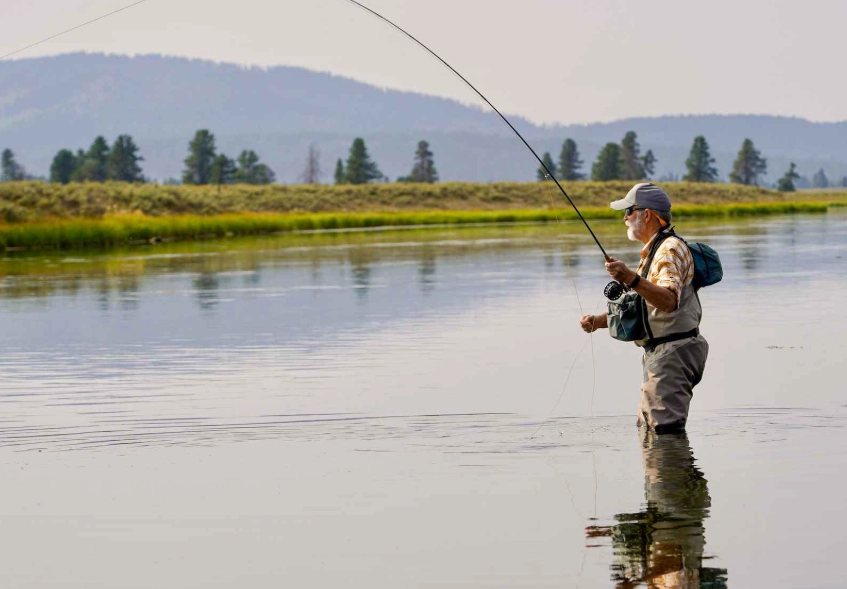
Length, Pieces, and Handle Types - The Nitty-Gritty Details
Alright, you've got the material, power, and action figured out. Now for the final fitting.
Rod Length: It's Not Just About Casting
Longer fishing rods (over 7 feet) generally cast farther, give you more leverage when fighting a fish (which can help tire it out faster), and allow for better line control when mending line in current or working a lure. They're great for shore fishing where you need distance, or for techniques like surf fishing or muskie fishing.
Shorter rods (under 6'6") are more accurate for pinpoint casts, offer more power for their rating (the leverage works in the fish's favor), and are easier to handle in tight spaces like a small boat or a brushy creek bank. They're often preferred for techniques like flipping heavy cover for bass.
For a first all-purpose rod, something in the 6'6" to 7' range is a safe bet. It's a good compromise that does most things well.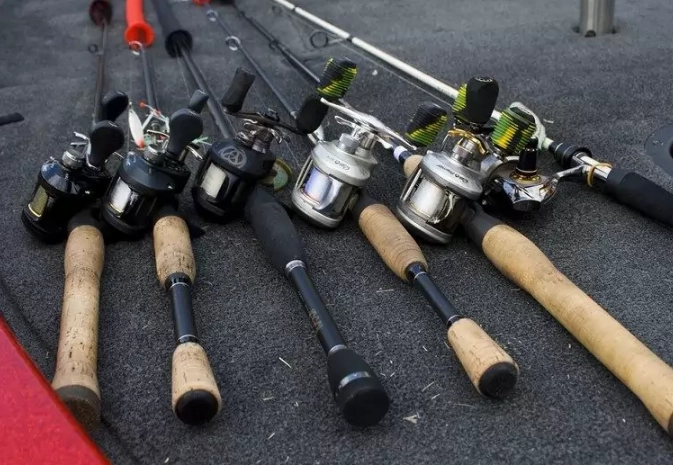
One-Piece vs. Two-Piece (or More!)
This one's about portability vs. performance.
One-Piece Rods have a slight performance edge. No ferrules (the joints) means a smoother transfer of energy down the blank. They're often more sensitive and, in theory, more durable because there's no weak point at a joint. The downside? Good luck fitting a 7-foot one-piece rod in most cars without putting down the back seat. Storage and travel are a hassle.
Multi-Piece Rods (2, 3, 4-piece) are all about convenience. Modern manufacturing has gotten so good that a high-quality 4-piece travel rod performs nearly identically to a one-piece. They fit in a suitcase, a backpack, or a small car trunk. For 90% of anglers, a two-piece rod is perfect. It's easy to transport and the performance loss is negligible. My travel rod is a 4-piece graphite that fits in my carry-on. It's caught fish all over the place and I've never thought, "I wish this felt more like a one-piece."
Handle (or Grip) Material
Usually cork or EVA foam. Cork is traditional, lightweight, and feels great in the hand. It's also more expensive and can get dirty or chip. EVA foam is durable, provides a good non-slip grip even when wet, is easy to clean, and is cheaper. Some people swear by the feel of cork. Personally, I like EVA for wet conditions (kayak fishing, saltwater) and cork for everything else. It's largely a personal preference thing.
Handle length matters too. Longer handles (called "butts") are for two-handed casting or tucking under your arm when fighting a big fish. Shorter handles are for one-handed casting and overall lighter feel.
Putting It All Together: Rod Recommendations for Common Scenarios
Let's get practical. Here are some specific setups that just work. These are starting points based on what countless anglers (including me) have found successful.
The Absolute Beginner's First Rod (Freshwater Pond/Lake)
You want to catch bluegill, bass, maybe the occasional catfish. You need something simple, durable, and versatile.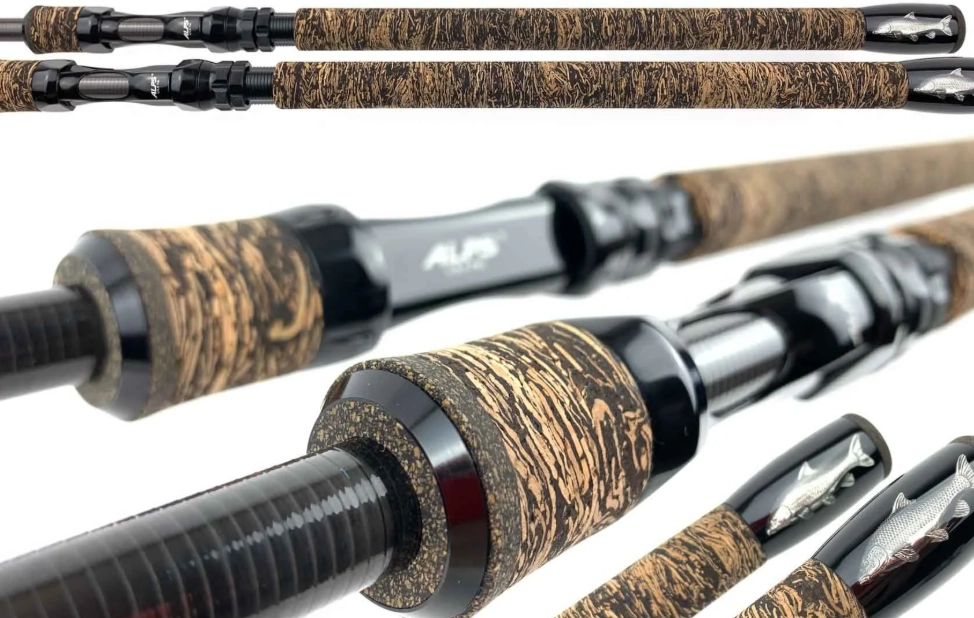
- Power: Medium
- Action: Moderate
- Length: 6'6" or 7'
- Pieces: 2-Piece (for easy transport)
- Material: Fiberglass or Composite
Why it works: The Medium power can handle a decent range of lures and fish. The Moderate action is forgiving for a beginner's hook set and works well with basic lures like spinners, spoons, and small crankbaits. Fiberglass/composite means it's tough when you inevitably step on it or knock it around. Pair this with a 2000 or 2500 size spinning reel and 8-10 lb monofilament line. Done.
The Bass Angler's "Do-It-All" Workhorse
You're serious about bass fishing but can only buy one nice rod for now.
- Power: Medium-Heavy
- Action: Fast
- Length: 7' to 7'3"
- Pieces: 1 or 2-Piece
- Material: Graphite
Why it works: This is arguably the most versatile bass rod ever. The Medium-Heavy/Fast combo has enough backbone to set hooks deep with single-hook lures (worms, creatures, jigs) and pull fish from light cover, yet it's not so heavy that you can't throw a larger spinnerbait or a weightless worm. The graphite gives you the sensitivity you need for bottom-contact techniques. It's not ideal for treble-hook lures, but it'll do in a pinch. This would be paired with a 3000 size spinning reel or a 7.1:1 baitcasting reel.
The Ultra-Light Dream for Panfish and Trout
You want maximum fun with smaller fish. Every bite feels huge.
- Power: Ultra-Light or Light
- Action: Fast
- Length: 5'6" to 6'
- Pieces: Often 4 or 5-piece for backpacking
- Material: High-modulus Graphite
Why it works: The light power makes tiny 1/32 oz jigs feel castable and turns a 10-inch trout into a acrobatic battle. The fast action in a light rod provides surprising sensitivity for detecting light bites. The shorter length aids accuracy on small streams. This is a pure finesse tool. Pair it with a tiny 1000 size spinning reel and 2-4 lb test line.
Common Questions (And Straight Answers)
Final Thoughts: Trust Your Feel
All this information is a roadmap, not a prison sentence. The best fishing rod for you is the one that feels right in your hands and gives you confidence. If possible, go to a tackle shop and hold a few. Feel the balance. Practice a mock cast in the aisle (carefully!).
Does that 7-foot rod feel too long and unwieldy? Maybe drop to a 6'6". Does the Medium-Heavy feel like a broomstick? Try a Medium. Your comfort is part of the equation.
Remember, the goal is to go fishing and have fun. The perfect rod removes barriers between you and the experience. It lets you feel connected to the water and the fish. It's an extension of your intention. Start with the basics we covered here, make an informed choice, and then just go get your line wet. You'll learn more on the water in one afternoon than you ever will from reading articles.
And hey, if your first choice isn't perfect, that's okay too. It's just an excuse to buy another rod later. We all do it. It's a sickness, really. A wonderful, expensive, rod-rack-filling sickness.
Now get out there.
Reader Comments