Let's be honest. The romantic idea of ice fishing often crashes into the reality of a biting wind and numb fingers. You're out there on a frozen lake, the fish are down there, but you're slowly turning into a human popsicle. That's where the game changes. An ice fishing shelter with a sled isn't just a piece of gear; it's your ticket to staying out longer, fishing more effectively, and actually enjoying the experience. I've spent over a decade chasing walleye and perch through the ice, and moving from a simple bucket to a proper sled-based shelter was the single biggest upgrade I ever made.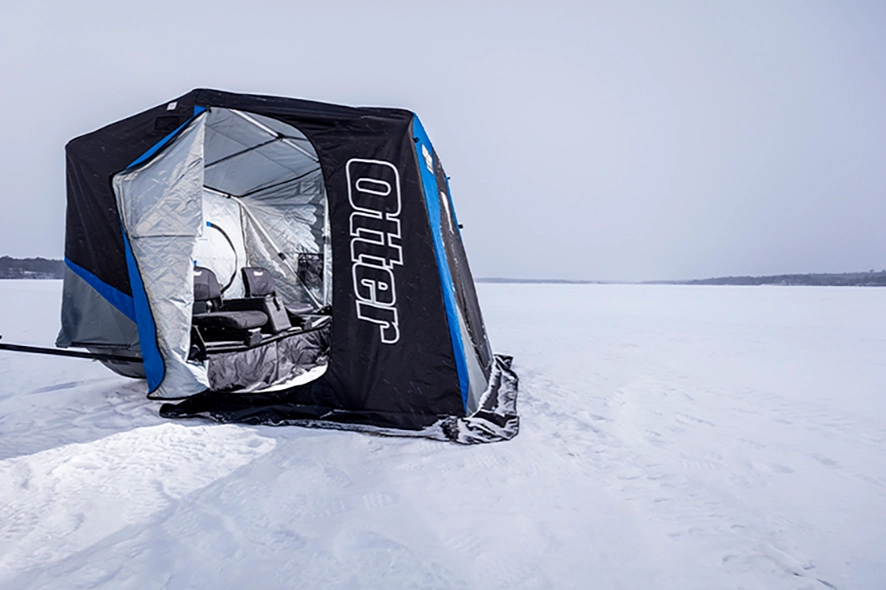
What's Inside This Guide
- Why a Sled-Based Shelter Beats Everything Else
- How to Choose the Right Model: Flip-Over vs. Hub
- The Non-Negotiable Features Checklist
- Mastering the Setup and Breakdown (Without the Swearing)
- Sled Packing Like a Pro: What Goes Where
- Critical Safety Tips Most Guides Forget
- Your Burning Questions, Answered
Why a Sled-Based Shelter Beats Everything Else
Think of it as your all-in-one winter fishing command center. The integrated sled solves the two biggest headaches in ice fishing: transport and setup.
You load all your gear—auger, rods, heater, tackle box, snacks—right into the sled. You hook it to your ATV, snowmobile, or even just a rope, and you drag it out. No more making five trips back to the truck. No more balancing a shelter bag, a gear bag, and an auger while trying not to slip. Everything is contained, organized, and mobile.
The warmth factor is obvious, but it's the wind block that's the real hero. A steady wind doesn't just make you cold; it ruins your hole by freezing it over constantly and makes detecting subtle bites nearly impossible. A good shelter creates a micro-climate where you can fish in a sweatshirt.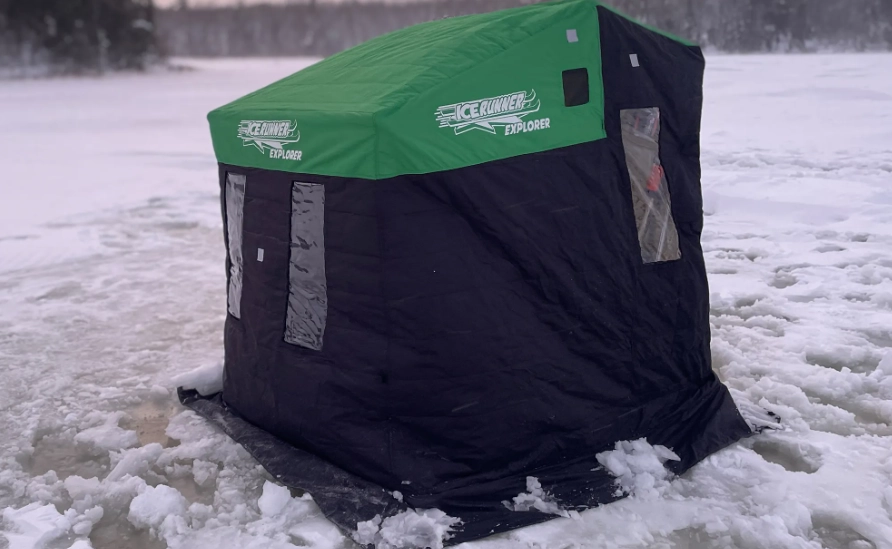
From My Experience:
I used to own a pop-up hub shelter. It was great, until I had to pack it up in a 20 mph wind with frozen fingers. The fabric would whip around, and it felt like wrestling a parachute. The day I switched to a flip-over shelter with a sled, that struggle vanished. Setup became a 60-second drill, even solo. That extra hour of comfortable fishing at the end of the day? That's when you catch the big one.
How to Choose the Right Model: Flip-Over vs. Hub
This is the fundamental fork in the road. Your choice dictates your entire fishing style.
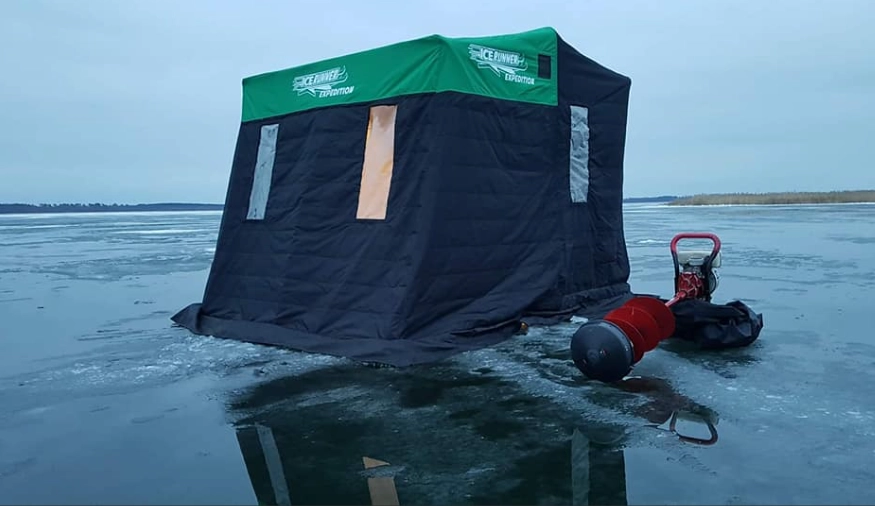
Flip-Over Shelters (Sled Style): The shelter fabric is permanently attached to a hard-shell sled. To set up, you literally flip the top half over. It's lightning fast—often under a minute. You're instantly enclosed. These are perfect for the solo angler or a duo who moves a lot, chasing fish. The sled is your seat platform. The downside? They're heavier and have less interior space for large groups.
Hub Shelters (with a separate sled): These are pop-up tents you carry in a bag and set up on the ice. You need a separate sled (like a heavy-duty plastic ice fishing sled) to haul them and your gear. They offer tons of square footage for groups of 3-6 people. Setting up takes 5-10 minutes and can be tricky in high wind. They're better for setting up in one spot for the whole day.
Here’s a quick breakdown to help you decide:
| Feature | Flip-Over Shelter (with Sled) | Hub Shelter (with Transport Sled) |
|---|---|---|
| Best For | Solo anglers, pairs, mobile fishing | Groups, family trips, all-day base camps |
| Setup Speed | Extremely fast (60-90 seconds) | Slower (5-10 minutes, longer in wind) |
| Portability & Weight | Heavier unit, but all-in-one tow | Lighter components, but more pieces to manage |
| Interior Space | Cozy for 1-2, tight for 3 | Spacious, can fit 4-6+ people |
| Wind Handling | Excellent; low profile and anchored | Good when anchored well, can be a sail |
| Approx. Price Range | $300 - $800+ | $200 (shelter) + $80 (sled) |
The Non-Negotiable Features Checklist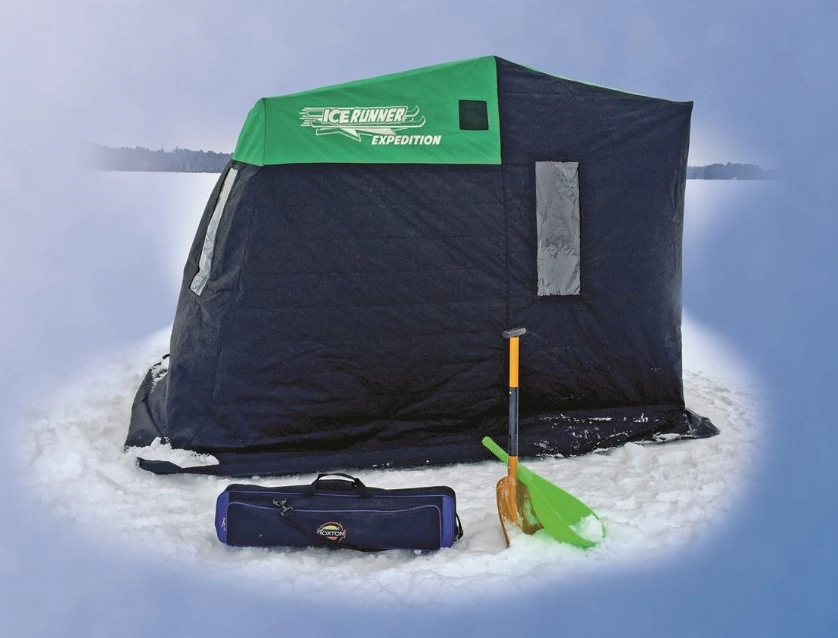
Don't just buy the first one you see. Look for these specifics.
For Flip-Overs:
Insulation: 300D to 600D polyester is standard. Look for thermal layers like Insultherm or reflective liners. This isn't just about warmth; it stops condensation from dripping on you.
Sled Material: Rotomolded polyethylene is the gold standard—it's tough, flexible in the cold, and won't crack like cheap plastic.
Frame: Powder-coated steel is strong, but look for models where the frame is externally routed. An internal frame eats up interior space.
Seating: Does it include swivel boat seats? Are they adjustable? Back support matters after four hours.
For Hub Shelters:
Hub Mechanism: Test the hubs. They should snap into place firmly and not feel flimsy.
Carry Bag: This sounds minor, but a poorly designed bag with bad zippers is a daily frustration. Get one with backpack straps.
Anchors: It must come with robust ice anchors (screw-in style). The ones that look like big drill bits are best. Don't rely on cheap stakes.
And for both: blackout fabric. A dark interior creates a “snow glow” effect, letting you see down your hole much clearer than in a bright, reflective shelter.
Mastering the Setup and Breakdown (Without the Swearing)
Practice in your driveway. Seriously. Do it once on a calm day so you're not figuring it out on the ice in a blizzard.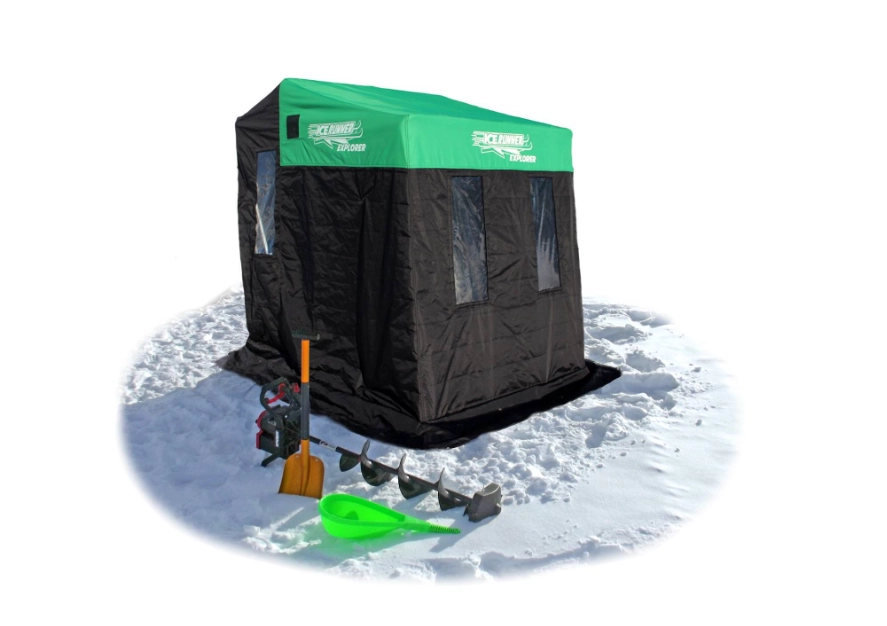
The Flip-Over 60-Second Drill
1. Position your sled where you want it, with the back to the wind.
2. Unhook any travel straps.
3. Lift the back of the shelter frame and walk it forward until it clicks or locks into the open position. It should feel solid.
4. Secure the side support poles if your model has them.
5. Immediately throw your ice anchors or screw them in. Do this before you get comfortable. A gust can send an unanchored shelter skidding across the lake.
The Hub Shelter Wind Hack
The classic mistake is trying to pop it up fully in the wind. Don't.
Lay the shelter out flat, connect all the hubs, but don't extend it. Screw in the ice anchors on the windward side first. Then, as you lift the frame, the anchored side will hold fast, and you can pop up the rest of the shelter into the wind. Anchor the other sides immediately after.
Sled Packing Like a Pro: What Goes Where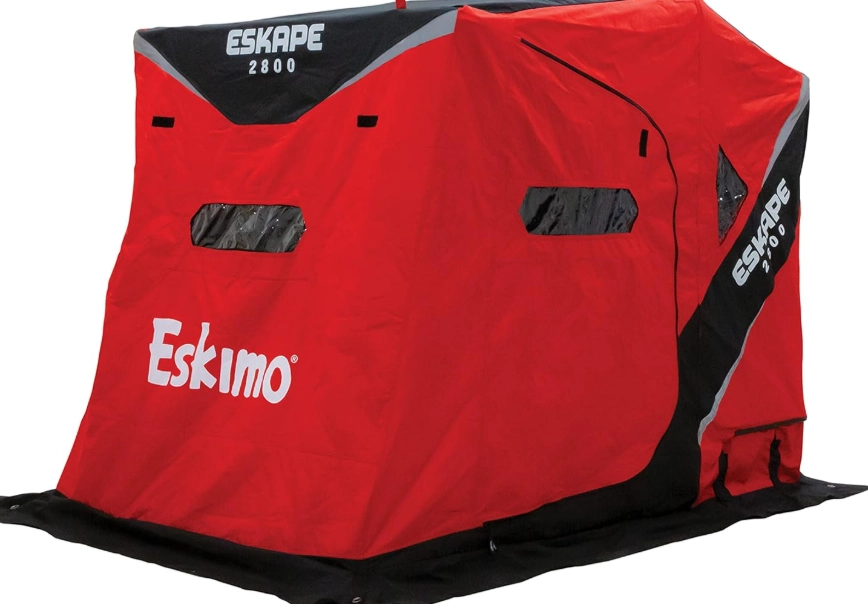
Poor packing makes the tow miserable and finding gear a nightmare.
Bottom Layer (Heaviest): Your auger. Lay it flat. Power auger fuel tank goes to the side, upright.
Middle Layer: Your heater (propane tank secured beside it) and tackle bag. Cushion these with your shelter's skirt or a moving blanket.
Top Layer & Sides: Rod case, electronics (flasher), food, and a small shovel. Keep the weight centered and as low as possible.
Critical: Use cinch straps or bungee cords to secure everything down tight. A bump can send your $500 sonar unit bouncing onto the ice.
I also zip-tie a small plastic tub to the front inside of my sled. That's for pliers, jaw spreaders, hook remover, and a towel—always within reach.
Critical Safety Tips Most Guides Forget
A shelter can create a false sense of security. Remember, you're on a frozen lake.
Ventilation is Non-Optional. Running a propane heater in a sealed tent consumes oxygen and produces carbon monoxide and water vapor. Always crack a vent or a window. I keep a small battery-powered carbon monoxide detector clipped to my gear bag. It's a $30 lifesaver.
Know Your Ice Conditions. Just because you can drive a truck out there doesn't mean it's safe where you're fishing. Check local reports from bait shops or the Minnesota DNR (for example). Carry ice picks around your neck.
Mark Your Holes. When you pack up, mark your fishing holes with a pile of slush or a branch. The next guy (or you tomorrow) won't drive a sled wheel into it.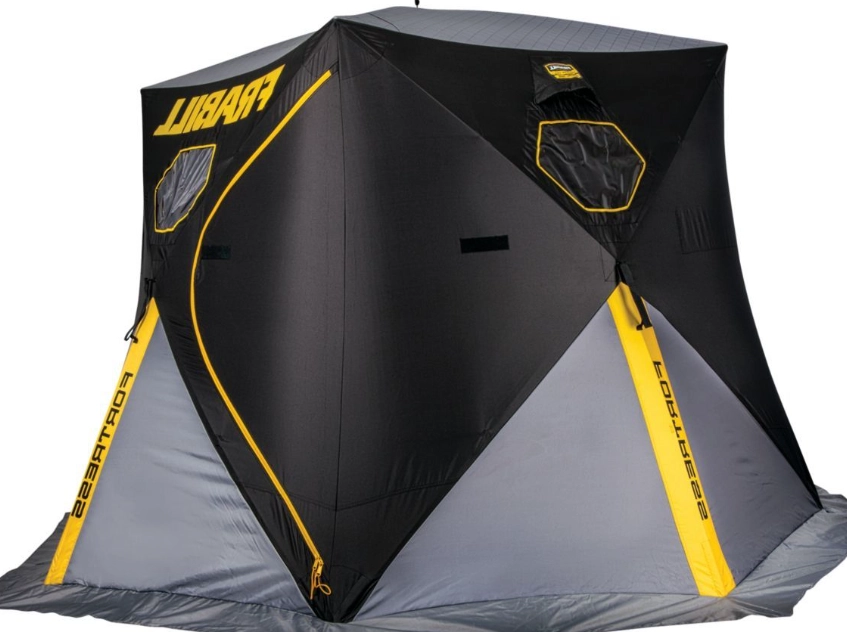
Your Burning Questions, Answered
Can I use a regular plastic kids' sled to haul my hub shelter?
You can, once. Those sleds are brittle in extreme cold and crack under the weight of an auger and gear. Invest in a dedicated, heavy-duty ice fishing sled like a Jet Sled or Shappell. The high sides and tough plastic are worth every penny.
My flip-over shelter is incredibly hard to pull by hand. What am I doing wrong?
You're likely overloading it or the sled has poor glide. First, check the weight distribution. Second, the sled's bottom gets scratched up. Get a set of sled glide strips (UHMW plastic). Glue them on the bottom. The difference in pulling effort on snow is night and day. For bare ice, a harness system is better than pulling with your arms.
 How do I prevent everything from getting soaked when the shelter melts during transport?
This is a classic headache. Before packing up a flip-over, sweep out all the snow with a small brush. For hub shelters, shake the living daylights out of the fabric before folding. Once home, always set the shelter up in your garage or basement to dry completely. Mildew will ruin the fabric and that "ice fishing" smell never comes out.
Are the more expensive, fully insulated models worth it over a basic fabric one?
If you fish in deep cold (below 10°F / -12°C) or use a heater often, absolutely. The insulation does two key things: it retains heat much better, allowing a smaller heater to work efficiently, and it drastically reduces interior condensation. Instead of dripping walls, the moisture freezes on the inside as frost, which is much more manageable. It's the difference between being damp-cold and dry-warm.
Reader Comments