You're standing in the gear aisle, staring at a wall of backpacks. A 20-liter daypack looks sleek. A 50-liter monster promises to hold everything. Which one do you grab for a day on the water? The answer isn't a single number. Choosing the right size fishing backpack is a balancing act between carrying your essential tackle and not feeling like a pack mule. Get it wrong, and you're either scrambling for gear you left behind or nursing sore shoulders by noon. Let's cut through the confusion. The perfect size depends entirely on how, where, and for how long you fish.
What You'll Learn in This Guide
- Why Backpack Size is More Than Just a Number
- Matching Your Fishing Style to Backpack Capacity
- The 5 Key Factors That Decide Your Perfect Size
- Fishing Backpack Capacity Recommendations (With Table)
- Beyond Size: Non-Negotiable Features for Any Fishing Pack
- Pro Tips for Organization and Packing
- Common Sizing Mistakes (And How to Avoid Them)
- Your Fishing Backpack Questions, Answered
Why Backpack Size is More Than Just a Number
Think of your backpack as your mobile command center. Its size, measured in liters (L), dictates your operational capacity. Too small, and you're forced to make sacrifices that can cost you fish—leaving behind that specific lure color or an extra spool of line. Too large, and you commit the cardinal sin of backpack fishing: overpacking. An overloaded pack is uncomfortable, throws off your balance on slippery banks, and turns every piece of gear into a buried treasure you have to dig for.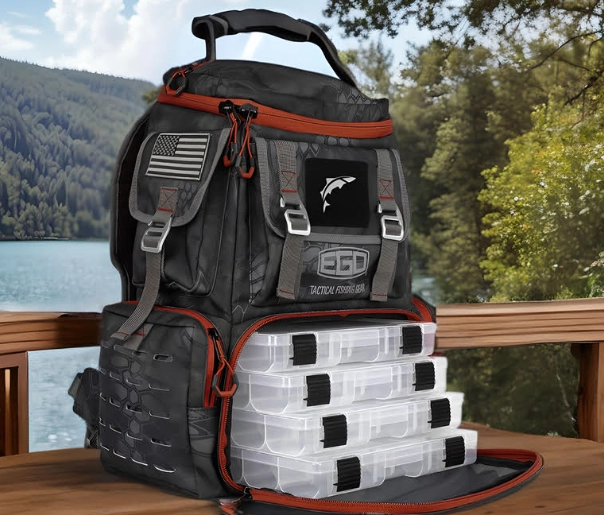
I learned this the hard way on a smallmouth bass trip. I had a massive 45L pack stuffed with "just-in-case" gear. After two hours of hiking the river, my back was sweaty, and I'd spent more time rummaging than casting. I switched to a streamlined 25L pack the next day and caught more fish because I was mobile, comfortable, and knew exactly where my three most productive lure boxes were.
Matching Your Fishing Style to Backpack Capacity
This is where we get specific. Your fishing style is the biggest dictator of size.
Bank Fishing and Pier Fishing
You might not hike far, but you need versatility. You're often carrying more rods (2-3), a larger tackle selection for various species, and maybe a folding stool. You also need space for food, water, and extra layers. A pack in the 30-40L range is the sweet spot. It's big enough for organization but won't overwhelm you. Look for packs with external rod holders or lash points.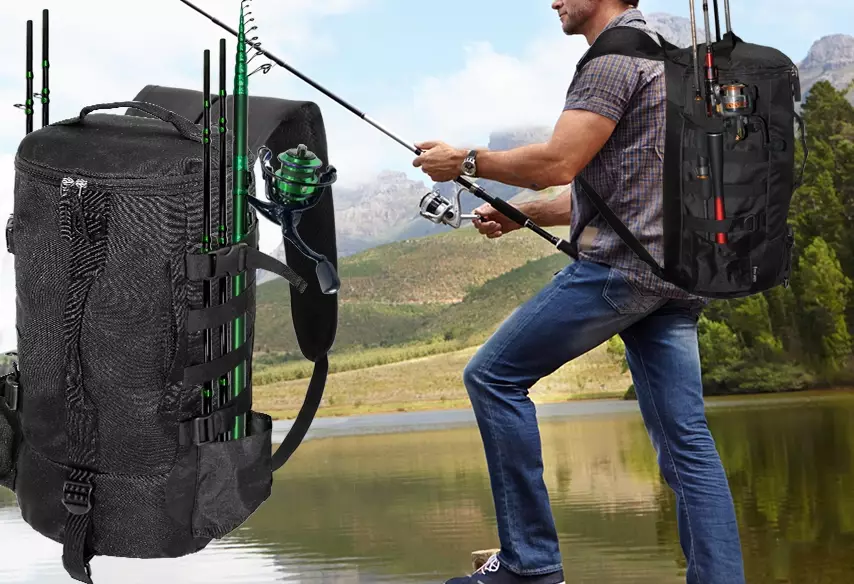
Stream and River Wading (Fly or Spin)
Mobility is king. You're climbing over rocks, navigating currents, and covering water. Every ounce counts. Your gear list is focused: a couple of fly boxes or small lure trays, leaders, tippet, floatant, nippers, and a water bottle. A 18-28L sling pack or small backpack is ideal. It keeps the weight centered and allows quick, one-shoulder swing access to your gear without taking the pack off. This is a game-changer.
Kayak or Canoe Fishing
Your craft holds the bulk, but you need a pack for essentials you want in the cockpit—rain gear, camera, lunch, a small tackle binder for the day's plan. Size matters less than waterproofing. A 20-30L dry bag backpack or a pack with an integrated dry bag liner is non-negotiable. A soaked sandwich is one thing; wet reels and phone are another.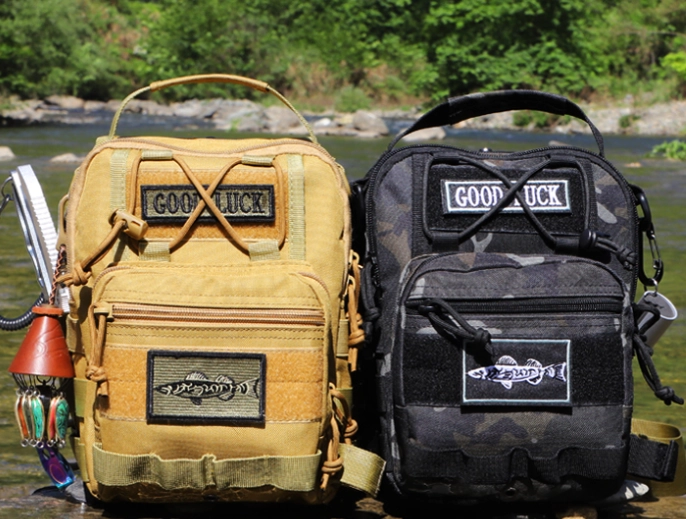
Hiking to Remote Spots (Alpine Lakes, Backcountry)
This is the ultimate test. You need fishing gear and hiking/ safety gear: water filtration, first-aid, layers, food. Your fishing kit must be ultra-minimalist (one small box, one rod). Here, you're often choosing between a dedicated fishing pack and a 40-50L+ hiking pack with good internal organization. I lean towards the hiking pack with fishing-specific pouches. Comfort over a long distance trumps specialized fishing features.
The 5 Key Factors That Decide Your Perfect Size
Before you look at a single liter number, answer these questions.
1. The Non-Negotiable Gear List: Physically lay out everything you must have on a standard trip. Not the "maybe" stuff—the essentials. Your main tackle box(es), pliers, scale, line spools, rain jacket, water (2-3 liters), lunch. Does it all fit in a grocery bag? That's roughly 20L. Is it a small pile? Think 30L+.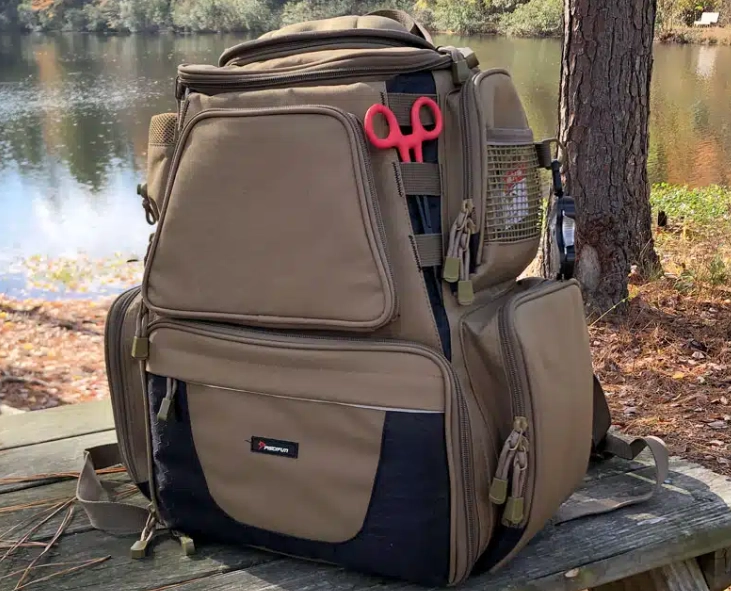
2. Rod Transport: This is a huge space hog. Are you carrying one 2-piece rod in a case? That can often be strapped outside. Are you carrying 3-4 rods in protective tubes? You'll need a pack designed for it or significant external lashing, which pushes your needed capacity up.
3. Trip Duration & Climate: A summer morning trip needs less than a full fall day where temperatures swing 30 degrees. More clothing layers, more water, maybe a thermos—it all adds liters. For multi-day backpacking fishing trips, you're in expedition territory (50L+), where fishing is just one part of the load.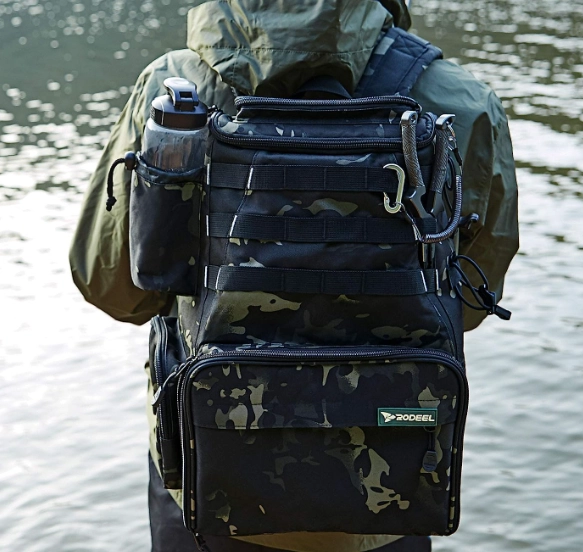
4. Your Body Size and Strength: A 40L pack loaded to the brim feels very different on a 6'2" angler versus a 5'4" angler. Always check the torso length range of a backpack. A properly fitted pack, where the hipbelt sits on your hips (not your waist), can make a larger capacity feel smaller and carry better.
5. Organization vs. Empty Space: A well-organized 25L pack with dedicated pockets can hold more accessible gear than a sloppy 35L sack. Internal organization effectively increases usable capacity.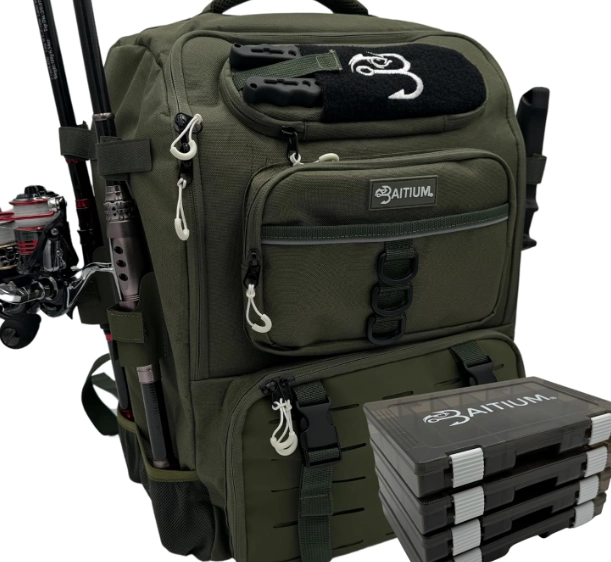
Fishing Backpack Capacity Recommendations
Here’s a concrete breakdown to translate your style into a number. Remember, these are starting points.
| Fishing Type / Scenario | Recommended Capacity Range | What Fits Inside (Typical Load) |
|---|---|---|
| Ultralight / Urban Fishing Short sessions, minimal gear. |
10 - 18 Liters | 1-2 small lure boxes, tools, water bottle, snacks. Often a sling pack. |
| Stream Wading & Hike-In Fly Fishing High mobility, focused gear. |
18 - 28 Liters | 2-4 fly boxes, leaders/tippet, rain shell, large water reservoir, lunch. |
| Full-Day Bank Fishing (General) The most common, versatile scenario. |
25 - 35 Liters | 2-3 medium tackle trays, tools, 2L water, lunch, extra layer, small camera. |
| Kayak/Canoe & Heavy-Duty Bank Fishing Carrying more rods/bigger boxes. |
30 - 45 Liters | Large tackle binder, multiple tool sets, full rain suit, food/water for 8+ hrs, safety kit. |
| Multi-Day Backcountry Fishing Fishing + camping gear. |
50+ Liters | Minimalist fishing kit integrated with camping gear (shelter, sleep system, food, etc.). |
My personal workhorse for 90% of my trout and bass trips is a 28L pack. It forces me to be disciplined but has never left me wanting. For all-day salmon steelhead sessions on big rivers with extra spools and heavy gear, I jump to a 36L.
Beyond Size: Non-Negotiable Features for Any Fishing Pack
Capacity is useless if the pack is a pain to use. Prioritize these features regardless of liters.
A Real, Padded Hipbelt: This is the #1 feature for comfort with any load over 15 lbs. It transfers weight from your shoulders to your hips. Don't settle for a flimsy strap.
Waterproof or Highly Water-Resistant Material: Look for coated fabrics (like TPU) or integrated rain covers. Zippers should be aquaguard or similar. Your gear stays dry in a sudden squall.
Logical, Dedicated Pockets: A quick-access top pocket for sunscreen and leaders. Side pockets that actually fit a large water bottle without it falling out. Internal sleeve for a hydration bladder. External lash points for a net or jacket.
Durable, Non-Corrosive Zippers: Saltwater and sand eat cheap zippers. YKK is the gold standard. Rust-resistant hardware (like aluminum) is a must for saltwater anglers.
Pro Tips for Organization and Packing
How you pack is as important as what you pack.
- Use Modular Systems: Ditch the giant, heavy plastic box. Use slim, modular trays (like the ones from Plano or Flambeau) that fit your pack's dimensions. Organize by technique, not by species.
- Weight Distribution: Heavy items (water bladder, tool pouch) go close to your back and in the middle of the pack. Lighter items (jackets, snacks) go in the outer and top pockets.
- The "Golden Rule" of Packing: The last thing you pack should be the first thing you need. Your go-to lure box or fly box goes in the most accessible spot, often a top lid or front-facing pocket.
- Dry Bag Inserts: For critical items (phone, wallet, dry flies), use a small silnylon dry bag inside your main compartment. Double protection.
Common Sizing Mistakes (And How to Avoid Them)
I've made these. My friends have made these. Let's skip them.
Buying for the "Once-a-Year" Trip: Don't get a 50L pack because you might go on a week-long trip. Buy for your 95% use case (the weekend day trip). Rent or borrow a massive pack for the big adventure.
Ignoring Torso Fit: You buy a pack online based on looks and liters, but it's built for a longer torso. The hipbelt rides on your ribs, all the weight is on your shoulders, and you hate it. Always check the manufacturer's torso fit guide.
The "Empty Space Vacuum": A bigger pack doesn't just hold more gear; it tempts you to fill empty space with junk you don't need. The result is a heavier pack with less accessible gear. Discipline is key.
Forgetting About Post-Trip Gear: Where does the wet rain jacket go? The fish you kept (if legal and intended)? A slimy net? Some packs have a "wet" or "dirty" gear compartment with a separate entrance—a brilliant feature for the trek back to the car.
Your Fishing Backpack Questions, Answered
Can I use a regular hiking backpack for fishing, or do I need a specialized one?
You absolutely can, and for certain styles (like hike-in fishing), it's often the better choice. The advantage of a dedicated fishing pack is organization—built-in tackle trays, tool holders, rod tubes. The advantage of a quality hiking pack is superior comfort, weight distribution, and durability for long carries. For most bank fishing, a fishing-specific pack in the 25-35L range is perfect. For mixing long hikes with fishing, start with a great hiking pack and add fishing organization inside with pouches and small boxes.
Is a sling pack or a traditional two-strap backpack better for fishing?
It's about access versus load. Sling packs (18-25L) are unbeatable for constant, quick access when you're on the move, like wading a stream. Swing it around, grab a fly, swing it back. But they carry weight less comfortably for long periods. Two-strap backpacks (25L+) distribute weight better, carry more gear comfortably, and are more stable for scrambling over rough terrain. If you're stationary for long periods or carrying heavier loads, the traditional backpack wins.
How do I know if a backpack is truly waterproof enough for kayak fishing?
Look for two things: material and closure. The best are made with laminated TPU or PVC tarpaulin (like many dry bags) and have roll-top closures with buckle seals. These are essentially waterproof backpacks. Next tier are packs with fully taped seams and high-quality water-resistant zippers (like YKK AquaGuard), often accompanied by an integrated rain cover. For kayaking, I wouldn't trust anything less than the roll-top style or a pack with a built-in, seam-sealed dry bag compartment. A soaked lunch is annoying; a waterlogged phone and wallet can ruin a trip.
What's one feature most anglers overlook when choosing a backpack size?
Back panel ventilation. On a hot day, a pack that sits flat against your back turns into a sweaty, uncomfortable sponge. Look for packs with a trampoline-style suspended mesh back panel (common on good hiking packs). It creates an air gap between the pack and your back, allowing airflow. This single feature can make a 35L pack feel cooler and lighter than a 25L pack that's stuck to you. It's a game-changer for comfort that has nothing to do with liters but everything to do with how the pack feels.
Reader Comments