You just spooled up with braid. It's thin, sensitive, and has zero stretch. You cast out, feel a thump, set the hook hard, and... your line goes slack. The knot failed. Again. If you've been there, you know the frustration. Braided line is fantastic, but its smooth, waxy surface laughs at knots that work perfectly on monofilament. This isn't about learning a dozen fancy knots. It's about knowing the few that actually work and why they work, so you never lose a fish to a knot again.
After a decade of guiding and testing lines, I've seen every knot failure imaginable. The biggest mistake? Anglers treat braid like it's just "stronger mono." It's a different beast. It doesn't bite into itself. This guide skips the fluff and gives you the four essential knots you need for braid, the exact scenarios to use them, and the subtle mistakes that cause 90% of failures.
What's Inside This Guide
Why Braid is a Knot Nightmare (And How to Tame It)
Think about tying a knot in a bundle of ultra-smooth, waxed dental floss. That's braid. Its lack of stretch and slick coating means it slides under pressure instead of locking. Monofilament knots rely on friction and the line's slight elasticity to cinch down and hold. Braid has neither.
This changes the goal. For braid, you need knots that either:
- Create multiple friction points: Wrapping the line around itself many times to build enough grip.
- Pinch or choke the line: Using the tag end to cinch down and lock the main line in place.
- Fuse the fibers together: In the case of leader knots, weaving the lines into each other.
The 4 Essential Braided Line Knots You Must Know
Forget the encyclopedia. These four cover 99% of your fishing with braid. I've ranked them by priority.
1. The Palomar Knot: Your Universal Lifesaver
Best for: Tying braid directly to hooks, swivels, or lures with a large enough eye.
Why it works for braid: It doubles the line through the eye, creating a massive friction point. The simple overhand knot chokes down on itself brilliantly. It's also incredibly strong and easy to tie, even in low light or with cold hands.
I use this for almost all my terminal tackle when I'm not using a leader. Jigheads, crankbaits, topwaters. The caveat? The lure eye needs to be big enough to pass a loop of doubled line through. For tiny finesse hooks, it gets fiddly.
Pro Variation: For extra security with braid, some anglers add an extra turn before passing the loop through the overhand knot. I don't find it necessary if tied correctly, but it doesn't hurt.
2. The Improved Clinch Knot (The "5-Turn Minimum" Rule)
Best for: A reliable, quick tie to hooks, lures, or rings when the Palomar isn't practical.
Why it works for braid: Multiple wraps create the necessary friction. This is where most fail. With mono, 5-7 wraps is standard. With braid, you need at least 7, and I recommend 8-10 wraps. The slickness requires more surface area to grip.
The trick is consistency. Don't let the wraps overlap or cross. Keep them neat and parallel. And remember that warning from earlier—keep those wraps loose until you're ready to slide them down and cinch.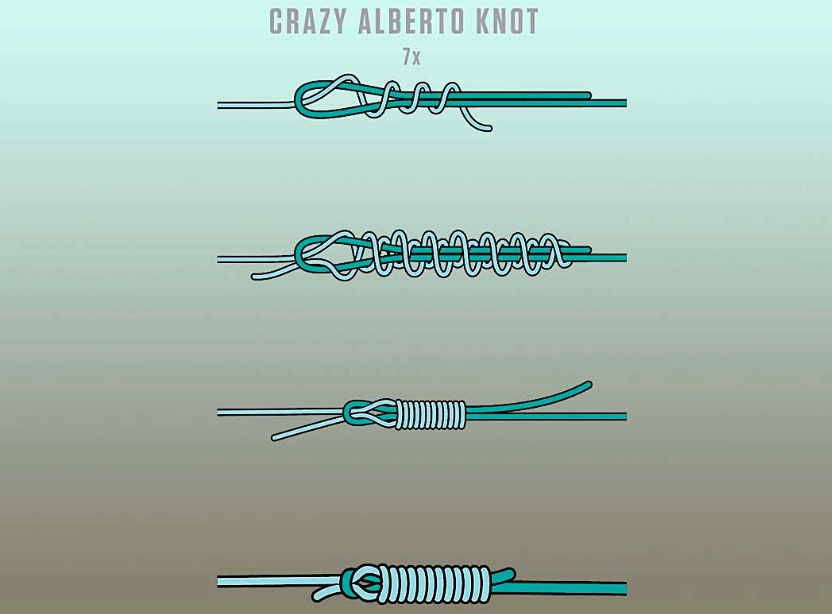
3. The Double Uni Knot: The Simple Leader Connection
Best for: Joining braided main line to a fluorocarbon or monofilament leader.
Why it works for braid: It creates two symmetrical friction-based knots that butt against each other. It's easy to learn and very strong when tied with enough wraps. For the braid side, use 8-10 wraps. For the leader (fluoro/mono) side, use 5-7 wraps.
It's a bit bulky and can catch on rod guides, but for beginner and intermediate anglers, it's the most forgiving leader knot. It's my go-to for teaching clients on the boat because it's hard to mess up completely.
4. The FG Knot or PR Knot: The Low-Profile Champion
Best for: The ultimate, nearly invisible connection between braid and leader for casting through guides.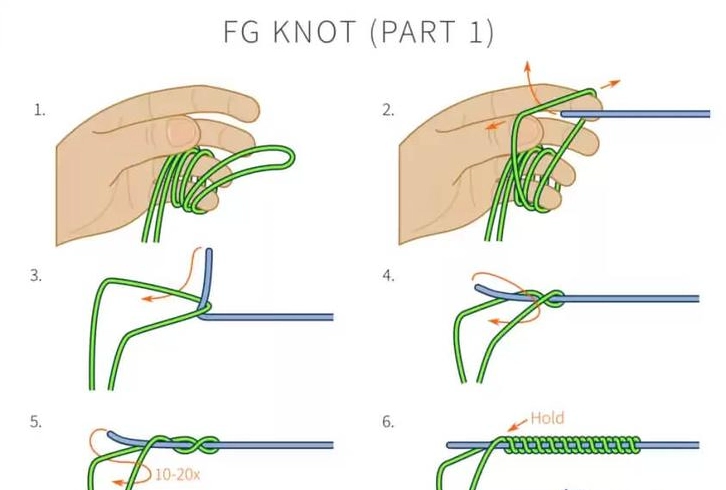
Why it works for braid: It's a weave, not a friction knot. The braid is woven around the core of the leader, fusing them. When cinched, it's incredibly slim and strong. It's the knot used by most professional tournament anglers.
Let's be honest: the FG knot has a learning curve. The first ten you tie will look ugly. But once you get the rhythm—maintaining tension on the leader with your teeth or a tool while weaving the braid—it becomes second nature. The PR (Peter Rönn) knot is a similar, slightly easier alternative that uses a series of half-hitches to finish.
Is it necessary for casual fishing? Maybe not. But if you're throwing big swimbaits, fishing heavy cover, or want the absolute best performance when casting, it's worth the practice. I practiced while watching TV for a week until my fingers could do it blindfolded.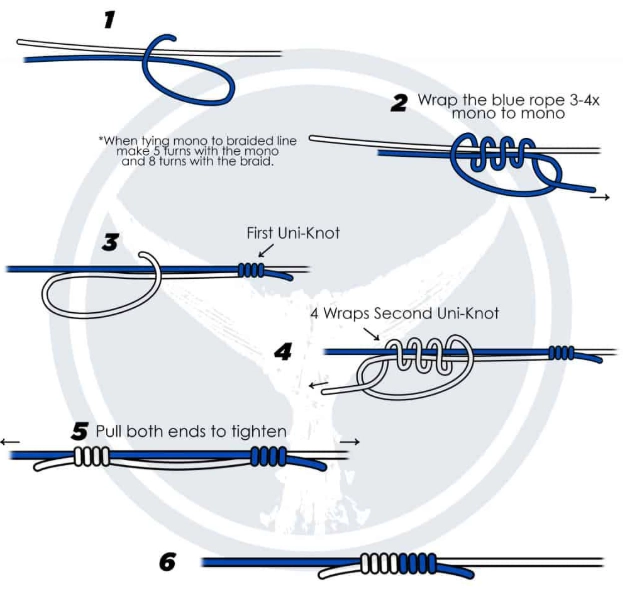
- If you tie direct to lures: Master the Palomar.
- If you use a leader: Learn the Double Uni first, then graduate to the FG/PR.
Pro Tips & The #1 Mistake Everyone Makes
Knowing the knots is half the battle. Tying them correctly on the water is the other half.
Always Lubricate: Before you cinch any knot tight, wet it with saliva or water. This reduces friction heat, which can weaken braid, and allows the knot to seat smoothly and evenly. Dry cinching creates hot spots.
The Cinch is Everything: Pull steadily and firmly on both the main line and the tag end. Don't jerk. With braid, you can actually feel it settle into place. For leader knots like the Double Uni, pull the two main lines to slide the uni knots together, then pull all four ends to tighten.
Trim, Don't Burn: Leave a slightly longer tag end (1/8 to 1/4 inch) than you would with mono. Braid can slip back a tiny bit before fully locking. Use sharp clippers. Never burn the tag end with a lighter like you might with mono. It melts the fibers into a hard, sharp blob that can cut your fingers or main line. I've seen it saw through a leader on a cast.
The #1 Subtle Mistake: Incorrect tag end pull direction. On knots like the Improved Clinch, you must pull the tag end parallel to the hook eye to slide the wraps down neatly. If you pull it at an angle, the wraps pile up and jam, creating a weak, messy knot. Pay attention to the exit direction of the tag end in the knot diagram.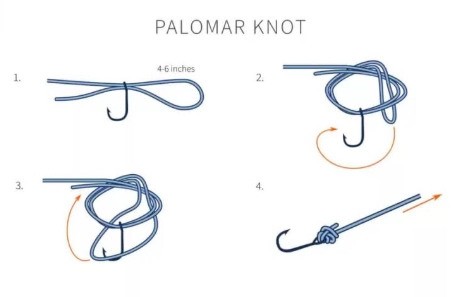
Quick Decision: Which Knot Should I Use?
Stuck on the water? Follow this logic:
- Braid → Hook/Lure/Swivel: Can you pass a loop through the eye? Yes → Palomar. No (eye is too small) → Improved Clinch (with 8+ wraps).
- Braid → Leader (Fluoro/Mono): Are you making long casts with a baitcaster or need the slimmest knot? Yes → FG/PR Knot. No, or just starting out → Double Uni Knot.
- Braid → Braid (Line to Line): Use a Double Uni or a specialized braid splice. Simple blood knots don't hold.
This isn't dogma. It's a reliable starting point. As you gain confidence, you'll develop your own preferences. I might use a Palomar 90% of the time for terminal tackle, but if I'm using a tiny finesse hook, I'll switch to a heavily wrapped Improved Clinch without a second thought.
Your Braid Knot Questions, Answered
Resources like the International Game Fish Association's knot guides offer great visuals for the basics, and dedicated line testing sites like Braid Authority often publish comparative strength tests that are worth a look to see the data behind the recommendations.
The bottom line is this: respect the unique properties of braided line. Don't fight its slickness; work with it by choosing knots designed for friction and security. Master the Palomar and one reliable leader knot. Pay obsessive attention to lubrication, cinching, and trimming. Do that, and you'll stop worrying about your knot and start focusing on the fish.
Reader Comments