Walk into any tackle shop, and the wall of bass fishing bait is enough to make your head spin. Spinnerbaits, crankbaits, worms, jigs, swimbaits, topwaters – each in a rainbow of colors. It's paralyzing. I've been there, staring blankly, wallet in hand, overwhelmed by choice.
But here's the thing – are you matching your bait to the water, the weather, and the mood of the bass? Or are you just throwing what you have confidence in and hoping for the best? That was my mistake for years. I'd fish a chartreuse spinnerbait in crystal-clear water because it worked once, and then wonder why I got skunked.
This guide isn't another list of "top 10 lures." It's a system. We're going to break down why bass eat, match specific baits to specific jobs, and give you a decision-making framework that works on any lake, any river, any pond. Forget the gimmicks. Let's talk about what actually catches fish.
What's Inside This Guide
Understanding the Bass Brain: Predator Psychology 101
Bass aren't thinking about your lure. They're running on instinct, driven by three primary triggers: hunger, opportunity, and aggression. Your bait needs to appeal to one of these.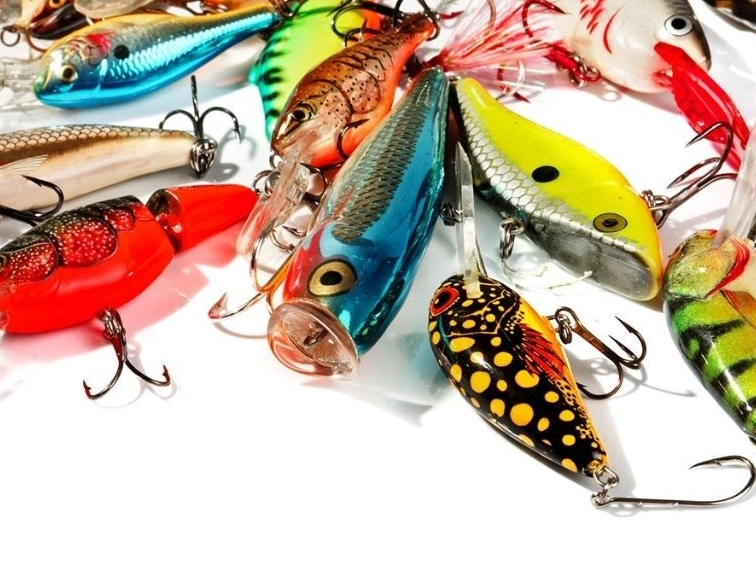
Hunger is the obvious one. A slow, wounded presentation like a Texas-rigged worm or a live shiner mimics easy prey. Opportunity is about something that looks edible passing within striking distance – a crankbait rolling past their rock pile. Aggression is key, especially for big bass protecting a bed or territorial ones. A loud topwater popper or a bulky jig dragged through their space can trigger a violent reaction strike, even if they're not hungry.
Key Insight: Water temperature dictates metabolism. In cold water (70°F), they're active and will chase. Match your retrieve speed and bait size to the temperature.
The Live Bait Debate: Shiners, Crawfish, and Nightcrawlers
Let's get this out of the way: live bait works. Exceptionally well. It emits natural sounds, vibrations, and scents that artificials struggle to replicate perfectly. Purists may scoff, but if your goal is to catch fish, especially trophy fish, ignoring live bait is silly.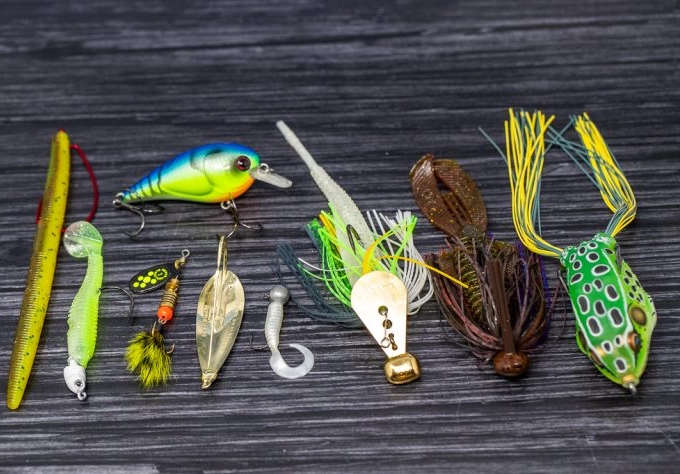
Live Shiners (or Minnows): The undisputed heavyweight champion for big largemouth bass. Fishing a large, lively shiner under a bobber near heavy cover is a time-tested trophy tactic. The struggling shiner does all the work. The downside? Cost, hassle, and it's a passive technique. You're not "fishing" as much as you are "waiting."
Live Crawfish: For smallmouth and spotted bass, this is candy. Match the hatch – use crawfish that match the size and color of the local population. Hook them through the tail and drift them along rocky bottoms. It's incredibly effective in rivers and clear lakes.
Nightcrawlers: Don't underestimate the worm. On a simple hook with a split shot, it's a killer for numbers, especially in ponds or for schooling bass. It's also the ultimate "finesse" option when bass are ultra-pressured or lock-jawed.
The Artificial Lures Arsenal: A Tool for Every Job
This is where strategy comes in. Think of your tackle box as a toolbox. You don't use a hammer to screw in a lightbulb.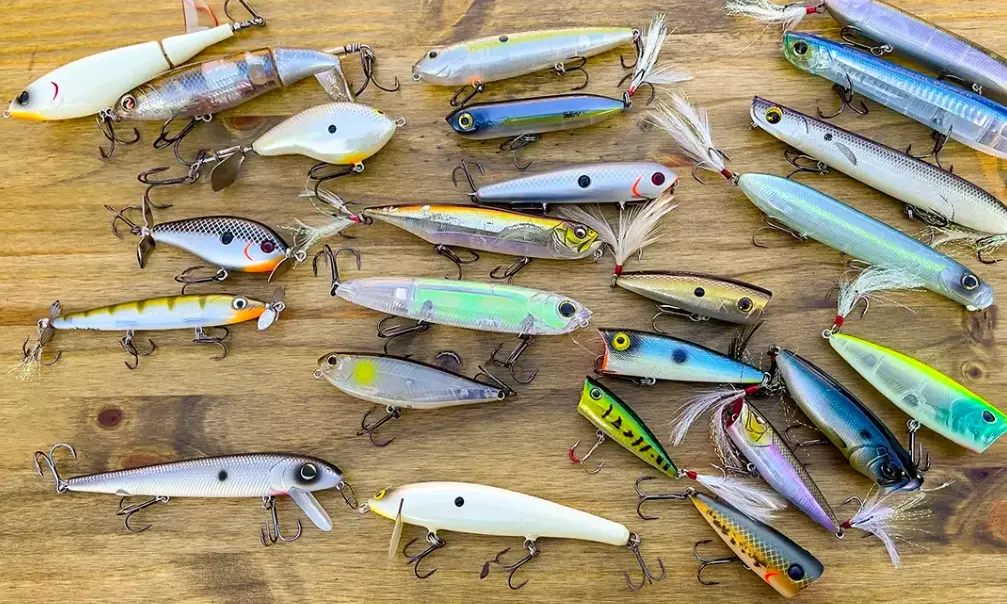
Soft Plastics: The Finesse Masters
Worms, creatures, craws. Their versatility is unmatched. You can Texas-rig them to be weedless, Carolina-rig them to cover deep water, wacky-rig them for a tantalizing fall. Colors like green pumpkin, black/blue flake, and junebug are staples for a reason – they work in most conditions. The action is entirely in your hands. A subtle twitch can be the difference.
Hard Baits: The Search & Reaction Tools
Crankbaits: Your depth-finding, area-covering machine. Lipless crankbaits (like Rat-L-Traps) are brilliant for searching grass flats and triggering reaction strikes. Diving crankbaits let you target specific depths – 10 feet, 15 feet, 20 feet. Banging them into rocks or wood is a proven trigger.
Spinnerbaits: The all-weather, all-cover workhorse. In windy conditions, stained water, or around thick vegetation, a spinnerbait is your best friend. The combination of vibration (from the Colorado blade) and flash (from the willow leaf blade) creates a stimulus package bass find hard to resist.
Topwater Lures: The most exciting bite in fishing. Poppers, walking baits (like a Zara Spook), and buzzbaits. Use them at dawn, dusk, or on overcast days. The common mistake? Retrieving too fast. A topwater bait should look like a struggling creature, not an Olympic swimmer.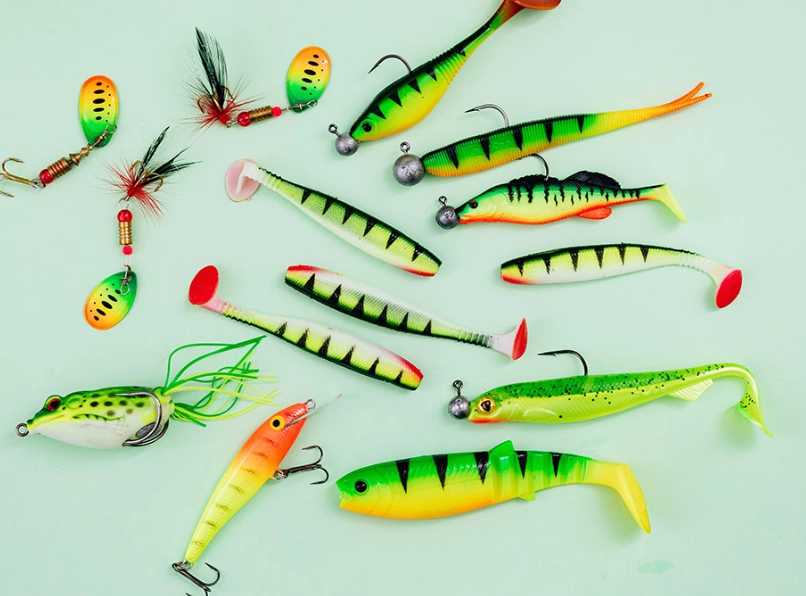
The Jig: The Big Bass Specialist
A football jig dragged on a rocky bottom. A flipping jig pitched into matted grass. The jig is a confidence bait for seasoned anglers because it mimics a crawfish or a baitfish so effectively. It's not a numbers bait; it's a quality bait. It requires patience and a sensitive touch to feel the often-subtle "tick" of a bite.
The Decision Matrix: How to Match the Bait to the Moment
Okay, you're at the lake. How do you choose? Follow this logic chain.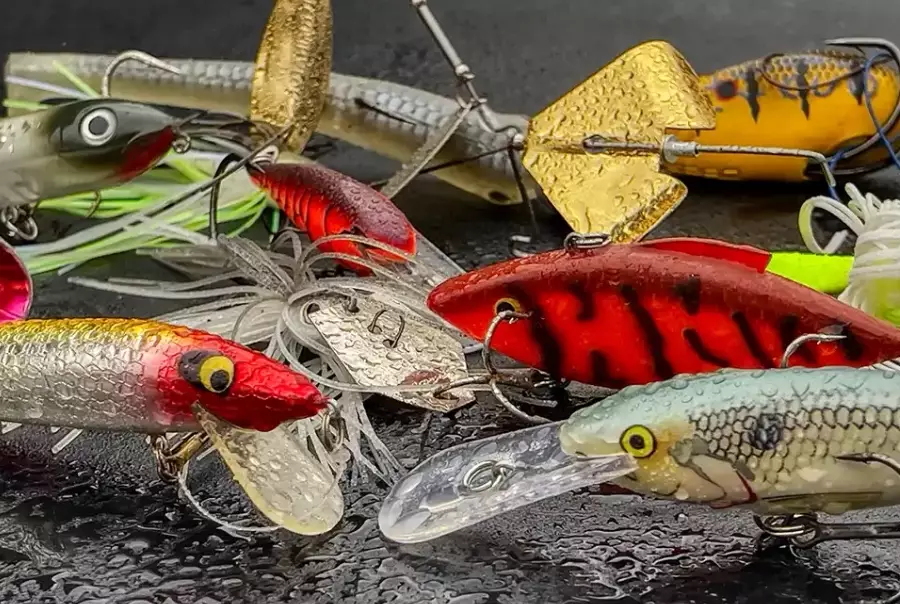
| Situation / Condition | Primary Bait Choice | Why It Works | Retrieve Style |
|---|---|---|---|
| Stained/Muddy Water | Spinnerbait (Colorado blades), Loud Crankbait, Chatterbait | Maximum vibration and flash to get noticed. | Steady, medium pace. |
| Clear Water | Finesse Worm, Jerkbait, Natural Crankbait | Subtle, natural appearance to avoid spooking fish. | Erratic pauses, slow rolls. |
| Heavy Cover (Grass, Timber) | Weedless Jig, Texas-Rig Worm, Punch Rig | Can penetrate the thick stuff without constant snags. | Hop, drag, let it fall. |
| Deep Water (>15 ft) | Carolina Rig, Deep Diving Crankbait, Drop Shot | Gets down to the fish's depth zone and stays there. | Slow drag, occasional hops. |
| Bass are Spawning | Lizard, Creature Bait, Jig | Bulky presentation triggers defensive strikes on beds. | Drag it slowly across the bed, let it sit. |
Start with the conditions, then let the fish tell you what they want. If you're not getting bites in 20-30 minutes, change something: color, retrieve speed, or switch bait types entirely.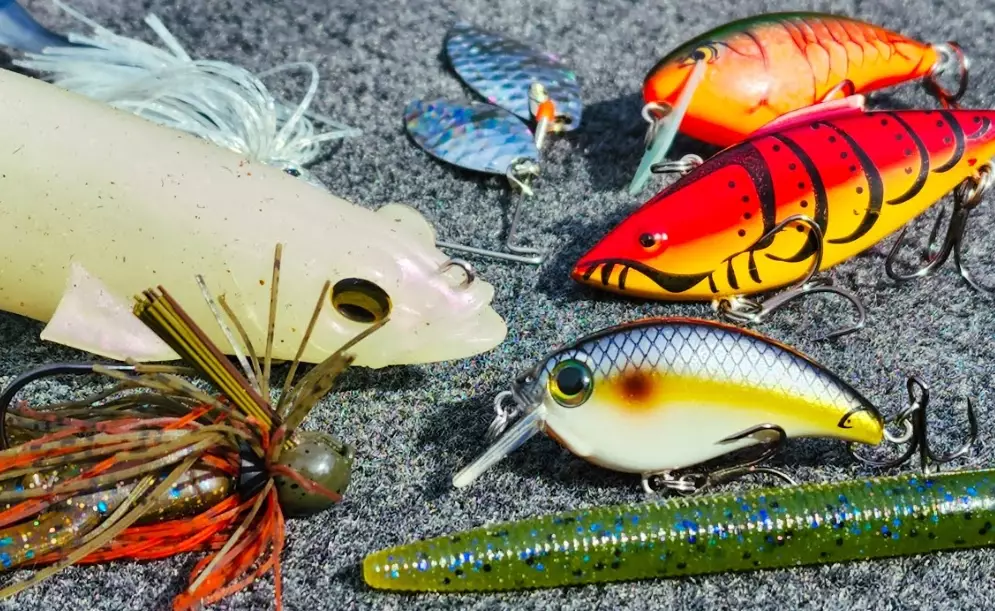
Pro Secrets & Common Mistakes You're Probably Making
After two decades on the water, you see patterns. Here are the subtle errors that separate good days from great ones.
Mistake #1: The "Confidence Lure" Rut. You love spinnerbaits, so you throw them everywhere. But in 20 feet of clear water on a calm day, a drop shot rig will out-fish it 10 to 1. Have confidence in your system of choosing, not just one lure.
Mistake #2: Ignoring Line Visibility. In that same clear water, 20-pound braid might as well be a rope. Tie on a fluorocarbon leader. It's nearly invisible underwater and has less stretch for better sensitivity. This one change can double your bite rate in tough conditions.
Secret #1: The Speed Change Bite. You're burning a crankbait back with no luck. Try this: reel fast for five cranks, then pause for a two-count. Repeat. That sudden change from fast movement to a fluttering fall triggers more strikes than a constant retrieve.
Secret #2: Color is a Fine-Tuner, Not a Magic Bullet. Don't own 50 colors of the same worm. Own five: Green Pumpkin, Black/Blue, Junebug, Watermelon, and something bright like Chartreuse. Let water clarity guide your main choice, and only switch colors if you get follows but no commits.
Fishing isn't about having the most bait. It's about having the right bait and the knowledge to use it. Build a simple, versatile kit based on the principles above, and you'll out-fish the guy with the $500 tackle box every time.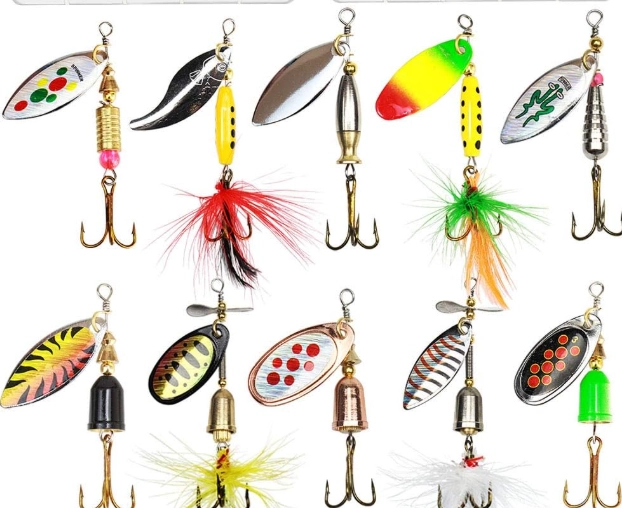
Your Bass Bait Questions, Answered
What is the best all-around bass fishing bait for beginners?
When should I use spinnerbaits vs. crankbaits for bass?
How do I choose the right color for my bass lure?
Is live bait like shiners really better than artificial lures for bass?
Reader Comments