Let's be real. Ice fishing from a bucket gets old fast. The wind bites, your toes go numb, and packing up every time you want to move is a pain. That's where the ice fishing cabin comes in. It's not just a shack; it's your command center, your warm sanctuary, and the key to turning a frigid day into a comfortable, productive fishing trip. I've spent over a decade fiddling with setups on lakes from Minnesota to Ontario, and I'm here to cut through the noise. Whether you're dreaming of building your own, looking to rent one, or just want to outfit a portable shelter like a pro, this guide has the concrete details you need.
What's Inside: Your Quick Navigation
- What is an Ice Fishing Cabin? More Than Just a Shack
- How to Build Your Own Ice Fishing Cabin (A Realistic Blueprint)
- Renting an Ice Fishing Cabin: What You Need to Know
- Essential Gear for Your Ice Fishing Cabin (The Non-Negotiables)
- Ice Fishing Cabin Safety: The Rules You Can't Ignore
- Budgeting for Your Ice Fishing Cabin: From DIY to Deluxe
What is an Ice Fishing Cabin? More Than Just a Shack
Think of it as a tiny, mobile house designed for one purpose: conquering winter fishing. It's a step (or five) above a simple windbreak. A proper cabin provides insulation, a stable floor, dedicated holes, storage, and a safe place for a heater. The spectrum is wide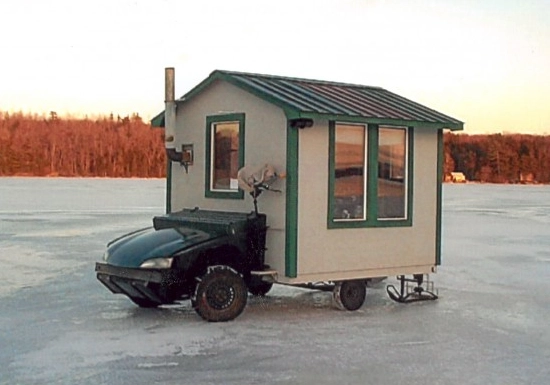
On one end, you have the portable flip-over shelter – a sled with a tent that pops up. Great for mobility, terrible for long-term comfort. Then there are hard-sided portable shelters, often on skis or a trailer, made of wood or composite materials. These are the sweet spot for many.
Finally, the permanent ice shack. This is what most folks picture: a small wooden structure you drag onto the ice, often with homemade charm (or chaos). Some are simple 4x8 boxes, others have porches, bunk beds, and satellite TV. The distinction matters because your choice dictates your mobility, cost, and legal obligations.
How to Build Your Own Ice Fishing Cabin (A Realistic Blueprint)
Building one is a rite of passage. It's also where most people make expensive, heavy mistakes. I built my first one like a garden shed – 2x4 framing, plywood siding. It weighed a ton and was a nightmare to move. Here's a smarter approach.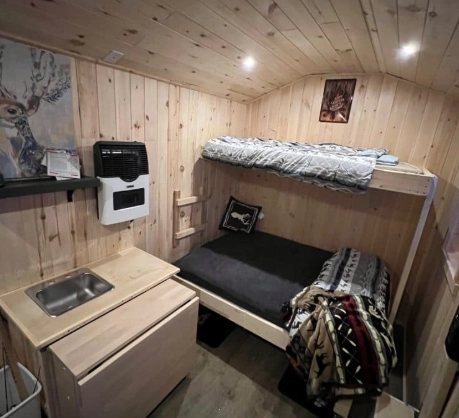
Step 1: Location and Legality (The Boring, Critical Part)
Before you buy a single 2x2, call your state's Department of Natural Resources (DNR). Ask: Do I need a permit? Are there size restrictions? What's the deadline for removal? In Wisconsin, for example, shacks must be off the ice by a specific date in March. Ignorance leads to fines. Also, scout your intended lake access. Can you get a trailer down to the shore?
Step 2: Design and Materials – Lightweight is King
Your enemy is weight. Use 2x2 or 2x3 lumber for framing instead of 2x4s. For walls, consider 1/4" or 1/2" plywood, or even lighter composite panels. Insulate with 1.5" foam board (R-value around 7.5). It's light and doesn't absorb moisture like fiberglass. For the roof, a slight pitch helps snow slide off. Use lightweight asphalt roll roofing or a tarp.
Dimensions? An 8'x8' footprint is surprisingly spacious for two anglers and gear. Anything over 10' long becomes a beast to maneuver.
Step 3: The Undercarriage and Mobility
This is the most important part. Don't just slap skis on the bottom. Build a sturdy sled-style base using 2x6 or 2x8 runners. Cover them with slippery HDPE plastic (like cutting board material) or steel strips. I've seen people use old snowmobile skis. Attach a solid tow hitch at the front. Your cabin should glide, not dig.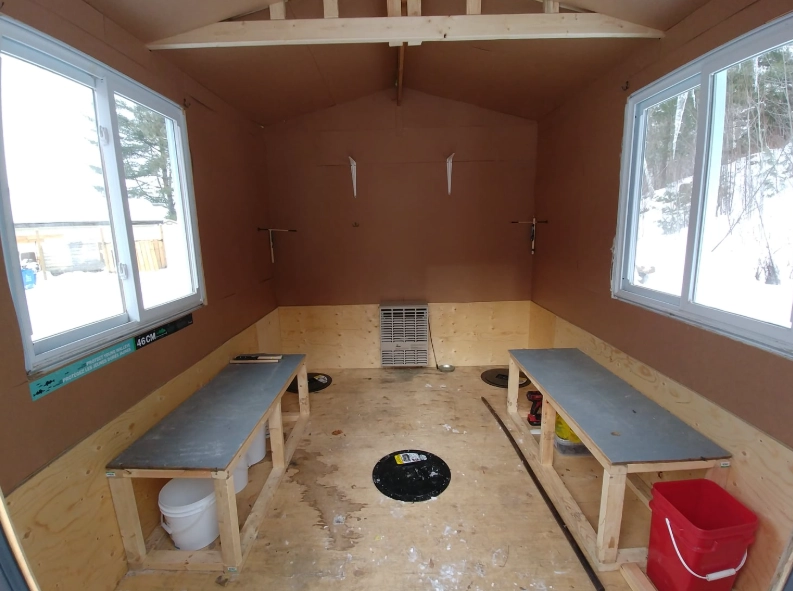
Step 4: Interior Layout – Function Over Frills
Plan your hole locations first. Two holes are standard. Build sturdy frames for them to prevent collapsing. Add a simple bench along one wall for seating and storage underneath. Install a few shelves for your flasher, bait, and snacks. Keep the floor clear of wires and clutter – it's a tripping hazard in boots. A small, removable table that hooks onto the wall is a game-changer.
Renting an Ice Fishing Cabin: What You Need to Know
Not everyone has the time or tools to build. Renting is a fantastic option, especially for a group trip. Resorts on popular ice fishing lakes often have wheeled shacks they'll place on the ice for you. Here's what to ask when you call to book.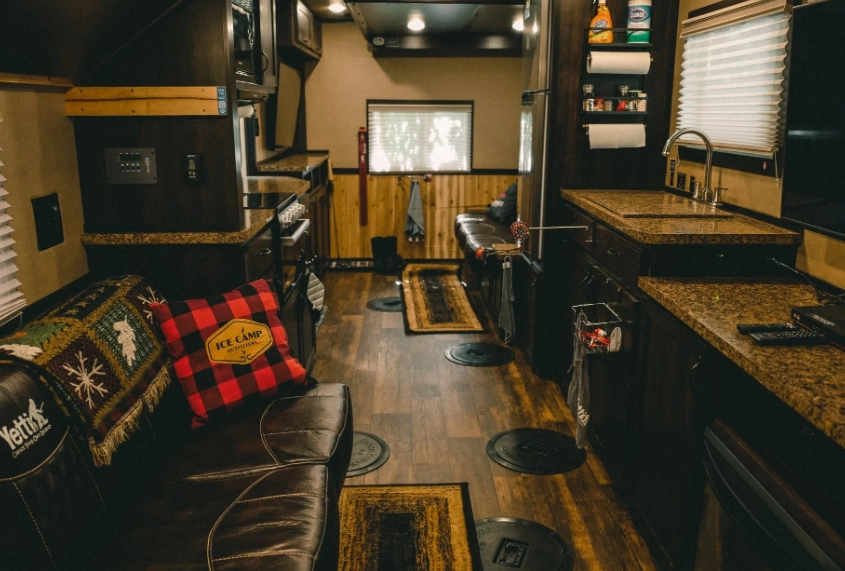
What's included? Does the rental come with holes pre-drilled? A heater? Seating? Some provide nothing but the shell, others are fully outfitted. Get a list.
Location and movement: Can you choose the spot, or do they place it? If the fishing is slow, will they move it for you (often for a fee)? This service is worth its weight in gold.
Access and amenities: How far is it from the resort parking? Is there a path plowed? Do they have a bathroom facility on shore? The last thing you want is a half-mile hike in a blizzard.
Prices vary wildly. In Minnesota's Lake Mille Lacs area, a basic rented sleeper shack for a weekend might run $150-$300 per night. On smaller lakes, a simple day shack could be $50-$80. Always book early.
Essential Gear for Your Ice Fishing Cabin (The Non-Negotiables)
Outfitting your cabin is where the fun begins. This isn't just about rods. It's about creating a system that keeps you fishing longer and more effectively.
| Category | Item | Why It's Essential & Pro Tip |
|---|---|---|
| Core Fishing Gear | Short ice fishing rods, tip-ups, sonar/flasher, jaw jackers. | Your flasher is your eyes. Mount the transducer on a dedicated arm, not just dangling in the hole. It gives a stable, clear reading. |
| Warmth & Environment | Ventilated propane heater (e.g., Mr. Heater Buddy), CO detector, foam floor tiles. | The foam tiles (like kids' play mats) are a secret weapon. They insulate your feet from the ice cold floor and keep gear from sliding. |
| Convenience & Safety | LED lanterns/rope lights, small tool kit, first-aid kit, fire extinguisher, door mat. | A door mat inside the entrance catches snow and slush. A small, dry cabin is a happy cabin. The fire extinguisher is for the unlikely but catastrophic heater flare-up. |
| Sustenance | Thermos, portable camp stove or kettle, easy snacks. | Being able to make a hot soup or coffee without leaving transforms the experience. A one-burner butane stove is perfect. |
A mistake I see? People bring a massive, noisy generator to power a tiny space heater. The noise scares fish and annoys everyone. A properly insulated cabin holds heat remarkably well with a small, quiet propane heater.
Ice Fishing Cabin Safety: The Rules You Can't Ignore
We need to talk about safety, because I've seen too many close calls. A cabin can create a false sense of security.
Carbon Monoxide (CO) is Public Enemy #1. That portable propane heater needs ventilation. Always crack a window or door, even just an inch. And you must have a battery-powered CO detector mounted at sleeping height if it's a sleeper, or just off the floor for a day shack. Check the batteries every trip. The U.S. Consumer Product Safety Commission has reports of fatalities from unvented heaters in ice shacks. It's not a joke.
Ice Conditions Trump Everything. Your beautiful cabin is worthless if the ice under it is 3 inches thick. No cabin is worth falling through for. Check local reports, talk to bait shops, and use a spud bar to test as you go out. Early and late season are the most dangerous.
Fire. Keep flammable materials (paper towels, spare propane tanks) away from the heater. Have that fire extinguisher mounted by the door.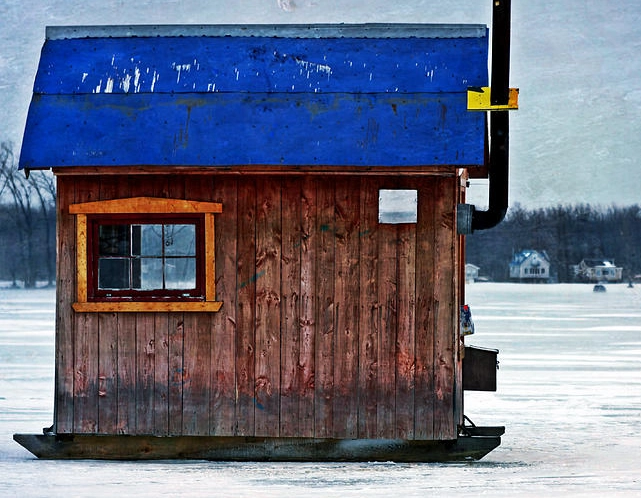
Budgeting for Your Ice Fishing Cabin: From DIY to Deluxe
Let's talk numbers, because sticker shock is real.
DIY Permanent Shack (8'x8'): If you're scrappy and have some tools, you can build a basic, functional model for $800 - $1,500. This includes lumber, insulation, roofing, hardware, and a basic heater. The cost balloons if you add windows, bunks, or fancy siding.
New Portable Hard-side Shelter: A well-insulated 4-person model from a brand like Otter or Eskimo will run $2,000 - $4,000. It's a turn-key solution with great resale value.
Renting: As mentioned, $50 - $300+ per night, depending on size and amenities. For a once-a-year trip, this is often the most economical choice.
My advice? Start with a rented shack or a used portable. See what features you actually use. Do you care about standing height? Do you need room for four people, or is it usually just you and a buddy? Then invest accordingly. The goal is more time on the ice, comfortably, not building a palace.
Reader Comments