Let's cut through the noise. You're here because you want to catch catfish, not just any catfish, but more of them and hopefully a few real lunkers. I've spent over a decade on rivers, lakes, and muddy backwaters, and I can tell you most generic advice misses the mark. Success in catfishing isn't about luck; it's about understanding a fundamentally different predator and tailoring your approach. This isn't a list of obvious tips. It's a system built on observation, a few hard lessons, and tactics that consistently put fish in the cooler.
Quick Navigation: Your Catfish Playbook
- Forget the Fancy Stuff: A No-Nonsense Gear Breakdown
- How to Find Catfish: Reading the Water Like a Pro
- What Are the Best Catfish Baits? (It's Not Just Stink Bait)
- Master Two Essential Rigs: The Slip Sinker and the Santee Cooper
- Seasonal Catfish Tactics: Adjusting Your Game Plan
- Expert Catfish FAQ: Your Burning Questions Answered
Forget the Fancy Stuff: A No-Nonsense Gear Breakdown
You don't need a $500 rod to catch a 50-pound blue cat. But you do need gear that won't fail. The biggest mistake I see? Anglers using bass tackle. Catfish fight dirty—they head for snags and use pure weight. Your gear must withstand that.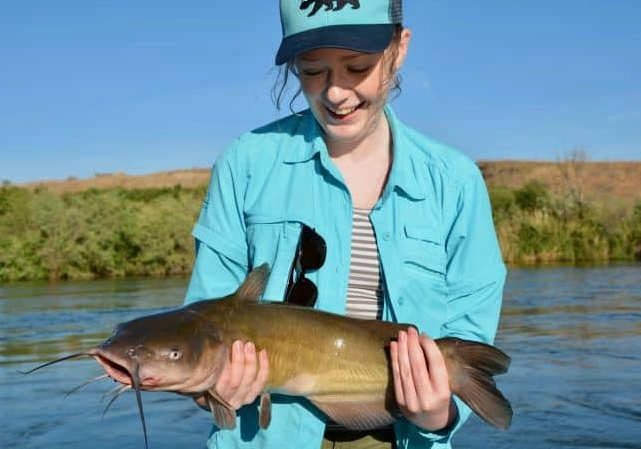
The Rod and Reel Combo That Won't Let You Down
For all-around bank fishing or boat fishing for channels and smaller blues, a 7 to 8-foot medium-heavy rod is perfect. Pair it with a 4000-5000 size spinning reel or a low-profile baitcaster if you prefer. Spool it with 20-30 pound braided line. Braid has no stretch, so you feel every tap and can set the hook powerfully even at long distances. Its thin diameter also cuts through current better.
For targeting big blues and flatheads, especially from a boat where you're fishing heavy weights near structure, step up to a 7.5-8.5 foot heavy or extra-heavy rod and a large round baitcasting reel (like an Abu Garcia 7000 series). Fill it with 50-80 pound braid. This isn't overkill; it's the tool for the job.
Terminal Tackle: Hooks, Sinkers, and Leaders
This is where fights are won or lost before they even start.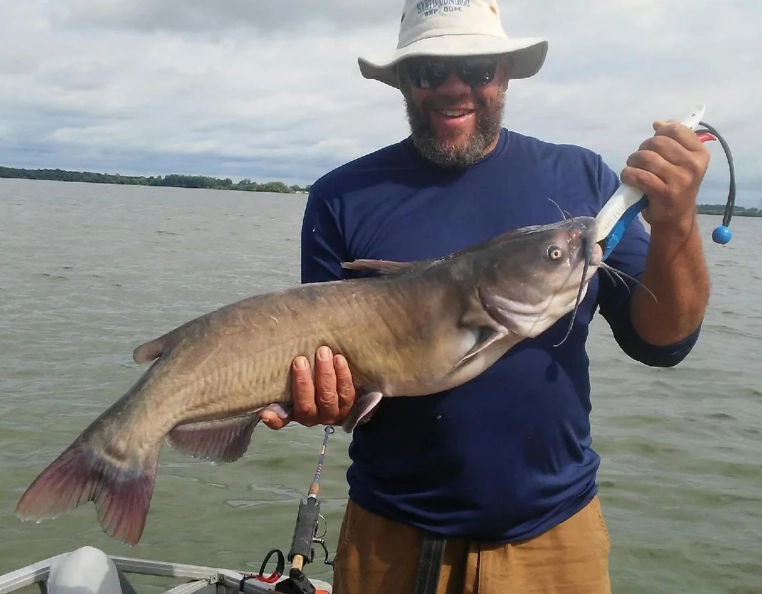
| Item | Recommended Specs | Why It Matters |
|---|---|---|
| Hooks | Circle Hooks: Size 2/0 to 8/0 (Kahle or Octopus styles good too) | Circle hooks self-set in the corner of the mouth, causing less harm and increasing survival for catch-and-release. You simply reel, don't jerk. |
| Leader Line | 15-40 lb Fluorocarbon or Mono | More abrasion-resistant than braid against rough mouths and structure. Slightly lighter than main line so it breaks first, saving your rig. |
| Sinkers | Egg, No-Roll, or Bank Sinkers (1-6 oz) | Holds bottom in current. Heavier isn't always better—use just enough to stay put. No-roll sinkers excel on rocky bottoms. |
| Swivels | High-Quality Barrel Swivels (size 3-5) | Prevents line twist from live bait or current. A cheap swivel will fail. Don't skimp here. |
How to Find Catfish: Reading the Water Like a Pro
Catfish aren't randomly cruising open water. They're lazy opportunists. They set up in ambush points where current brings food to them, or in areas rich with natural forage. Think like a catfish: where can I sit and expend minimal energy while dinner floats by?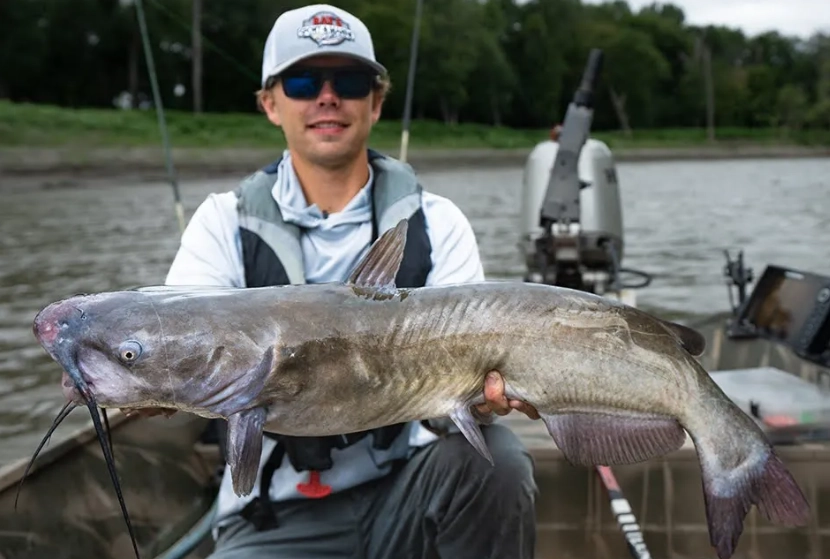
- River and Creek Mouths: Where a tributary meets a larger river or lake. Oxygen levels are higher, and baitfish get funneled through. Catfish stack up here.
- Outside River Bends: The current scours out a deeper hole on the outside of a bend. Catfish, especially big ones, hold in this deeper, slower water right on the edge of the main current lane.
- Current Breaks: Anything that interrupts the flow—wing dams, bridge pilings, fallen trees, rock piles. The slack water directly downstream is a prime feeding lane. I've caught dozens of cats in the tiny calm eddy behind a single large rock.
- Deep Holes and Ledges: In lakes or slow rivers, summer heat drives cats deep during the day. Use a fish finder or depth map to locate sharp drop-offs, old creek channels, or deep basins. They'll move up onto adjacent flats to feed at night.
- Shallow Flats at Night: Don't ignore 2-4 feet of water after dark, especially near a spawning area or a weed line. Flatheads and big blues will move incredibly shallow to hunt. I once landed a 35-pound flathead in water so shallow its back was out of the water when it first struck.
What Are the Best Catfish Baits? (It's Not Just Stink Bait)
Bait choice depends entirely on the species and conditions. Stink bait from a jar has its place, but it's often the least effective option for larger fish.
Live Bait: The Flathead Killer
For flathead catfish, it's non-negotiable. They are voracious predators. A live bluegill, green sunfish, or small carp (6-10 inches) is the ultimate offering. Hook it through the back just below the dorsal fin so it can swim naturally. Fish it right in or near heavy cover—sunken logs, rock piles, deep brush. The struggle of the baitfish is like a dinner bell.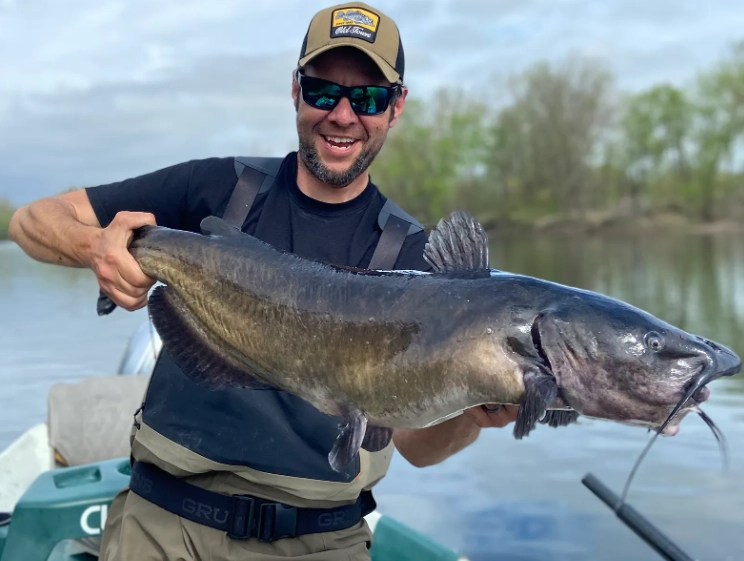
Cut Bait: The Blue Catfish Magnet
Blue catfish, especially larger ones, are scent-driven scavengers and predators. Fresh cut bait from a baitfish like shad, skipjack herring, or even a chunk of carp is unbeatable. The bloody, oily scent trail pulls them in from far away. Use a fillet section or the head (which holds together well). This is also deadly for big channel cats.
Prepared & "Dip" Baits: For Channel Cats in Crowds
When targeting numbers of eating-sized channel catfish (1-5 lbs), prepared baits like punch bait, dip bait on a sponge or tube, or even good old nightcrawlers and chicken liver (use a mesh bag to keep it on the hook) can be incredibly effective. They create a strong scent cloud. This is the scenario where a Santee Cooper rig (which we'll cover next) shines.
Master Two Essential Rigs: The Slip Sinker and the Santee Cooper
You only need to master two rigs to catch catfish anywhere.
1. The Slip Sinker Rig (Carolina Rig)
This is the workhorse. It's simple, effective, and allows a catfish to pick up the bait and run without feeling resistance.
How to tie it: Thread your main line through an egg or bullet sinker. Tie on a barrel swivel. To the other end of the swivel, tie a 12-36 inch leader of fluorocarbon/mono. Tie your hook to the end of the leader.
When to use it: Almost always. It's perfect for bottom fishing in current, on sandy or muddy bottoms, and with live or cut bait. The fish feels only the weight of the bait, not the sinker.
2. The Santee Cooper Rig (Float Rig)
This rig suspends your bait off the bottom, keeping it visible and out of bottom debris. It's a killer in still water or around vegetation.
How to tie it: On your main line, slide a bobber stop, then a bead, then a large slip bobber (like a peacock style). Tie on a barrel swivel. Add a leader (2-4 feet) and your hook. Set the bobber stop so your bait hangs at the desired depth.
When to use it: In lakes, ponds, or slow rivers. Over weed beds, near standing timber, or when fish are suspended. Excellent for dip baits or live bait when you want it hovering just above the bottom.
Seasonal Catfish Tactics: Adjusting Your Game Plan
Catfish behavior changes with water temperature. A one-size-fits-all approach fails.
Spring (Pre-Spawn): As water warms into the 50s and 60s (F), catfish become ravenous. They're moving from deep winter holes toward shallow, protected bays and tributaries to spawn. Fish shallow (3-8 feet) near potential spawning areas—clay banks, undercut roots, hollow logs. Live bait and cut bait work great.
Summer: The dog days see a split. During bright daylight, target deep holes, ledges, and cool water near dams or spring inflows. At night, they move shallow to feed aggressively. Night fishing is peak time for big fish. Use strong-smelling baits and focus on flats adjacent to deep water.
Fall: Similar to spring, as water cools, feeding activity spikes. They're bulking up for winter. Follow the baitfish. As shad move into creeks and coves, the catfish will be right behind them. Cover water with moving baits like a jig-and-minnow combo or drift cut bait.
Winter: It's not impossible. Catfish slow down but still feed. You must go to them. Fish the absolute deepest, slowest holes in the system with small, pungent baits (like a chunk of cut shad or a gob of worms). Be patient; bites will be very subtle.
Expert Catfish FAQ: Your Burning Questions Answered
Remember, catfishing is about patience and positioning more than fancy tricks. Get your gear right, put a good bait in the right spot, and be ready for that slow, heavy pull. That's the magic. Now get out there and bend your rod.
Reader Comments