Let's cut through the noise. A catfish fishing setup isn't about buying the most expensive rod or the trendiest lure. It's about matching durable, simple gear to the specific behavior of a bottom-feeding powerhouse. I've watched too many anglers lose fish because their "all-purpose" trout rod snapped or their fancy knot failed. This guide is built on catching fish, not just listing specs.
Your Quick Guide to Catfish Gear
The Core Gear Breakdown: Rod, Reel, Line, and Terminal
Think of this as your foundation. Get this wrong, and everything else is a struggle.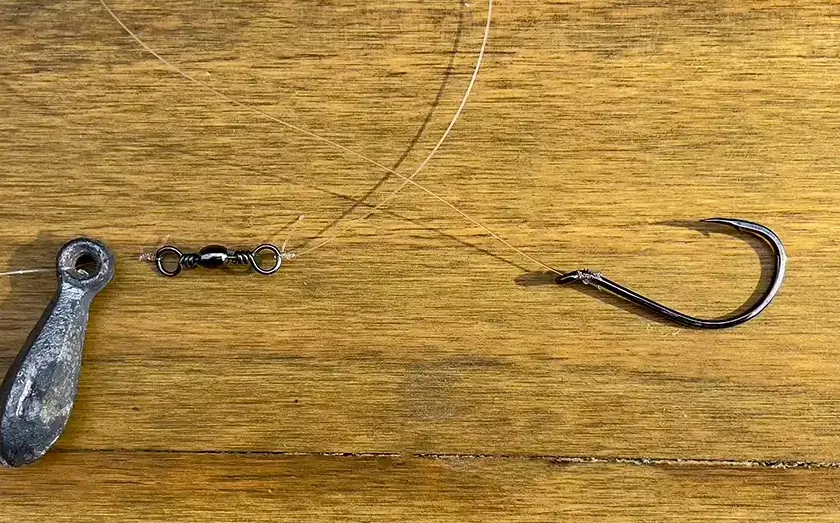
The Rod: It's All About Backbone
Forget ultra-fast actions and sensitive tips for detecting subtle bites. A catfish rod needs power—specifically, backbone in the lower two-thirds of the blank to lift a heavy fish from structure. A moderate or moderate-fast action is perfect; it loads up smoothly under pressure, acting as a shock absorber against headshakes.
Length? For shore fishing, 7 to 9 feet gives you better casting distance and leverage. In a boat, 6.5 to 7.5 feet is more manageable. I personally lean towards a 7'6" medium-heavy Ugly Stik Catfish rod for 90% of my fishing. It's not fancy, but it's nearly indestructible and has the perfect parabolic bend for big blues.
The Reel: Simplicity and Muscle
Two main choices here, and it's a matter of preference.
Spinning Reels: The go-to for most. Look for a size 4000 to 6000. Key features are a strong drag system (smooth washers, not cheap felt) and a high gear ratio (5.8:1 or higher) to pick up line quickly when a fish runs toward you. The Penn Pursuit IV or Battle series are workhorses.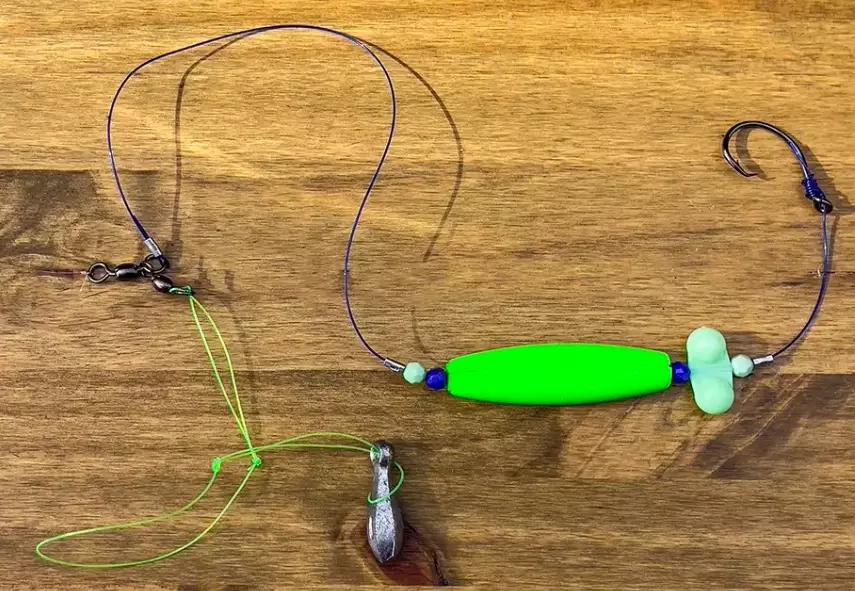
Baitcasting Reels: Preferred for heavy-duty applications like punching big baits into current. A low-profile baitcaster with a flipping switch is fantastic for stationary fishing. They offer more cranking power and direct feel. The Abu Garcia Ambassadeur C3/C4 is a classic for a reason.
The biggest mistake I see? Using a reel that's too small. A 2500-size reel might hold enough 10 lb line for bass, but its drag and gears will scream under the load of a 20 lb catfish.
Line, Hooks, and Sinkers: The Unsung Heroes
| Component | Type & Why | Recommended Specs |
|---|---|---|
| Fishing Line | Monofilament is the classic choice. It's cheap, has stretch (good for shock absorption), and is easy to handle. Braid is great for sensitivity and zero stretch, but you MUST use a long fluorocarbon leader to avoid abrasion and because catfish can be line-shy in clear water. | Mono: 15-30 lb test (20 lb is a sweet spot). Braid: 30-50 lb with a 20-40 lb fluoro leader (3-5 feet). |
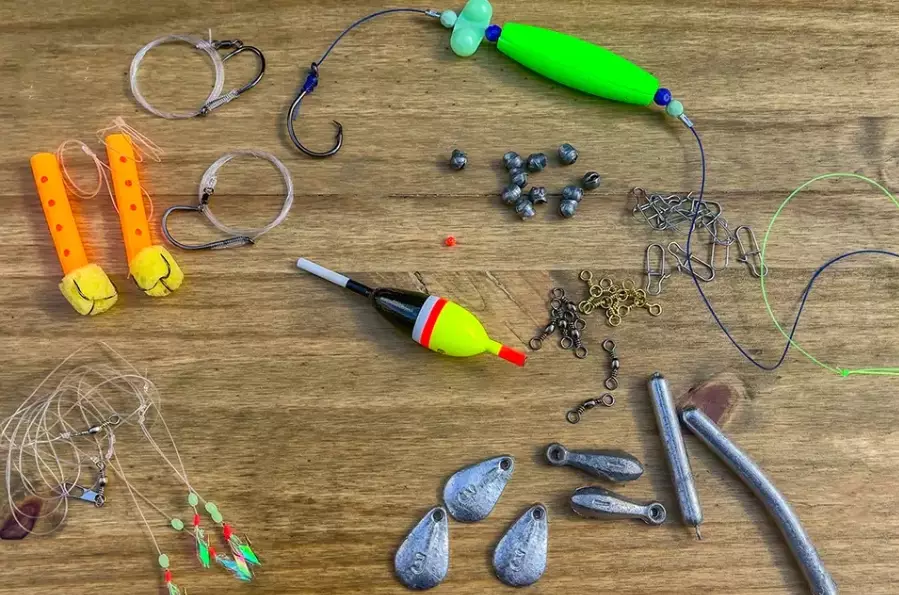
| Hooks | Circle Hooks are the game-changer. They almost always hook the fish in the corner of the jaw, leading to better holds and healthier release. J-Hooks (like Kahle or Octopus) are still useful for live bait where you need to set the hook immediately. | Circle Hooks: 5/0 to 8/0 for channels & blues. 8/0 to 12/0+ for flatheads. J-Hooks: 3/0 to 7/0. Always sharp, always chemically sharpened. |
| Sinkers | You need weight to hold bottom. Egg Sinkers (for slip rigs) and Bank Sinkers (for fixed rigs) are staples. In heavy current, use a No-Roll or Pyramid sinker. | 1/2 oz to 3 oz for calm water/light current. 3 oz to 8 oz for rivers and strong wind. Don't be shy with weight. |
The Rigs That Actually Catch Fish
These aren't just diagrams in a book. These are the three rigs I have tied and ready on every trip.
1. The Slip-Sinker Rig (The Carolina Rig)
This is your bread and butter. A sinker slides freely on your main line, followed by a bead (to protect the knot), a swivel, and then a leader to your hook. Why is it so good? A catfish can pick up the bait and run with it without feeling the weight of the sinker. You see your rod tip bounce, then steadily pull down. That's your signal.
I use this 80% of the time in lakes and slow rivers. Leader length matters: 12-18 inches for cleaner bottoms, up to 36 inches for weedy or rocky areas to keep the bait above the snags.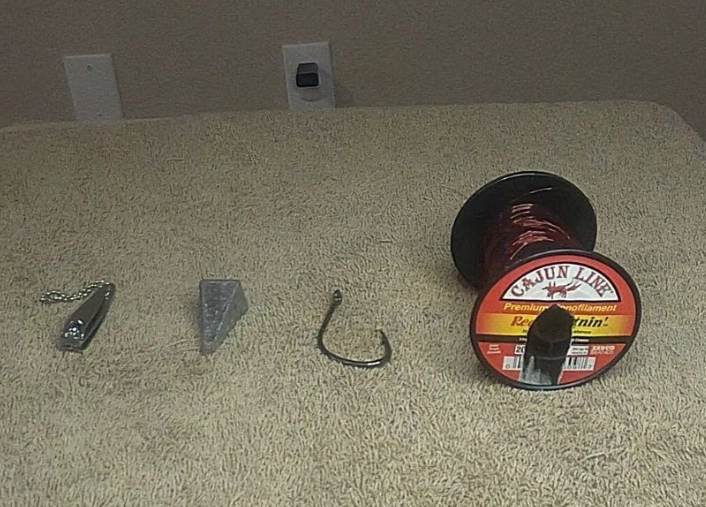
2. The Santee Cooper Rig
This is a brilliant adaptation for suspended catfish, especially in Southern reservoirs. It's essentially a three-way swivel rig. One eye connects to your main line, one to a short drop line with a heavy sinker, and one to a longer leader (3-6 feet) with a float positioned about a foot above the hook. The float suspends your stink bait or cut bait off the bottom, right in the strike zone for fish cruising 5-10 feet down.
It looks complicated but is deadly effective when fish aren't on the bottom. The setup info from the South Carolina DNR on reservoir catfish behavior confirms why this rig works so well.
3. The Simple Three-Way Swivel Rig
For fishing in heavy current—think main river channels—this is your rig. The three-way swivel lets you use a very heavy sinker on a short drop line (6-12 inches) to anchor, while your bait swims naturally on a longer leader (2-4 feet) in the current. The bait swings enticingly in the flow.
The key is using enough sinker weight. If your rig is slowly dragging, go heavier. A 4 oz no-roll sinker is not uncommon in the Mississippi.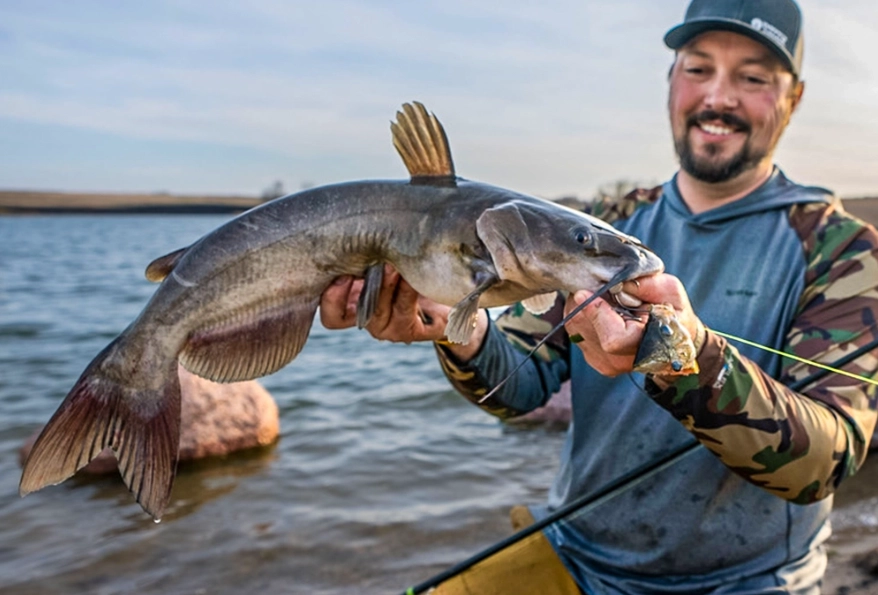
The Bait Connection: What to Put on the Hook
Your perfect rig is useless with the wrong bait. Match the bait to the species and conditions.
Channel Catfish: They're the garbage disposals. Prepared stink baits (like Sonny's or Magic Bait) on a treble hook with a sponge work wonders. So do cut bait (shad, skipjack herring) and nightcrawlers. In summer, a chunk of hot dog soaked in strawberry Kool-Aid can be bizarrely effective.
Blue Catfish: Primarily fish eaters. Fresh cut bait is king. A 2-inch cube of gizzard shad or bluegill fillet on a 7/0 circle hook is hard to beat. The oil and scent trail it creates is irresistible.
Flathead Catfish: They want live meals almost exclusively. A lively sunfish, bullhead, or small carp (4-10 inches) hooked through the back or lips is the ticket. Use a heavier setup here—these are ambush predators that live in the nastiest snags.
Pro Moves & Common Blunders
Here's where that "10 years of experience" part comes in. The subtle stuff they don't put on the packaging.
Rod Holder Setup: Don't just jam your rod in a holder and walk away. Point the rod tip directly at the water, not up at a 45-degree angle. This gives you a better hookset and reduces leverage on the rod if a big fish hits. Keep the reel's drag slightly loose but engaged.
The Feel of the Bite: With a slip-sinker rig, don't set the hook at the first little tap. That's a catfish mouthing the bait. Wait for the rod to load up steadily. With a circle hook, you don't "set" it at all. Just start reeling when the rod is bent. The hook will do its job.
Biggest Blunder I See: Anglers using gear that's too light because they think it's more "sporting." A 10 lb test line on a medium-power rod might land a 15 lb catfish on a lucky day, but you'll be fighting that fish to exhaustion, greatly reducing its chance of survival if released. Use gear that lets you control the fight and bring the fish in efficiently. That's more ethical and successful.
My personal rule? If I'm targeting cats over 10 lbs, my leader is at least 20 lb test. No exceptions.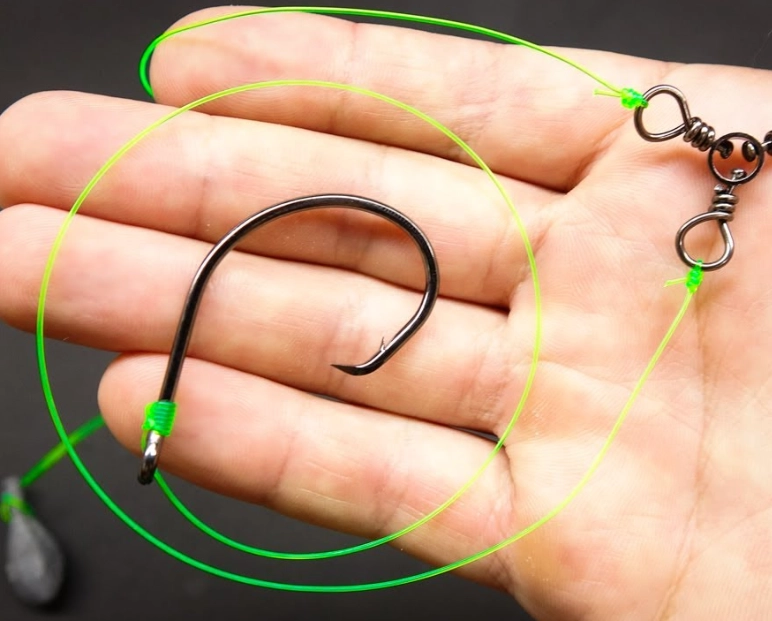
Reader Comments