Baitcasting Reels: The Ultimate Guide to Choosing & Using One
Confused about baitcasting reels? This complete guide breaks down how they work, who they're for, and how to pick the perfect one. Learn about gear ratios, braking systems, and master techniques to avoid frustrating backlashes.
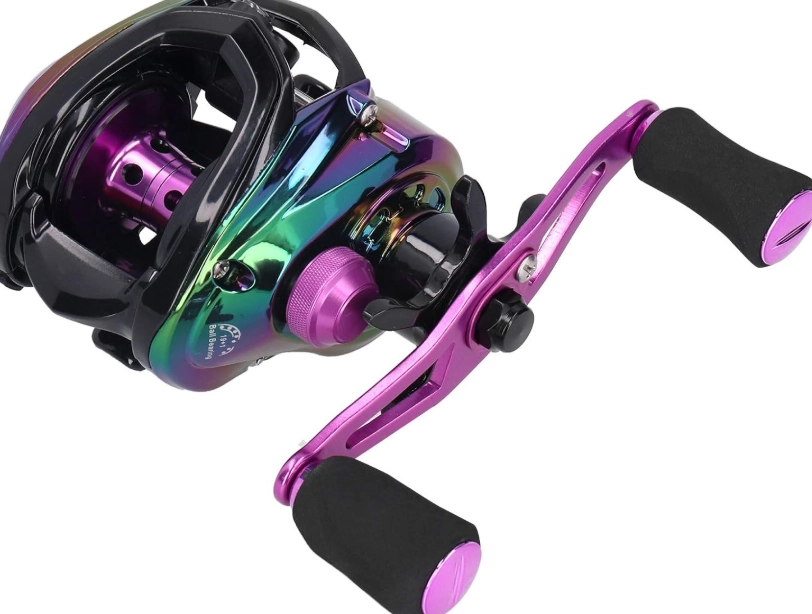
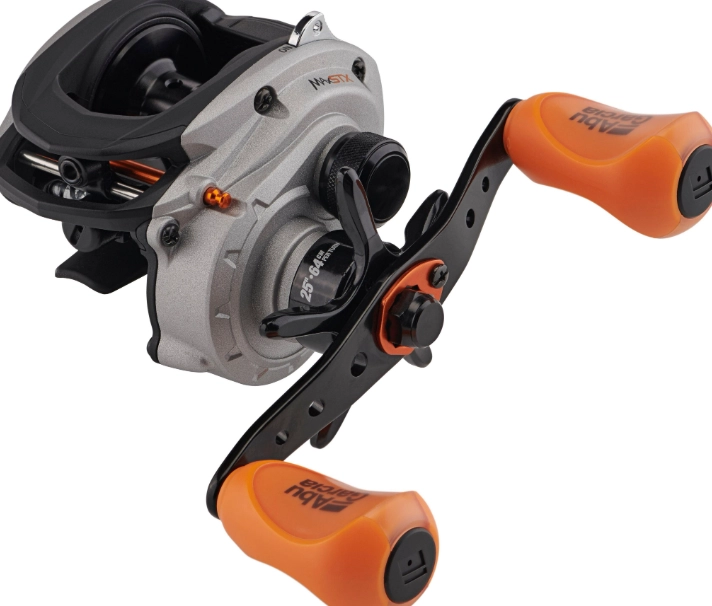
Let's talk about baitcasting reels. You've probably seen them on the rods of anglers catching big bass or musky, looking all sleek and low-profile. Maybe you've thought about trying one yourself, but then you hear horror stories about "backlashes" and "bird's nests" that sound like a nightmare to untangle. I was there too. My first attempt with a baitcaster ended with me spending more time picking out line than actually fishing. It was frustrating, to say the least. But here's the thing—once you get past that initial learning curve, a good baitcasting reel unlocks a level of precision and power that spinning gear just can't match. It's not just for pros. With the right information and a bit of practice, any dedicated angler can master it. This guide is here to cut through the confusion. We're not just listing specs; we're going to walk through what a baitcasting reel actually does, who it's really for, how to pick one that won't fight you, and most importantly, how to use it without wanting to throw it in the lake. The Core Idea: A baitcasting reel sits on top of the rod. You control the spool's rotation with your thumb during the cast. This direct control is what gives you incredible accuracy and power, but it's also what causes trouble if the spool spins faster than the line flies off. This is the first big decision. It's not about which is "better," but which is better for you and your fishing. I made the mistake of buying a baitcaster for finesse fishing with light lures because it looked cool. Bad move. Let's break it down so you don't do the same. Spinning reels are fantastic. They're intuitive, great for lighter lines and lures, and much more forgiving. The line flows off a fixed spool with minimal friction. You can pretty much just whip it and go. A baitcasting reel, on the other hand, requires you to be the brake. You're managing the spool's inertia. It demands more from the angler, but pays you back with more control. So, who wins? If you're primarily fishing for bass, pike, musky, or in saltwater with heavier gear, and you want to place lures under docks or next to stumps with surgeon-like precision, a baitcasting setup is your tool. If you're throwing weightless worms, small crankbaits, or just starting out and want to focus on catching fish rather than fighting your reel, stick with spinning for now. Many serious anglers, myself included, carry both types on the boat for different jobs. My Early Mistake: I ignored the lure weight rating on my first baitcaster. I tried casting a tiny jerkbait, and it was an instant, irredeemable bird's nest. The reel simply couldn't handle the lack of weight to pull line off against the spool's inertia. Check the specs! Walk into a tackle shop or browse online, and you're hit with a wall of numbers and marketing terms: gear ratios, braking systems, bearing counts, high-speed this, low-profile that. It's overwhelming. Forget trying to absorb it all at once. Focus on these five core aspects, in this order. This is the most critical feature for a new user. The brakes slow the spool down as you cast to prevent it from over-spinning and creating that dreaded tangle. There are two main types, and most modern reels use a combination. Centrifugal Brakes: These are little brake blocks or pins inside the side plate that fly outward due to centrifugal force as the spool spins, creating friction. You engage or disengage individual pins (usually 4 or 6) to adjust the braking force. They're great for the initial part of the cast and are generally very consistent. The downside? You have to take the side plate off to adjust them. Some reels have an external dial that engages more or fewer pins, which is a nice hybrid solution. Magnetic Brakes: These use a dial on the outside of the reel to move magnets closer to or farther from the spool (which is often made of a conductive metal). The closer they are, the stronger the magnetic field that slows the spool. The huge advantage is that you can adjust this on the fly, even between casts. They're fantastic for dealing with changing conditions, like wind. My advice? For your first serious baitcasting reel, look for a model with a dual braking system—both centrifugal and magnetic. This gives you a huge range of adjustability. You can set the centrifugal brakes for the core spool speed based on your lure weight, and then use the external magnetic dial as a fine-tuner for wind or if you switch to a slightly different lure. It's a confidence booster. This number, like 6.3:1 or 8.1:1, tells you how many times the spool rotates for each full turn of the handle. A higher ratio means a faster retrieve. Don't get obsessed with the absolute highest number. A 7.5:1 reel is incredibly versatile. I have a 8.1:1 reel specifically for frogging and flipping, but my go-to all-day reel is a 7.3:1. This affects how easy it is to start and stop the spool. A lighter spool requires less energy to start spinning (easier casting with lighter lures) but is also easier to stop (more prone to overrun if brakes aren't set right). A heavier spool has more inertia, which can be more stable for heavier lures. Most reels today use aluminum spools. Higher-end models might use carbon fiber or hybrid materials to cut weight dramatically. For your first reel, a standard aluminum spool is perfectly fine. Just be aware that a reel marketed for "light lures" will likely have a very lightweight spool, which is more sensitive but also more demanding of your thumb control. This is about durability and weight. Reels with frames made of aluminum or magnesium are stronger, more rigid, and better at dissipating heat from the drag during a long fight. They're also lighter. Reels with graphite composite frames are more affordable and corrosion-resistant but can flex more under heavy load. If you're fishing freshwater for bass and treating your gear well, a graphite frame is okay. If you're going after big pike, musky, or fishing in saltwater, or if you just want a reel that feels solid and will last for years, invest in a metal-frame model. The difference in feel is noticeable. You'll see reels advertised with "11+1 Stainless Steel Bearings!" It sounds impressive. Bearings reduce friction and make the retrieve smoother. More bearings can mean a smoother reel, but it's not a guarantee. The quality, placement, and sealing of those bearings matter far more than the raw count. A well-made reel with 5 or 6 quality bearings will feel infinitely better than a cheap reel with 10 poorly shielded ones that grind after a season. Look for reels that specify "stainless steel" or "corrosion-resistant" bearings, especially if you fish near saltwater. A bearing on the handle knob is really nice for comfort. Don't let a high bearing count alone convince you to buy a reel. Focus on the braking system and gear ratio first. Pro Tip: When researching, visit the manufacturer's official website for detailed specs. For example, checking Shimano's site or Abu Garcia's site gives you the most accurate information on their braking systems and spool technology, straight from the source. The market is dominated by a few key players, each with a reputation. Here's a no-nonsense look at what they're known for, from the budget-conscious to the no-expense-spared. Shimano: The engineering leader. They practically invented modern baitcasting technology with the Curado (a legendary model) and their proprietary SVS Infinity braking. Their reels are known for incredible refinement, smoothness, and durability. You pay for it, but even their mid-range reels feel high-end. The SLX is a fantastic entry point, the Curado is the workhorse king, and the Metanium is their top-tier marvel. Daiwa: The innovation contender. Daiwa is famous for its magnetic braking systems (Magforce, SV, T-Wing). Their reels often feature unique designs, like the T-Wing line guide that reduces friction on the cast. They feel a bit different than Shimano—some say more "free" on the cast. The Tatula series is wildly popular for its durability and performance at its price point. The Steez is their ultra-premium, featherweight flagship. Abu Garcia: The heritage brand. They make the famous round-style reels (like the Ambassadeur) that are tanks for big game fishing, but their low-profile reels (Revo series) are serious competitors. They offer great value and are known for solid, reliable performance. A great brand to look at if you want proven tech without the top-tier price tag. 13 Fishing: The modern disruptor. They use lots of carbon fiber and ceramic components to make reels extremely light. Their aesthetics are bold. They appeal to anglers who want the latest tech and a lightweight feel above all else. Lew's: The American favorite. Designed by tournament fishermen, Lew's reels are known for being user-friendly, featuring great out-of-the-box settings, and offering tremendous performance for the money. The Speed Spool is a classic model name for a reason. My personal quiver has a Shimano for all-around duty, a Daiwa for specific techniques where I love its casting feel, and an old Abu Garcia that just won't die. Don't feel like you have to pledge loyalty to one brand. You've got the reel. Now let's get it on the rod and fishing without the tears. This process is non-negotiable for success. Find the knob on the side of the reel, opposite the handle. It usually has little clicks. Tie your lure on, and let out about a foot of line. Hold the rod parallel to the ground. Press the thumb bar to disengage the spool. The lure should fall slowly to the ground. If it doesn't fall, loosen the spool tension knob (turn it counter-clockwise). If it drops like a rock, tighten it (clockwise). You want the lure to fall steadily and the spool to stop spinning the instant the lure hits the ground. This is your baseline setting. Start with your brakes on a higher setting. If it's a magnetic dial, turn it to 7 or 8 out of 10. If it's centrifugal with external pins, engage all of them. This is your safety net. You will dial them back as you get more confident. Don't try to cast to the horizon. Start with short, easy casts at a target 20-30 feet away. The spool should stop the moment the lure hits the water. If you get a small overrun (a few loose loops), you can often pick them out easily. If you get a full-blown backlash, don't panic. Pinch the line above the tangle and pull. Sometimes it pops free. If not, you'll need to patiently pick at the loops. It happens to everyone. Once you're making clean casts consistently, start to lower your brake settings one click at a time. Also, try loosening the spool tension knob a tiny bit. The goal is to find the lowest braking setting where you can still control the spool comfortably with your thumb. This maximizes casting distance. Your thumb is the ultimate brake. #1 User Mistake: Setting the brakes too low, too fast, because you want more distance. This guarantees a backlash. Be patient. Increase the brakes for heavier lures/wind, decrease them for lighter lures/calm conditions. A little care goes a long way. After every trip, especially in saltwater or muddy water, wipe the reel down with a damp cloth. A very light spray of reel cleaner or corrosion inhibitor (like WD-40 Specialist Corrosion Inhibitor) on the exterior helps. Once a season, or if the reel starts to feel gritty or noisy, it's time for a deeper clean. You don't need to be a watchmaker. For most anglers, this means: If that sounds daunting, many tackle shops offer reel cleaning services for a reasonable fee. It's worth it to protect a $150+ investment. The Take Me Fishing resource site, supported by the Recreational Boating & Fishing Foundation, has general gear care tips that emphasize the importance of maintenance for longevity. The bottom line? Don't be intimidated by baitcasting reels. View the learning process as part of the sport. Start with a reel designed to be user-friendly, set it up correctly, practice in your yard with a weight, and be patient with your thumb. The moment you pitch a jig perfectly into a coffee-can-sized opening in the lily pads, or winch a big bass out of a brush pile, you'll understand why so many anglers make the switch. That level of control and connection to your cast is what makes mastering the baitcasting reel so rewarding.Quick Guide
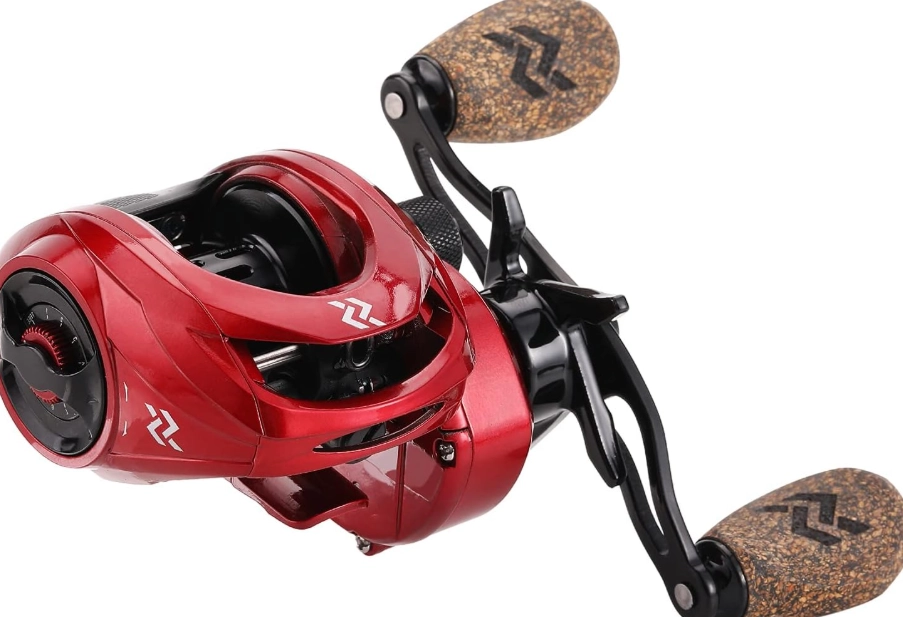
Baitcasting Reel vs. Spinning Reel: Which One Is Actually For You?
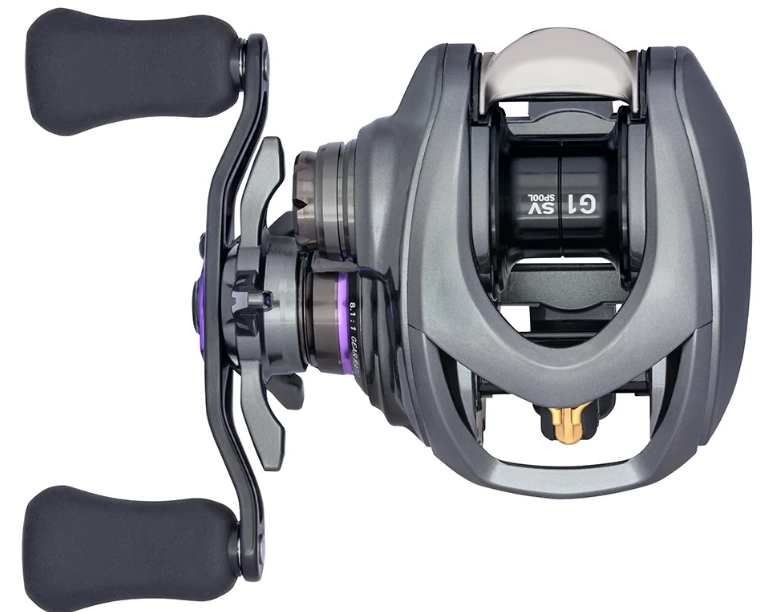
Feature
Baitcasting Reel
Spinning Reel
Best For
Heavier lures (1/4 oz and up), precision casting, power fishing (pitching, flipping, heavy cover), using braided line effectively.
Lighter lures (under 1/4 oz), finesse techniques, beginners, situations where backlash risk is high (windy days).
Control & Accuracy
Superior. Thumb-on-spool control allows for last-second adjustments, pinpoint pitching, and feathering the line onto a target.
Good, but less direct. You stop the line with your finger, but fine adjustments are harder.
Learning Curve
Steep. Requires practice to manage spool tension and brakes to avoid backlashes.
Gentle. Much easier to pick up and cast without major tangles.
Power & Retrieval
Higher gear power, stronger drag systems, better for horsing fish out of thick cover. The reel sits in-line with the rod for direct power transfer.
Good power, but the off-axis design can create more torque on the rod during a hard fight.
Line Twist
Virtually none. The line comes off the spool in a straight line.
Can be an issue, especially if the bail isn't closed manually or the spool is overfilled.
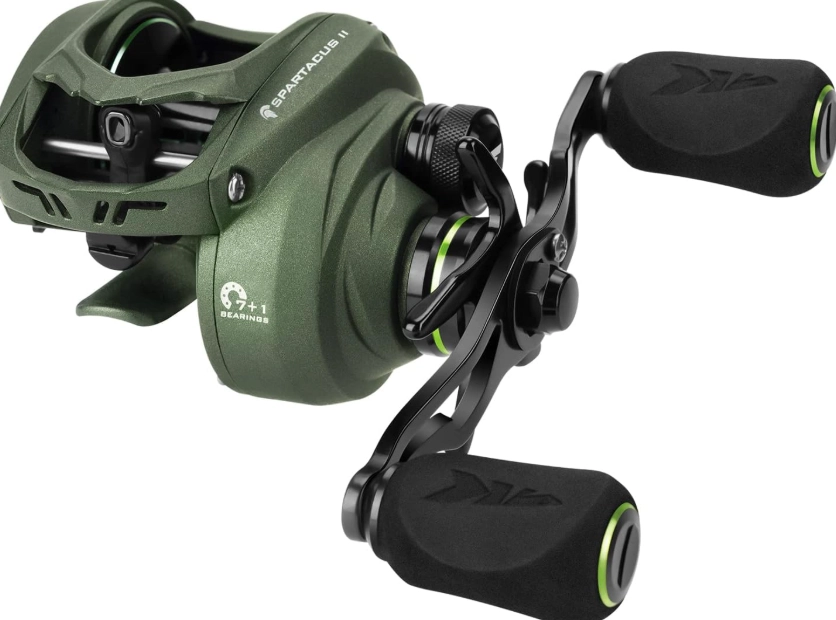
How to Choose a Baitcasting Reel: The 5 Things That Actually Matter
1. Braking System: Your Best Defense Against Backlash
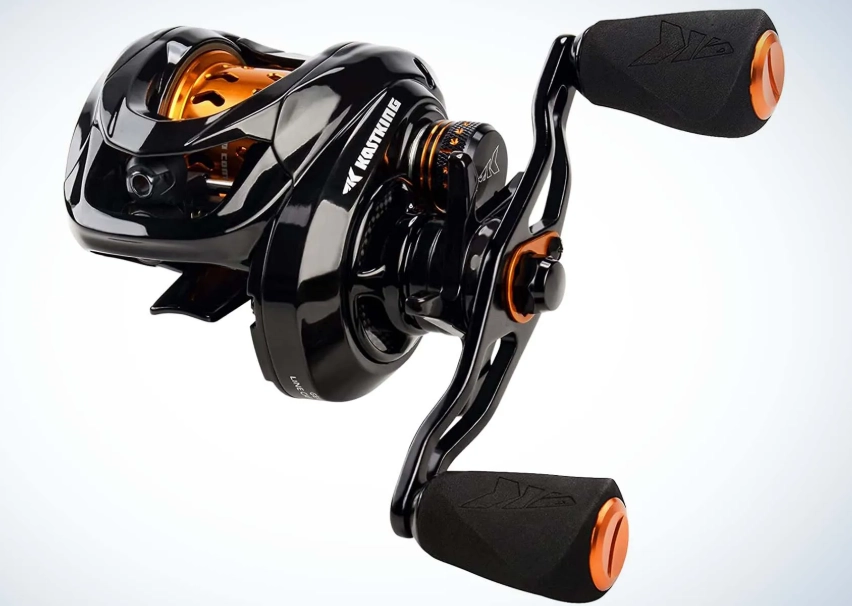
2. Gear Ratio & Retrieve Speed
3. Spool Material & Weight
4. Frame & Body Material
5. Bearings... The Most Overhyped Spec?
Breaking Down the Top Baitcasting Reel Brands & Models
Setting Up and Using Your Baitcasting Reel: A Step-by-Step Walkthrough
Step 1: The Initial Spool Tension Adjustment
Step 2: Setting the Brakes
Step 3: The First Cast (and How to Avoid the Bird's Nest)
Step 4: Fine-Tuning for Performance
Maintenance: Keeping Your Baitcasting Reel Smooth for Years
Answering Your Baitcasting Reel Questions (FAQ)