Quick Navigation
- How Does a Fishing Drone Actually Work?
- Choosing Your Fishing Drone: What Really Matters
- Top Fishing Drone Models: A Real-World Rundown
- Mastering the Technique: It's Not Just Pressing a Button
- The Legal and Safety Maze You Can't Ignore
- Answering Your Biggest Questions (FAQ)
- So, Is a Fishing Drone Worth It For You?
Let's be honest, we've all been there. You're on the shore or in your boat, and you can see the fish jumping way out there, way beyond where your best cast can reach. That perfect spot near a drop-off, or just past a weed bed, feels miles away. For years, that was just part of fishing—you either tried a heroic cast that usually failed or resigned yourself to closer waters. But what if you could send your bait out 300, 400, even 500 feet with pinpoint accuracy, without a single muscle ache? That's the promise a fishing drone makes, and it's not just a gimmick anymore.
I remember the first time I saw one in action. A guy at my local lake had this quadcopter-looking thing. He clipped on a lure, flew it out silently over the water, and just... dropped it. It landed with a soft plop right in the middle of a ripple ring. Ten minutes later, he was reeling in a decent bass. My mind was blown. I was skeptical, sure. It looked like cheating. But then I tried it.
Now, after spending a couple of seasons with various models, from the cheap ones that almost ended up as fish food to the serious rigs that feel like professional tools, I want to walk you through everything. This isn't just a specs sheet. We'll talk about what it's actually like to use one, the headaches you might run into, and whether dropping a few hundred (or thousand) bucks on a fishing drone is really worth it for you.
How Does a Fishing Drone Actually Work?
Forget the complex jargon for a second. At its heart, a fishing drone is a UAV (Unmanned Aerial Vehicle) that's been modified or designed from the ground up to carry fishing tackle. Most look like larger, more robust versions of the photography drones you've seen. The key differences are underneath.
They have a release mechanism. This is the magic button. It's usually a servo-powered clamp or hook that holds your line. You fly the drone out, position it, and hit a button on your controller. The mechanism opens, and your bait or lure drops free. The line is fed from your rod, which you've left in a holder or are holding loosely, so once the bait drops, you're immediately connected and ready to fish.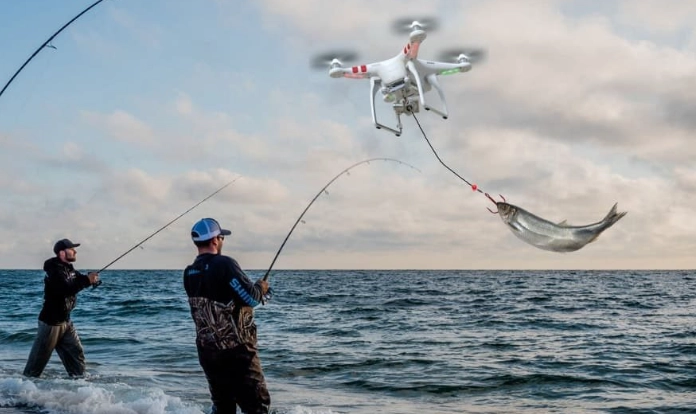
It sounds straightforward, but the engineering is what separates the good from the frustrating. A gust of wind, the weight of your bait, the drag of the line—all of it affects the drone's flight. A good fishing drone has the power and stability to handle it. A bad one will wobble, struggle, and make you nervous.
And here's a personal gripe: the line management. If your line gets tangled in the landing gear during takeoff or flight, it's a recipe for a crash. The best designs have clean lines and dedicated channels to keep everything separate.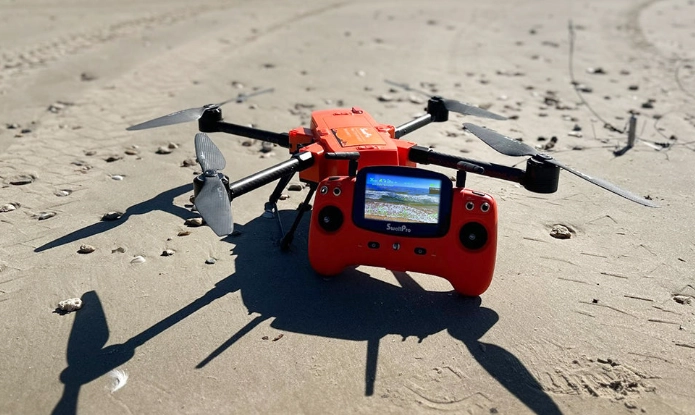
Choosing Your Fishing Drone: What Really Matters
So you're thinking about taking the plunge. You'll see drones advertised with all sorts of numbers. Flight time, range, payload capacity. It's easy to get lost. Let me break down what you should actually care about, in plain English.
Payload Capacity: The Muscle
This is the maximum weight the drone can lift and carry stably. It's not just the weight of your bait. You have to add the weight of the release mechanism, the line tension, and often a camera. Most entry-level fishing drones can handle 1-1.5 kg (2.2-3.3 lbs). That's enough for a decent-sized bait fish or a heavy lure rig.
But if you're into serious big game fishing, think about bait like a live mullet or a large squid. You'll need a drone that can lift 2 kg (4.4 lbs) or more. Don't max out the capacity on paper; leave a safety margin for wind resistance. I learned this the hard way with an early model—it technically could lift the weight, but it flew like a drunk seagull and the battery drained in half the time.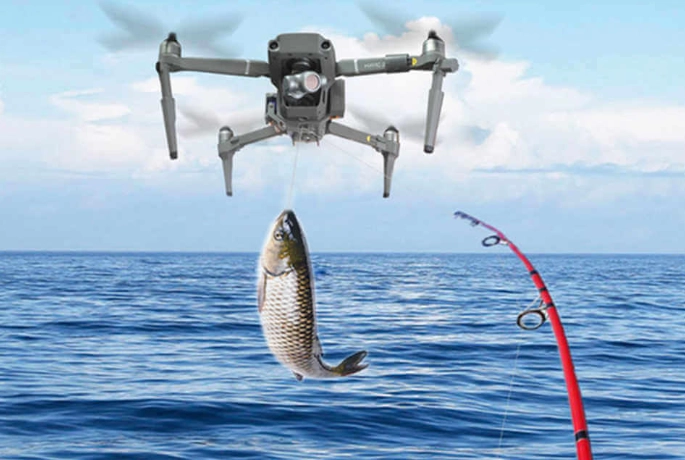
Flight Time and Range: The Endurance
Manufacturers love to tout a 30-minute flight time. Be skeptical. That's usually in perfect, windless conditions with no payload. Add your bait and some wind, and you can easily cut that number by a third or more.
A realistic, useful flight time for a fishing drone is 20-25 minutes under real conditions. That gives you time to fly out, scout a bit, drop your bait, and return comfortably. Always, and I mean always, plan for a return trip. Don't push your battery to 5%. Over water, that's a one-way ticket to an expensive swim for your drone.
Range is less of an issue than you might think. Most have a video transmission range of 1-2 kilometers, which is far beyond where you'd ever need to cast. The legal and practical limit is almost always keeping the drone in your line of sight, which is a requirement from bodies like the U.S. Federal Aviation Administration (FAA). You can't legally fly it so far you can't see it with your own eyes.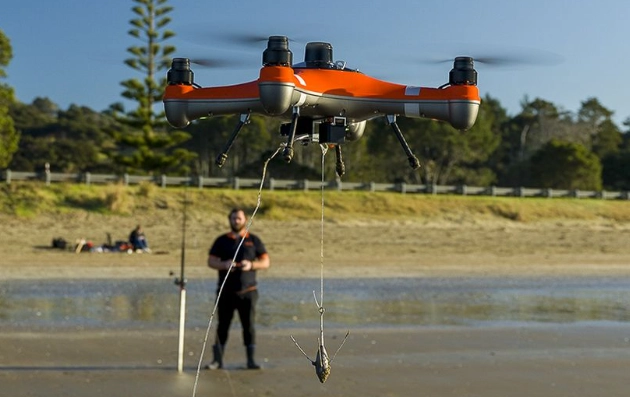
The Release Mechanism: The Heart of the Operation
This tiny part is what makes or breaks the experience. There are two main types:
The Magnetic Release: Uses an electromagnet. When you cut the power, the bait drops. Very clean and less prone to mechanical failure, but if your battery dies unexpectedly... well, you get an unplanned drop.
Look for a mechanism that allows you to test the release multiple times on land without dropping your bait. A safety switch is also crucial to prevent an accidental drop during flight.
Build Quality and Water Resistance
You're using this over water. Accidents happen. A few drops of rain, some spray, a slightly wet hand—it's a hostile environment for electronics. While no consumer fishing drone is fully waterproof (they'd be too heavy), many have water-resistant coatings on the electronics or sealed compartments. It's a feature worth paying for. Saltwater is a killer. If you fish in the sea, a quick rinse with freshwater after each use is non-negotiable, even on "resistant" models.
Top Fishing Drone Models: A Real-World Rundown
Let's get concrete. The market has settled around a few key players. This table isn't just a spec dump; it's based on community feedback, my own testing, and the kind of chatter you hear on the docks.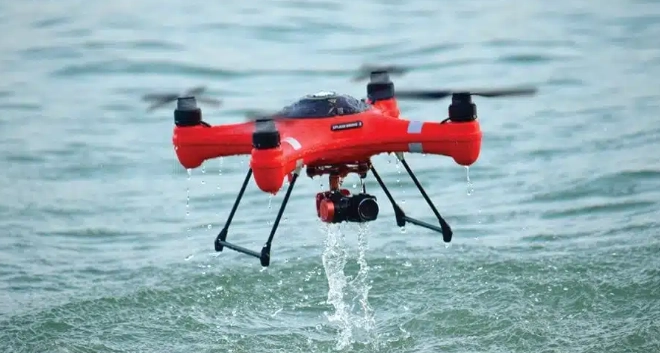
| Model | Best For | Key Strength | Potential Headache | Real-World Payload |
|---|---|---|---|---|
| DJI Agras T10 (Adapted) | Serious anglers, big baits | Industrial build, huge payload (up to 8kg spray tank, adapted for heavy bait) | Expensive, complex, overkill for most | 4-5 kg reliably |
| SwellPro SplashDrone 4 | Saltwater & rugged conditions | Legendary water resistance, can land on water | Bulkier, shorter flight time than some | 1.8 kg |
| PowerVision PowerDolphin | Scouting & trolling | It's a boat! Great for sonar scanning and towing lures. | Can't "drop" bait vertically | N/A (tows) |
| Various "Fishing Edition" Quadcopters (e.g., Autel, lower-end DJI with add-ons) | Beginners, freshwater lakes | Affordable, uses proven drone platforms | Add-on release mechanisms can be finicky | 0.8 - 1.5 kg |
The SwellPro is the crowd favorite for a reason. It feels like a tool built for the job, not a photography drone with a clip-on. I've seen them take a dunk and keep flying (after a careful drying, of course). The adapted agricultural drones like the DJI Agras are a whole other level—think charter captains targeting marlin.
But here's my take: if you're just starting, don't go for the absolute cheapest no-name brand on Amazon. You'll spend more time troubleshooting than fishing. A used, well-known brand is a better bet.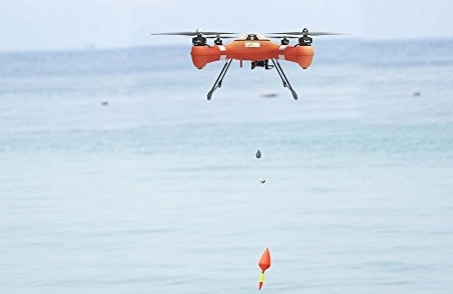
Mastering the Technique: It's Not Just Pressing a Button
Owning a fishing drone is one thing. Using it effectively is another. It changes your entire approach.
Scouting: This is the hidden superpower. Many fishing drones come with a camera. Before you even bait up, fly out and look. You can spot weed beds, rock piles, color changes in the water, and even schools of fish. It's like having your own spotter plane. I've saved hours of blind casting by scouting first.
The Drop: Don't just fly to a spot and release. Hover for a moment. Let the bait settle directly below the drone. If you release while moving forward, your bait will swing on the line and can tangle or splash down awkwardly. A gentle, vertical drop is much more natural.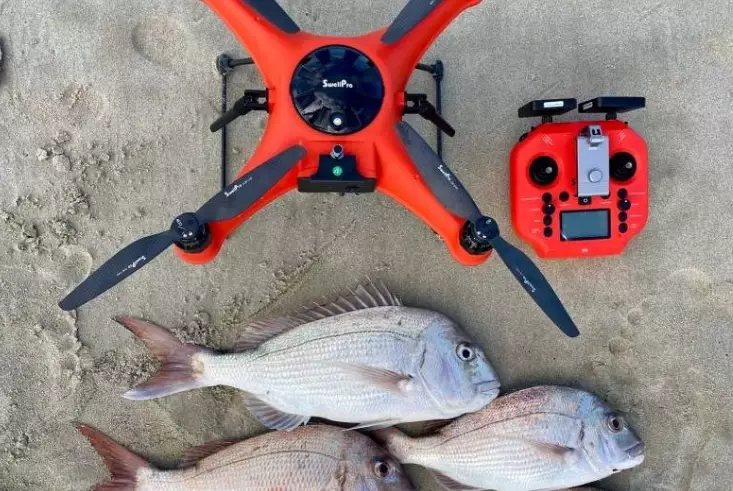
Line Management: This is critical. Use a rod holder. Keep your rod tip high when the drone takes off to create a clean line angle. Let line peel off the reel smoothly as the drone flies. A baitrunner or loose drag is essential. If the line snags, the drone doesn't stop—something breaks.
The Legal and Safety Maze You Can't Ignore
This is the boring but vital part. Flying a drone isn't like throwing a rock. It's regulated aviation in most countries.
In the U.S., you must follow FAA rules. For recreational flyers (which most fishing drone users are), this includes:
- Flying at or below 400 feet.
- Keeping your drone within visual line-of-sight.
- Never flying over groups of people or public events.
- Never flying near other aircraft, especially emergency response efforts.
- Registering your drone if it weighs over 0.55 lbs (250 grams) – which virtually all fishing drones do. You can do this on the FAADroneZone website.
Many state parks and local municipalities have their own additional rules. Some ban drones outright. Always check the rules for your specific fishing location before you even pack the drone. I got politely but firmly told to pack up at a state park once—my bad for not checking first.
Respect other anglers. The buzz of a drone can be seriously annoying. Don't fly over someone else's lines or their spot. Give people space. A little courtesy goes a long way in keeping this hobby welcome.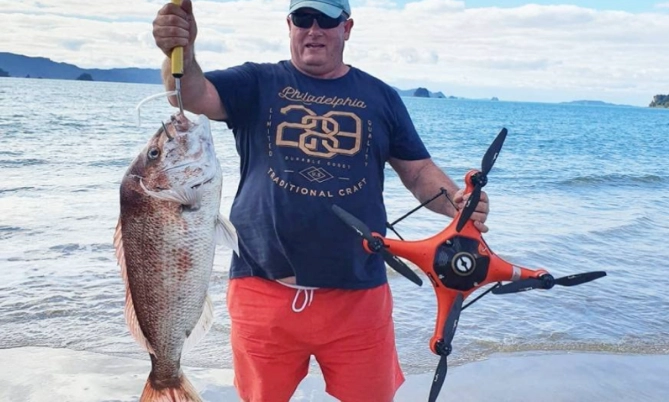
Answering Your Biggest Questions (FAQ)
Is using a fishing drone considered cheating?
That's the ethical question, isn't it? Tournament rules are clear: many major competitions now explicitly ban drone-assisted bait delivery. For recreational fishing? It's a tool, like a fish finder or a better rod. It doesn't set the hook or fight the fish for you. It just gets your bait to a place you couldn't reach otherwise. Some purists will scoff. My view? It got me fishing new water and solving new puzzles. It's still fishing.
Can I use my regular camera drone for fishing?
Technically, yes, with an aftermarket release mechanism. But I don't recommend it for beginners. Camera drones aren't built for the downward force and vibration of a dangling payload. You risk damaging your expensive photography gear. The gimbals are fragile. It's like using a sports car to haul lumber—possible, but not wise.
What's the biggest mistake beginners make?
Not accounting for wind. A light breeze on shore can be much stronger 100 feet up. Always take off into the wind for more stability. Check the weather forecast. If it's gusting over 15-20 mph, it's probably not a good drone fishing day. Also, not securing the bait properly. A double-check before takeoff saves a lot of heartache.
How do I maintain my fishing drone?
After every saltwater use, gently rinse with fresh water (avoid motors directly). Check for nicks in the propellers. Inspect the release mechanism for corrosion or grit. Calibrate the compass regularly in a clean magnetic environment. Store batteries at a partial charge in a cool, dry place. The manual from the manufacturer, like those from SwellPro's support page, will have model-specific advice.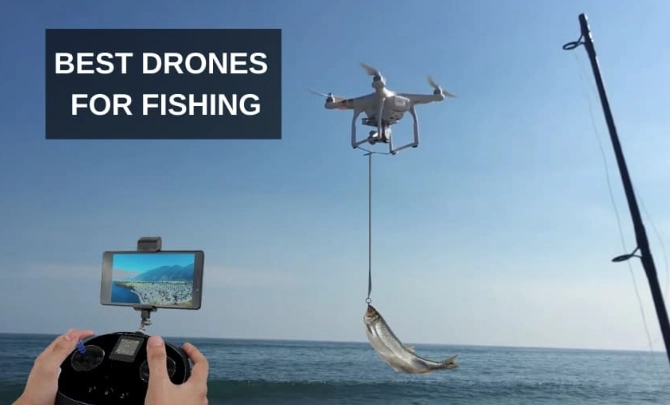
So, Is a Fishing Drone Worth It For You?
Let's wrap this up. A fishing drone isn't for every angler. It's an investment, not just in money but in time to learn.
You might love a fishing drone if: You regularly fish from shore or a small boat and see unreachable productive water. You enjoy the tech side of fishing as much as the catch. You fish in places with wide-open spaces and few people (legally and politely).
You might want to skip it if: You mostly fish small streams or densely wooded areas. The idea of more electronics and charging batteries kills the simplicity of fishing for you. Your budget is tight—the drone, extra batteries, and accessories add up fast.
For me, it transformed my surf fishing. I could finally reach those second and third sandbars where the big redfish and drum hang out. The first time I dropped a crab bait perfectly in a trough I'd spotted from the air and got a slam a minute later, I was hooked (pun intended).
It's not magic. You still need to know what the fish are eating, read the water, and present the bait well.
But it sure feels like having a superpower. It opens up a whole new map of your fishing spot, one grid square at a time. Just fly smart, fish respectfully, and for goodness' sake, keep an eye on that battery.
Reader Comments