Quick Navigation
- Fishing Rods: The Foundation of Your Tackle
- Fishing Reels: The Engine Room
- Fishing Line: The Invisible Connection
- Hooks, Weights, and Terminal Tackle: The Business End
- The Lure Lottery: Picking Artificial Baits
- The Fishing Tackle Box: Organizing the Chaos
- Building Your First Real Fishing Tackle Kit: A Shopping List
- Maintenance: Making Your Gear Last
- Fishing Tackle Ethics and Sustainability
- Your Fishing Tackle Questions, Answered
Let's be honest. Walking into a tackle shop or scrolling through endless online listings for fishing tackle can feel like trying to read a foreign language. Graphite composite? Gear ratios? Action and power ratings? It's enough to make you want to just grab the shiniest lure and hope for the best. I've been there. My first real fishing tackle purchase was a cheap combo from a big-box store, and let's just say the rod snapped on a decent-sized bass. Not a great start.
But here's the thing: understanding your gear doesn't have to be a PhD-level course. It's about matching a few key pieces to the fish you're after and the water you're fishing. That's it. This guide is the conversation I wish I'd had with a seasoned angler years ago, broken down without the jargon and sales pitches. We're going to talk about what actually matters when you're out on the water, what's worth spending money on, and what you can probably skip—at least for now.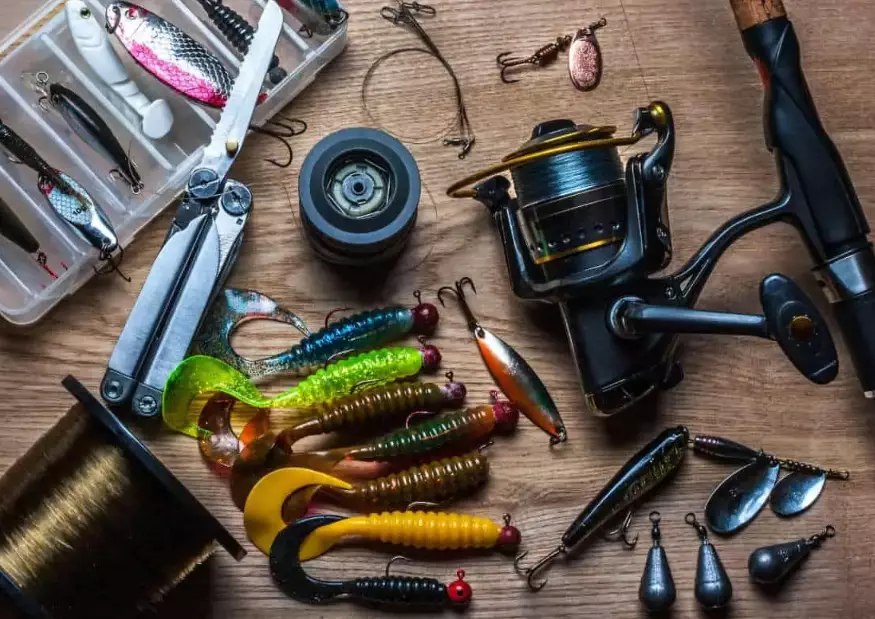
Fishing Rods: The Foundation of Your Tackle
Think of your rod as an extension of your arm. It's your main tool for casting, feeling bites, and fighting fish. Get this wrong, and everything else becomes harder. The two biggest factors are power and action. Power is the rod's backbone—how much force it takes to bend it. Action is where along the rod it bends.
Power ranges from ultralight to heavy. An ultralight rod is like a delicate wand for tiny trout panfish. You'll feel every little nibble. A heavy rod is like a broomstick designed to haul a big catfish or musky out of heavy cover. For most beginners targeting bass, walleye, or pike, a medium-power rod is the sweet spot. It's versatile enough to handle a good range of fish and techniques.
Action is usually described as slow, moderate, or fast. A fast-action rod bends mostly in the top third. It's super sensitive, so you feel bites immediately, and it gives you more power for hook sets. A slow-action rod bends down into the handle, which is great for casting light lures smoothly and playing fish with a more forgiving bend. Moderate is, well, in the middle. For all-around use, a fast or moderate-fast action is a great choice.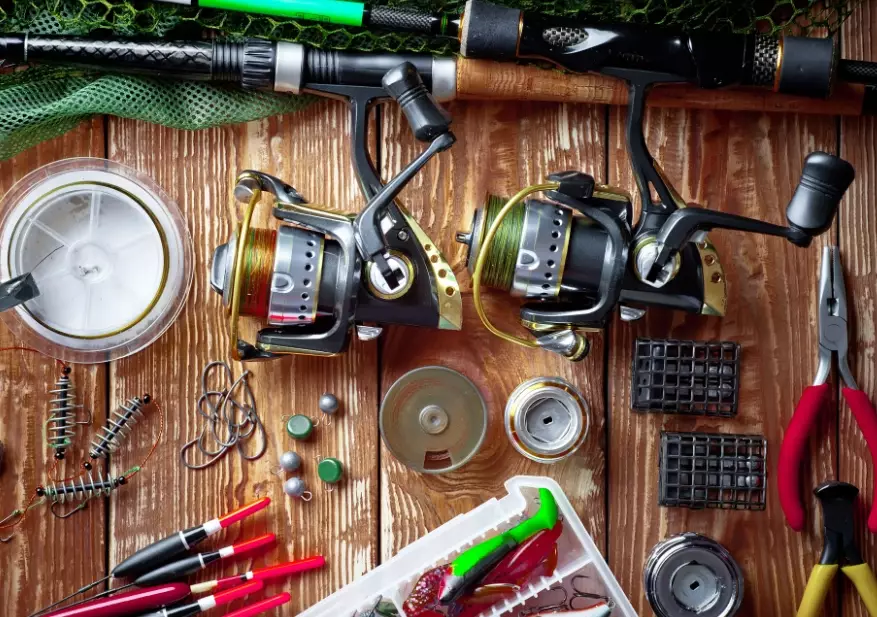
Then there's material. Most modern rods are graphite, fiberglass, or a blend. Graphite is sensitive and lightweight—you feel everything. Fiberglass is more durable and flexible, great for techniques where you need a parabolic bend. Composites try to give you the best of both. For your first serious rod, a graphite or composite rod is a solid bet.
Length matters too. Shorter rods (under 6 feet) are great for accuracy in tight spots, like creek fishing. Longer rods (over 7 feet) give you longer casts and more leverage. A 6'6" to 7' medium-power, fast-action rod is arguably the most versatile piece of fishing tackle you can own for freshwater species.
Fishing Reels: The Engine Room
If the rod is your arm, the reel is your hand, controlling the line. There are three main types: spinning, baitcasting, and spincast. For 90% of people starting out or looking for hassle-free fishing, a spinning reel is the answer. They're intuitive, less prone to tangles (those dreaded "bird's nests"), and can handle a wide range of line weights.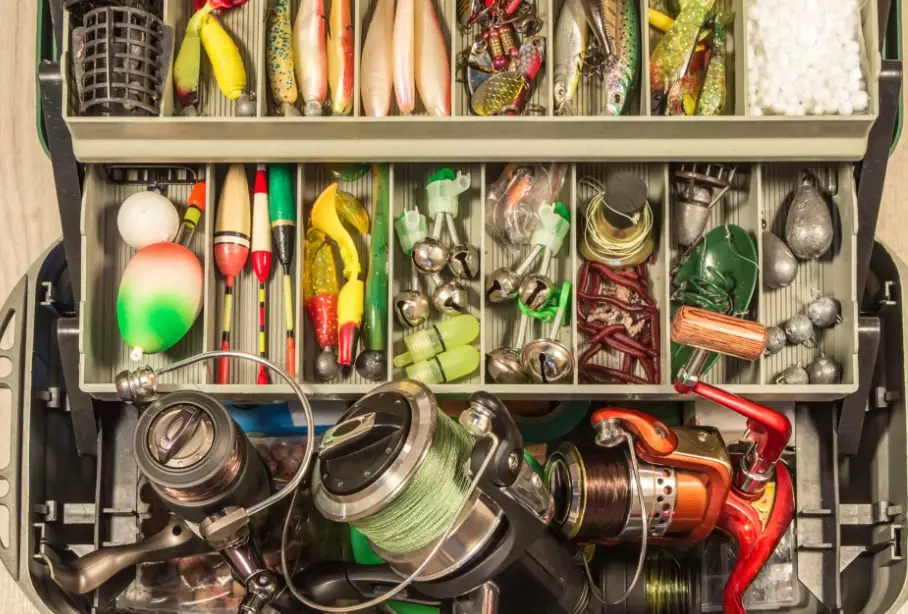
Baitcasting reels offer more control and power for heavier lures and lines, but they have a steeper learning curve. That bird's nest I mentioned? It's called a backlash, and it's a rite of passage with a baitcaster. I spent an entire afternoon picking one out. Not fun. Master a spinning reel first.
Spincast reels (the kind with a closed face and a button on the back) are dead simple and great for kids, but they lack the refinement and smoothness for serious fishing.
When choosing a spinning reel, look at the size (usually denoted by a number like 2500 or 3000). Match it to your rod—the manufacturer's recommendation is usually on the rod handle. Gear ratio tells you how many times the spool rotates per handle turn. A higher ratio (like 6.2:1) means faster retrieval, good for techniques like working a spinnerbait. A lower ratio (5.2:1) gives you more cranking power for deep-diving crankbaits. A mid-range ratio is perfectly fine to start.
The drag system is crucial. This is the adjustable friction that lets a big fish pull line out without breaking it. A smooth drag is non-negotiable. A jerky drag will snap your line. Test it in the store if you can—it should feel smooth and consistent as you pull line out.
Spinning vs. Baitcasting: A Quick Side-by-Side
| Feature | Spinning Reel | Baitcasting Reel |
|---|---|---|
| Best For | Beginners, light to medium lures, finesse techniques, versatility. | Experienced anglers, heavy lures & line, precision casting, power fishing. |
| Learning Curve | Low. Easy to pick up and cast. | High. Requires practice to avoid backlashes. |
| Typical Use | All-around freshwater, inshore saltwater, trout, bass, walleye. | Bass fishing (especially with heavier cover), pike, musky, saltwater. |
| Price Point for Quality | You can get a very reliable reel for $50-$100. | Quality reels with good braking systems start closer to $100. |
| My Personal Take | My most-used reel type. I own several for different line classes. Reliable and simple. | I use them for specific bass techniques. Powerful but frustrating when I'm not dialed in. |
So, what's the best fishing tackle combo for a newcomer? Pair that 6'6" medium-power rod with a 2500 or 3000-size spinning reel. Spool it with 8-10 pound test monofilament or braid, and you have a setup capable of catching 90% of the freshwater fish in North America.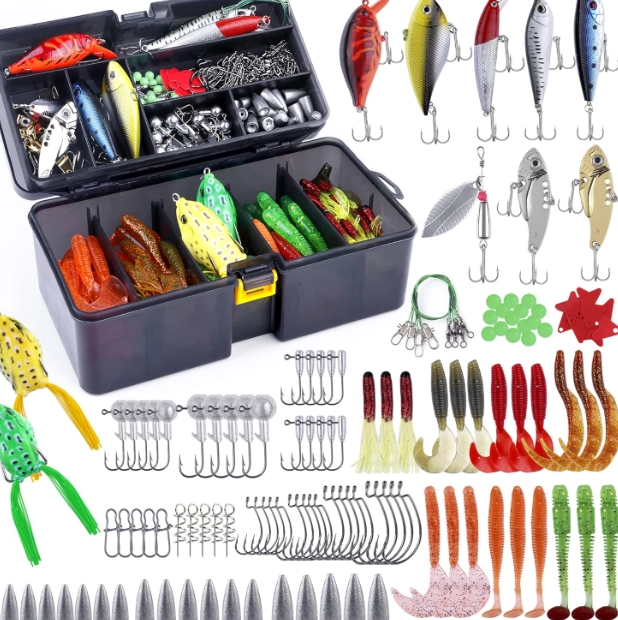
Fishing Line: The Invisible Connection
Line is the only thing between you and the fish, so don't cheap out here. There are three main types, and each has a job.
Monofilament: The classic. It's stretchy, cheap, and forgiving. That stretch can be good—it acts as a shock absorber when a fish strikes or jumps. But it also means you feel bites a split-second later, and it has more memory (it comes off the spool in coils). Great for beginners, topwater lures, and crankbaits where that stretch is beneficial.
Braided Line: No stretch, super strong for its diameter, and incredibly sensitive. You feel everything. It's also very visible. I love braid for its direct connection to the lure, especially when fishing soft plastics on the bottom. Because it's so thin, you can spool more on your reel. The downside? No stretch means you need a more careful hand on the hook set, and it can be prone to wind knots if you're not careful.
Fluorocarbon: The invisible one. It sinks and has a refractive index close to water, making it nearly invisible underwater. It has very low stretch, like braid, but is much stiffer. It's abrasion-resistant, making it great for fishing around rocks and wood. It's also the most expensive. Many anglers use it as a leader material tied to braided main line.
Line weight ("test") is how many pounds of force it takes to break it. Match it to your rod and reel's specifications and the size of fish you expect. Heavier isn't always better—thick line can make lures swim unnaturally.
Hooks, Weights, and Terminal Tackle: The Business End
This is where your fishing tackle connects to the fish. It seems simple, but small choices here make a huge difference.
Hooks: Size and style are critical. Hook sizes are confusing—a size 1 is smaller than a 1/0, and it goes up from there. For general worm hooks (like for Texas-rigging soft plastics), a 3/0 or 4/0 offset hook is a staple. For smaller baits or panfish, size 4 or 6 hooks work. Treble hooks (three points) are common on crankbaits and topwater lures. Pay attention to sharpness. A dull hook costs fish. Run the point lightly across your fingernail—if it digs in and doesn't slide, it's sharp. If it slides, it needs replacing or sharpening.
Weights: Split shot, bullet weights, egg sinkers... they get your bait down. Weight is measured in fractions of an ounce. A 1/4 oz bullet weight is a common starting point for Texas rigs. Use the lightest weight you can to get to the bottom. The slower the fall, the more natural it looks to a fish.
Swivels & Snaps: Barrel swivels prevent line twist, especially when using inline spinners or spoons. Snap swivels let you change lures quickly. Some purists hate snap swivels, saying they affect lure action. For beginners, they're a useful tool. Just use a quality one that's appropriately sized.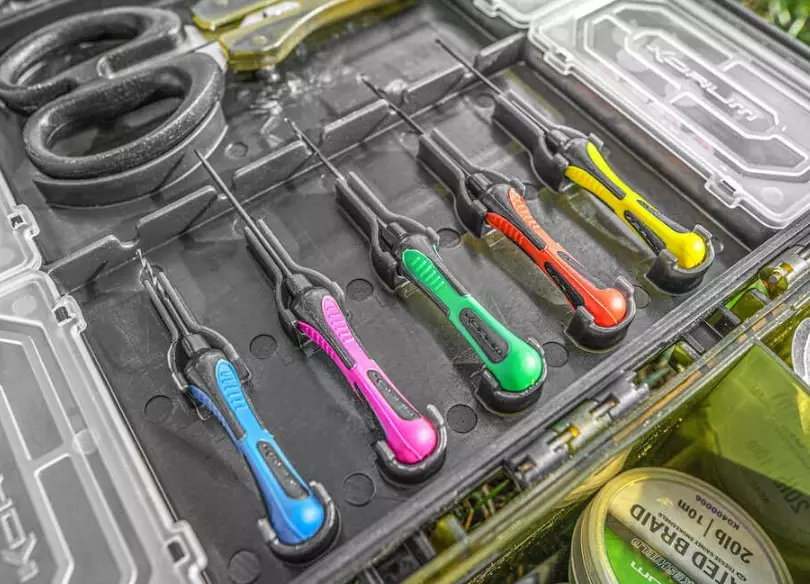
The Lure Lottery: Picking Artificial Baits
This is the fun part—and the most overwhelming. Entire aisles are dedicated to lures. You don't need them all. Start with a few proven categories.
Soft Plastics: Worms, creature baits, swimbaits made of soft plastic. They're incredibly versatile. You can rig them weedless (Texas rig), exposed (wacky rig), or on a jighead. A pack of 5"-7" straight-tail worms (in green pumpkin or black/blue) and a pack of paddle-tail swimbaits will catch bass, walleye, and more. They're disposable, so buy a few packs.
Hard Baits: These include crankbaits, jerkbaits, topwaters, and lipless crankbaits. They have a built-in action. A medium-diving crankbait that dives 6-10 feet is a fantastic search bait to cover water. A topwater popper or walking bait is pure excitement when a fish blows up on it.
Spinnerbaits & Inline Spinners: Flash and vibration. Spinnerbaits are great for covering water and fishing around cover—the skirt and single hook help them come through weeds. Inline spinners like the classic Mepps are deadly for trout, bass, and pike.
Spoons: Simple, flashy, and effective. They imitate a wounded baitfish. Cast them and reel them back, or jig them vertically.
Jigs: Perhaps the most versatile and effective lure ever. A lead head with a hook, dressed with a skirt or paired with a soft plastic trailer. They can be flipped into heavy cover, swam, hopped along the bottom, or jigged vertically. A 3/8 oz football jig with a craw trailer is a bass-catching machine.
See a pattern?
Instead of buying one of every color, buy a few proven lures in a couple of natural colors. Match the hatch, as they say. Shad colors (silver/white, chrome/blue) for open water, green pumpkin or watermelon for vegetation, and black/blue for stained water. You can drive yourself crazy with color choices. Focus on size, shape, and action first.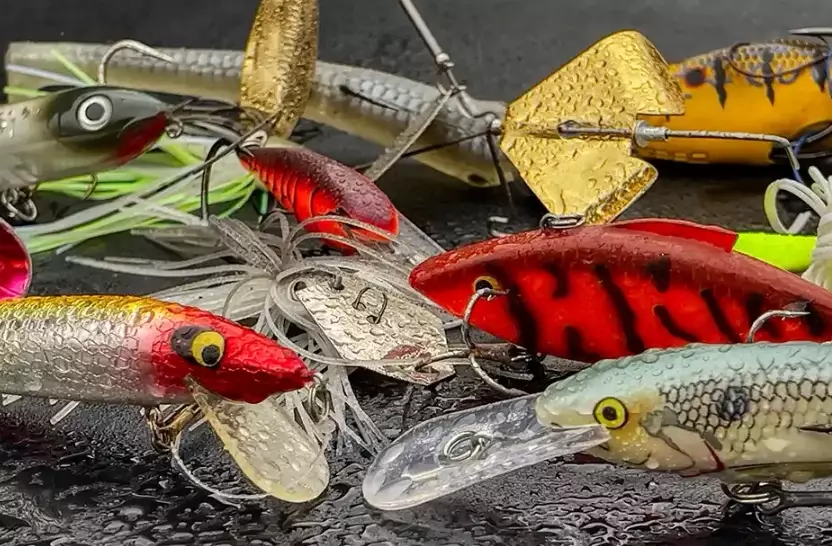
The Fishing Tackle Box: Organizing the Chaos
A good tackle box or bag isn't just about storage; it's about efficiency. You don't want to be fumbling for pliers when you have a fish on. I've learned this the hard way.
There are two main philosophies: the all-in-one box and the modular system. The classic hard plastic box with trays is fine if you have a small collection. But as your fishing tackle grows, a soft-sided tackle bag with multiple plastic utility boxes (like Plano 3700s) is the way to go. You can organize by technique: one box for soft plastics, one for terminal tackle, one for crankbaits, etc. Then, you just grab the boxes you need for the day's trip.
Essential tools to keep in there:
- Pliers: For removing hooks, crimping split shot, cutting line. Get ones with a cutter built in.
- Line Cutters: Nail clippers or small scissors. Braid requires sharp scissors or specific braid cutters.
- Hook Sharpener: A small stone or file. Hooks get dull.
- Scale & Measuring Tape: For the bragging rights photos (and responsible harvest if you keep fish).
- First Aid Kit: Hooks are sharp. They find fingers. Have bandages and antiseptic.
Building Your First Real Fishing Tackle Kit: A Shopping List
Okay, let's get practical. If you're starting from scratch and want a capable, all-around kit for freshwater fishing (targeting bass, walleye, pike, etc.), here's a sensible list. This assumes you have a rod and reel combo already.
- Line: One spool of 10-15 lb braid (for your main line). One spool of 8-12 lb fluorocarbon (for leaders).
- Hooks: Pack of 3/0 offset worm hooks (EWG style). Pack of size 4 or 6 baitholder hooks for live bait.
- Weights: Assorted bullet weights (1/8, 1/4, 3/8 oz). A few split shot.
- Soft Plastics: A pack of 5"-7" straight-tail worms (green pumpkin). A pack of 3"-4" paddle-tail swimbaits (white/silver).
- Hard Baits: One medium-diving crankbait (shad color). One topwater popper (frog or bone color).
- Other Lures: One 3/8 oz spinnerbait (white/chartreuse). One 1/4 oz inline spinner (gold or silver). One 3/8 oz jig (black/blue or brown) with matching craw trailers.
- Terminal Tackle: A small selection of barrel swivels, snap swivels, and extra split rings.
That's it. That collection, paired with your rod and reel, will let you fish from top to bottom, fast and slow. It's a foundation you can build on as you discover what you like.
Maintenance: Making Your Gear Last
Fishing tackle takes a beating—sun, sand, salt, water. A little care goes a long way.
Rinse your reel with fresh water after every trip, especially in saltwater. Let it drip dry. Every season, consider putting a drop of reel oil on the moving parts (check the manual). Wipe down your rod with a damp cloth. Check the line guides for nicks or cracks that can fray your line.
At the end of the season, I like to re-spool my reels with fresh line. Old line gets brittle from UV exposure. Store your rods vertically or horizontally in a rod rack, not leaning in a corner where they can warp. Keep soft plastics in their original bags—some plastics can melt others if stored together.
Fishing Tackle Ethics and Sustainability
This is increasingly important. We all love fishing, and we should be stewards of the resource. Your choice of fishing tackle can play a part.
Consider using non-lead alternatives for weights, like tin or tungsten. Lead is toxic to wildlife if ingested. The U.S. Fish & Wildlife Service has information on the impacts of lead tackle on birds like loons and eagles. Tungsten is more expensive but denser and more sensitive—a worthwhile upgrade over time.
Be mindful of line disposal. Discarded fishing line (monofilament) can last for centuries and entangle animals. Many parks and tackle shops have line recycling bins. Cut up old line into small pieces before throwing it in the trash at home. Organizations like the Take Me Fishing campaign often promote clean-up initiatives.
When a hook is deeply swallowed, it's often better to cut the line as close as possible and let the hook dissolve (if using non-stainless hooks) rather than causing fatal damage trying to remove it. This is a tough call, but sometimes it's the most humane option for catch-and-release.
Your Fishing Tackle Questions, Answered
The bottom line?
Choosing fishing tackle is a journey, not a destination. You'll make some purchases you regret (I have a box of lures that have never caught a thing to prove it). You'll find a simple lure you have insane confidence in. The goal isn't to have the most gear, but to have the right gear for the way you like to fish. Start simple, learn the fundamentals of what each piece does, and let your experience on the water guide your next purchase. Now go get your line wet.
Reader Comments