Your Ultimate Guide to Fishing Competitions: Rules, Strategies & Winning Tips
Dreaming of winning a fishing competition? This complete guide walks you through everything from finding local tournaments and understanding complex rules to developing killer strategies and handling the pressure on tournament day. Get the insider knowledge you need to compete with confidence.
I remember my first fishing tournament. The night before, I couldn't sleep. My mind was racing through a checklist a mile long. Did I have the right lures? Did I understand the rules about the boundaries? What if I got skunked in front of everyone? That mix of excitement and pure, unadulterated nervousness is something every angler feels before their first competition.
Maybe you're sitting there right now, browsing local events, thinking, "I catch fish all the time on my local lake. How hard can it be?" Let me tell you, a fishing competition is a whole different beast. It's not just relaxing with a line in the water. It's strategy, speed, rules, and psychology all rolled into one. It can be incredibly rewarding, but also brutally humbling.
This guide isn't here to sell you a dream. It's here to give you the real, practical, sometimes gritty details of what it takes to find, enter, and compete in a fishing tournament. We'll skip the fluff and get right to what you need to know before you hand over your entry fee.
First Things First: Finding and Choosing the Right Tournament
You can't just show up anywhere with a rod. Finding the right event is step zero. The fishing tournament world is vast, from hyper-local club derbies to massive, nationally televised pro circuits.
Where do you even look?
- Local Bait & Tackle Shops: This is gold. The bulletin board or the shop owner's knowledge is often better than any website. They know the local clubs, the recurring events, and the reputations of the organizers.
- State Fish & Wildlife Agency Websites: This is a must for authoritative info. Many states list permitted tournaments or have calendars. For example, the U.S. Fish & Wildlife Service and your state's own resource page (like the Minnesota DNR or Tennessee Wildlife Resources Agency) provide crucial regulations that govern all competitions.
- Fishing Organization Websites: Groups like BASS or the Major League Fishing (MLF) circuit have event schedules. Even if you're not aiming for the pros, seeing their rules sets a standard.
- Social Media: Facebook groups for your regional anglers are incredibly active. Search for "[Your County] Fishing Tournaments."
Decoding the Tournament Flyer: What to Look For Before You Pay
The flyer or webpage is your contract. Read every word. Twice. Here’s what often trips people up:
Entry Fee & Payout Structure: Know exactly what your money gets you. Is it 100% payout? Does the organization take a cut for overhead? How many places get paid? A big prize for first but nothing for second through fifth feels very different from a flatter payout.
Rules, Rules, and More Rules: This is the heart of any fishing competition. Pay attention to:
- Eligible Species: Is it "big bass" (heaviest single fish), "total weight" of 5 bass, or a multi-species aggregate?
- Launch & Weigh-in Times: Be punctual. Late weigh-in usually means disqualification, no excuses.
- Off-Limits & Boundaries: Can you pre-fish the day before? Are there areas of the lake that are strictly off-limits? Don't assume.
- Livewell Check: Most tournaments require a mandatory livewell check before launch to ensure your fish-keeping system is operational. Don't be the guy who fails this.
- Sportsmanship Clauses: These cover everything from boat-rights etiquette to what constitutes "hole sitting."
Gearing Up: It's Not Just Your Weekend Rod and Reel
You can fish a tournament with basic gear, but you'll be at a severe disadvantage. It's not about having the fanciest stuff, but the right and reliable stuff.
Non-Negotiables (The "You Will Regret Not Having This" List)
- A Working Livewell System: This is your fish's life support. Aerator pump, recirculation, the whole deal. Test it the day before. A dead fish can mean a penalty or DQ.
- Quality Scale and Measuring Board: Don't trust a cheap grocery store scale. Get a certified digital scale for pre-weighing your fish. A bump board-style measuring board is essential for any length-based tournaments.
- Organized Tackle: Time is money. Fumbling through a giant, messy tackle box for a specific lure while the clock ticks is a nightmare. Use trays, binders, or a boat-specific organization system.
Electronics: A good fish finder/GPS combo isn't just for finding fish. It's for marking waypoints during pre-fish, navigating safely, and staying within tournament boundaries. The mapping detail can be a game-changer.
Rods and Reels: Have backups. I've seen a reel seize up on tournament morning. If you only have one setup for flipping jigs, you're done. Have a versatile arsenal ready to go.
Let's break down a sample tournament bag for a generic bass competition. This assumes you've done some pre-fishing and have an idea of conditions.
| Technique / Condition | Primary Lure Choices | Rod/Reel/Line Setup | Why It's in the Bag |
|---|---|---|---|
| Searching / Covering Water | Squarebill crankbait, Spinnerbait, Lipless crankbait | 7' Med-Heavy / Baitcaster / 12-15lb Fluorocarbon | To quickly find active fish in shallow to mid-depth zones. The reaction bite. |
| Finesse / Tough Bite | Drop shot rig, Ned rig, Shaky head worm | 7'2" Medium / Spinning / 8-10lb Fluorocarbon | When fish are pressured or inactive. The "get a bite when nothing else works" safety net. |
| Power / Heavy Cover | Jig with trailer, Texas-rigged creature bait | 7'6" Heavy / Baitcaster / 17-20lb Fluorocarbon | For pulling big fish out of thick grass, wood, or docks. Your big-fish play. |
| Topwater (Dawn/Dusk) | Walking bait, Popper, Frog | 7'3" Heavy / Baitcaster / 50lb Braid | For explosive early morning or late evening bites. High-risk, high-reward. |
See? It's not about bringing 500 lures. It's about bringing a strategic selection for likely scenarios.
Pre-Fishing and Strategy: The Real Work Happens Before Tournament Day
The actual competition day is just the execution. The game is won or lost in the days leading up to it, during pre-fish (if the rules allow it).
Pre-fishing isn't about catching fish. Well, it is, but not really. Let me explain.
It's about gathering data. You're trying to answer key questions:
- Where are the fish located (deep, shallow, on points, in coves)?
- What stage are they in (pre-spawn, spawn, post-spawn, summer pattern)?
- What are they biting on? Is it a specific color or presentation?
- How does weather (an approaching front, wind direction) affect them?
Developing a game plan is crucial. Based on your pre-fish, you should have:
- A Starting Spot: Your highest-confidence area for the first hour. This calms the nerves and gets you on the board.
- A Milk Run: A sequence of 5-8 proven spots you can rotate through.
- A "Hail Mary" or Big-Fish Spot: A place you saved, maybe only fished lightly in pre-fish, that holds the potential for a giant. You hit this when you need a kicker fish.
- A Backup Plan (Plan B, C, and D): What if your primary pattern dies? Do you have a deep-water pattern? A finesse pattern? You must be able to adapt.
Game Day: Navigating the Chaos and Pressure
Tournament morning has a unique energy. The ramp is packed, engines are growling, there's a low hum of nervous conversation. Here's how to navigate it.
The Morning Meeting & Boat Check: Listen intently. Rules can be reiterated or even changed last minute (e.g., a no-wake zone added). During the livewell check, have your system running and ready. Be polite to the officials.
The Blast-Off: This can be chaotic, especially in bigger tournaments. If you draw a late number, don't panic. Your first spot might get taken. This is why having a Milk Run is key—you just move to spot #2.
On-The-Water Decision Making: When to Stick, When to Pivot
This is the mental chess game of a fishing competition. You have a limited number of hours. Every minute counts.
Stick if: The conditions match your pre-fish predictions, you're getting bites (even follows or short strikes), or you're in an area known for holding quality fish. Sometimes you just need to slow down or make a subtle lure change.
Pivot if: You've given the spot a legitimate effort (45 mins to an hour with multiple presentations) with zero signs of life. The weather has drastically changed from your pre-fish days (a major cold front rolls in). You see other competitors consistently catching fish in a different area or using a different technique you didn't anticipate.
Adaptation is the mark of a good tournament angler.
Handling and Caring for Your Catch
This is a critical and often overlooked skill. Your fish are your currency. A dead fish is a penalty, and it's just bad stewardship.
- Land them quickly. Don't play a 2-pound bass for five minutes. Use appropriate gear.
- Wet your hands before handling. Protect their slime coat.
- Get them in the livewell immediately. Don't let them flop on the deck for a photo op first.
- Manage your livewell. Add catch-and-release formulas (like Please Release Me), keep the water oxygenated, and monitor temperature. If the water is very warm, add ice slowly to keep temps down.
The Weigh-In: The Moment of Truth (and a Bit of Theater)
You've made it through the day. Now comes the weigh-in. It can be a public spectacle, especially for larger events.
Be early. Get in line with time to spare. Have your fish transferred to a weigh-in bag with water. Handle them gently.
The Process: An official will usually take your bag, verify the fish are alive and legal, then weigh them. They'll call out the weight. Sometimes they'll hold up your big fish for the crowd. Smile, even if your weight is low. Sportsmanship is always on display.
After the weigh-in, your job isn't done. Revive your fish thoroughly before releasing them. Hold them in the water by the tail, moving them gently back and forth until they kick strongly and swim away on their own.
Beyond the Basics: Answering Your Real Questions
Let's tackle some of the specific, sometimes awkward questions people have but are hesitant to ask.
"How much does it really cost to compete?"
It varies wildly. A local club derby might be a $40 entry fee. A larger, open tournament could be $200-$500 per team. Then factor in gas for the boat and truck, lodging if it's out of town, food, and tackle. Your first year, don't expect to turn a profit. View it as paying for an education.
"I don't have a fancy bass boat. Can I still compete?"
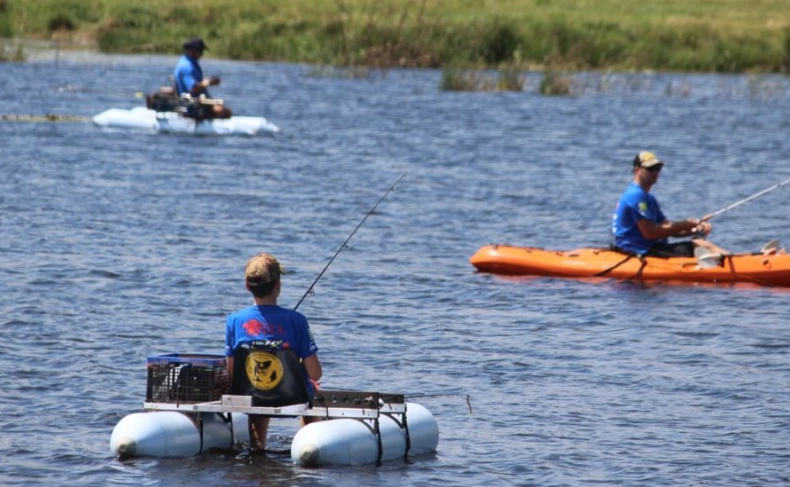
Absolutely. Many tournaments have "jon boat" or "kayak" divisions that are exploding in popularity. Even in open events, a smaller boat can access places big boats can't. Your knowledge of the lake often trumps the size of your engine. I've been beaten by guys in 16-foot aluminum boats more times than I care to admit.
"What's the biggest mistake beginners make?"
Trying to run someone else's pattern. Just because the winner was cranking deep ledges doesn't mean that was the only pattern. They might have found one special spot. Beginners often see that and spend the next tournament blindly cranking, ignoring their own strengths and observations. Fish to your strengths.
"How do I deal with other anglers crowding my spot?"
Ah, the eternal headache. First, know the rules about "hole sitting" and casting distance. Usually, if you're there first and are actively fishing a spot, others should give you space. Sometimes a polite conversation works. Sometimes you just have to out-fish them or make a tactical decision to leave and come back later. Getting angry rarely helps and ruins your own focus.
Wrapping It Up: Is Tournament Fishing For You?
Entering a fishing competition will change the way you fish forever. It makes you more observant, more strategic, and a better overall angler. It also introduces stress, expense, and frustration that casual fishing doesn't have.
My final, honest take? Give it a try. Start with the smallest, most low-pressure event you can find. Go with a goal that isn't "win." Make your goal to not break any rules, to keep all your fish alive, and to learn one new thing about the lake. If you enjoy the process of solving the puzzle under a time limit, you'll be hooked. If you find the pressure sucks all the joy out of fishing, that's okay too. You'll still walk away with skills that make your weekend trips more productive.
The water is waiting. Just go in with your eyes open.