Fishing Ruler Guide: How to Choose & Use for Accurate Catch Sizing
Struggling to measure your catch accurately? Our ultimate fishing ruler guide covers everything from choosing the right type to proper measuring techniques for catch-and-release. Learn how a simple fishing measuring tool can settle bets and ensure you follow regulations.
Let's be honest for a second. When you think about gearing up for a fishing trip, what's the first thing that comes to mind? The rod, the reel, the fancy lures, the tackle box that looks like a spaceship console. Right at the bottom of the list, if it's even on there, is a simple fishing ruler. It's an afterthought. A piece of plastic or aluminum you might toss in the boat if you remember. I was the same way for years.
I'd hold up my hands, span my fingers, and give that classic fisherman's estimate. "Yeah, it was about this big." You know the move. It's universal. And it's almost always wrong. My moment of truth came on a trip for walleye. My buddy and I both caught decent ones. Mine felt bigger. His looked longer. The argument started. "Twenty inches, easy!" "No way, eighteen and a half, tops." We had no fishing ruler. The debate ruined the post-catch buzz. We had to let them both go not knowing who actually won. It was stupid.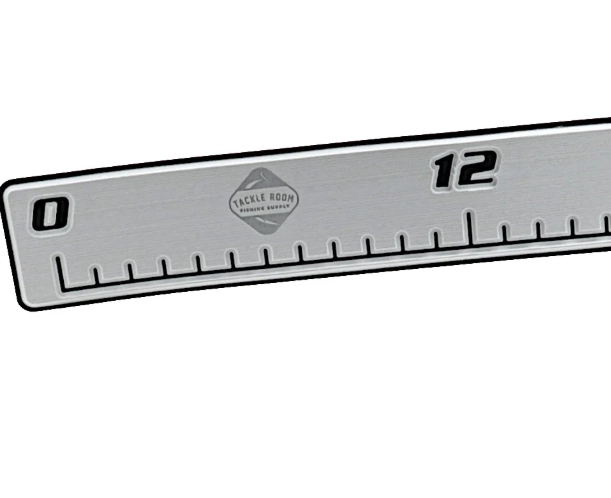
That's when I realized a fishing ruler isn't just a measuring stick. It's a peacekeeper, a record-keeper, and a legal safeguard.
If you've ever wondered if that bass makes the legal slot limit, or if your personal best trout was really 24 inches, or you just want to end the "who caught the bigger fish" debate for good, then this is for you. We're going deep on everything you never thought you needed to know about the humble fishing measuring tool.
Bottom Line Up Front: A good fishing ruler is one of the cheapest and most impactful pieces of gear you can own. It turns guesswork into fact and ensures you're fishing within the law. Don't just grab the first one you see.
Why Bother? The Real Reasons You Need a Measuring Tool
Okay, so it measures fish. Big deal. Why write a whole guide about it? Well, because the uses go way beyond just satisfying curiosity.
First and foremost, regulations. This is the non-negotiable one. Fish and wildlife departments don't care about your hand-span estimates. They set specific size limits—minimum lengths, maximum lengths, or protected slot limits—to ensure sustainable fish populations. Keeping a fish that's half an inch under the limit is illegal, period. A fine can ruin your trip and your wallet. An accurate fishing ruler is your proof of compliance. For example, many striped bass regulations have very precise minimum sizes that vary by state. Guessing isn't an option.
Then there's personal records. Are you actually improving? Is that pike really your biggest? Memory fades. A photo next to a clear measurement doesn't lie. It's concrete data for your fishing log.
What about catch-and-release? You'd think it matters less, but it matters more. Knowing the size quickly helps minimize the time the fish is out of water, increasing its survival odds. A ruler built into your landing net or placed on the boat deck lets you measure without fumbling.
And let's not forget the bragging rights. Friendly competition is part of fishing. A fishing ruler ends all arguments. It's the judge and jury. That alone is worth the ten or twenty bucks.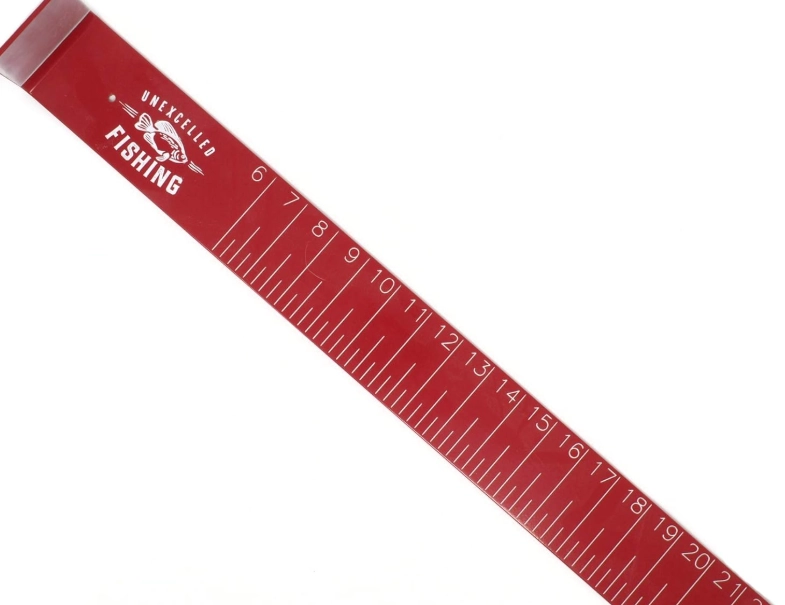
Not All Rulers Are Created Equal: A Tour of the Types
Walk into a tackle shop or browse online, and you'll see a confusing array. Sticky tapes, hard boards, folding ones, ones with grippy backs. It's not just about picking the prettiest color. The material and design drastically affect durability, accuracy, and where you can use it.
Let's break down the main players. I've used most of these, and some have let me down spectacularly.
The Classic Hard Ruler (The Boat Board)
This is the iconic one. A long, rigid board, usually made of plastic or aluminum, with clear markings. It's what you see in most tournament weigh-in photos.
Pros: Super accurate and durable. Laying a fish flat on it gives you a perfect, uncontested measurement. The good ones have a raised lip at the zero end to butt the fish's mouth against, which is the correct way to measure. Easy to clean.
Cons: It's big. A 36-inch or 48-inch fishing ruler board isn't going in your pocket. It's for the boat deck, the kayak crate, or the bank next to you. If you're hiking miles into a stream, forget it.
My Take: If you do most of your fishing from a boat or one spot on shore, this is the gold standard. Just don't buy the cheapest, flimsiest plastic one. They crack in the sun or under a thrashing fish. Go for a reinforced plastic or aluminum.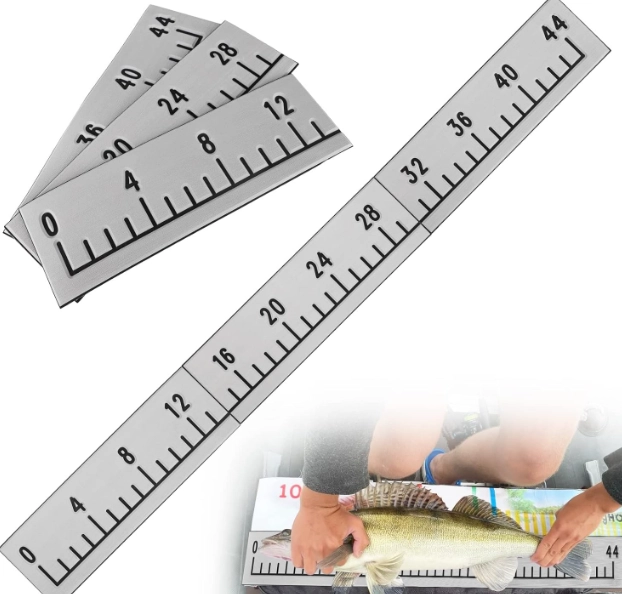
The Flexible Tape Ruler
Think tailor's tape, but for fish. Often made of coated cloth or flexible vinyl, sometimes with a metal tip.
Pros: Incredibly portable. Rolls up small enough to fit in any pocket or a tiny corner of your tackle box. Great for measuring fish with awkward shapes (like a curved tuna) along their contour, not just in a straight line. Perfect for the minimalist angler or when backpacking.
Cons: Can be tricky to use alone on a wiggly fish. Stretches over time (especially cheap ones), killing accuracy. The numbers can wear off. If it gets wet and muddy, it's a mess.
My Take: I have one in my vest for trout streams. It's a backup. I don't fully trust it for absolute precision, but it's better than nothing when you're on the move. Check it against a hard ruler now and then to make sure it hasn't stretched.
The Stick-on Ruler (Bump Board Style)
This is a clever solution. It's a durable, adhesive-backed measuring tape meant to be stuck permanently onto a surface. Your cooler lid, your kayak hull, your boat gunwale, even your landing net handle.
Pros: Once it's on, it's always there. No forgetting it. Creates a built-in measuring station. Saves space. Often very affordable.
Cons: The adhesion is everything. If you stick it to a porous or uneven surface, or in direct sun on a cheap cooler, it will peel and bubble. Measurement is only as stable as the surface it's on. If your cooler lid is curved, the measurement will be off.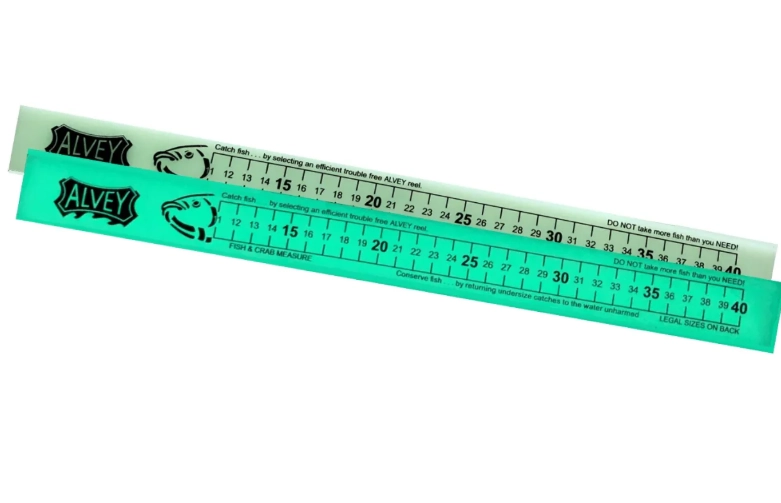
My Take: I have one on my kayak's center console. It's fantastic. But prep the surface with alcohol wipes and let it cure for a full day before getting it wet. I made that mistake first time—it slid right off.
Specialty & Digital Rulers
This is where it gets fancy. Rulers with built-in digital scales, jaw grippers to hold the fish, or even Bluetooth connections to log data directly to your phone.
Pros: The ultimate in convenience and data tracking. Some combine length and weight in one sleek tool, perfect for tournament anglers who need quick, accurate stats.
Cons: Expensive. Batteries die. Electronics and water are eternal enemies, no matter what the "water-resistant" rating says. More parts to break.
My Take: Cool? Absolutely. Necessary for 99% of anglers? Nope. They're fun gadgets, but a simple, reliable mechanical fishing ruler will never fail you because its battery is dead. I see them as a "nice to have" after you've mastered the basics.
| Type | Best For | Portability | Durability | Accuracy | My Personal Rating |
|---|---|---|---|---|---|
| Hard Board Ruler | Boat fishing, shore stations, tournaments | Low (Bulky) | High | Excellent | Top choice for serious measurement |
| Flexible Tape | Backpacking, wading, minimalists | Excellent | Medium (wears out) | Good (if not stretched) | Great backup, not my primary |
| Stick-On Ruler | Kayaks, coolers, permanent boat setups | N/A (It's fixed) | High (if installed well) | Very Good | Super convenient for frequent spots |
| Digital Combo | Tech lovers, tournament anglers, data nerds | Medium | Medium (electronics risk) | Excellent | Cool toy, but have a backup |
Choosing Your Champion: What to Look For
So you're convinced you need one. How do you pick the right fishing ruler from the wall of options? Don't just grab the cheapest. Think about these factors.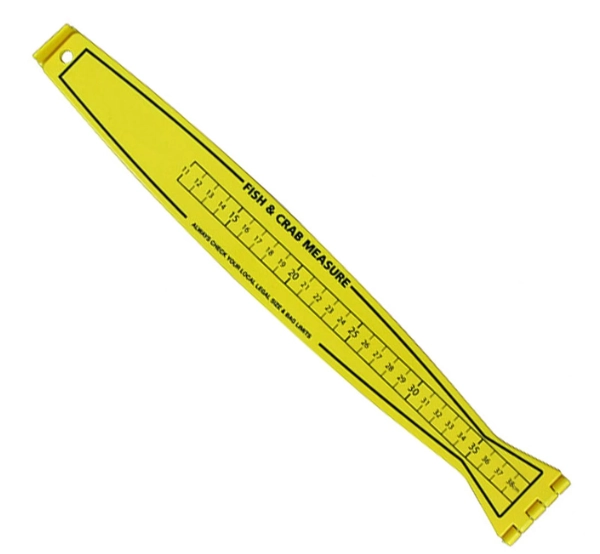
Material Matters: Plastic is common and cheap, but UV rays from the sun make cheap plastic brittle. Look for UV-stabilized or marine-grade plastics. Aluminum is my favorite—it's light, rigid, doesn't rust (though it can corrode in saltwater if not anodized), and lasts forever. Avoid plain steel; it will rust.
Length: This seems obvious, but think about the fish you chase. A 12-inch ruler is useless for pike. A 60-inch board is overkill for panfish. For all-around freshwater use (bass, walleye, trout, pike), a 36-inch ruler is a sweet spot. For inshore saltwater (redfish, snook, sea trout), 30-36 inches works. For offshore, you might need 60 inches or more. When in doubt, go longer.
Readability: This is huge. The numbers and lines need to be crystal clear, even in low light, with wet hands, and with a fish slime covering everything. Deeply engraved or printed markings are best. Painted lines that sit on the surface will flake off. Contrast is key—black on white or yellow is classic for a reason. I had a ruler with dark green marks on a dark blue background. It was a stylish nightmare. Utterly useless at dusk.
The Zero End: A proper fishing ruler doesn't start with the numbers right at the physical edge. It should have a vertical lip or stop at the zero point. You press the fish's mouth (closed!) firmly against this lip. This ensures every measurement starts from the exact same place. Without it, you're eyeballing where the mouth lines up, which introduces error.
Increments: Most are in inches, with 1/4-inch or 1/8-inch marks. Some have metric on the other side. Get one with the increments you understand and that match your local regulations (usually inches in the US). Finer increments (1/8-inch) are better for precision with smaller fish or tight slot limits.
Extras: Some have a built-in scale for weighing fish. Some have a fish grip. Some are magnetic to stick to your boat frame. These are nice, but don't let them distract you from the core features: durability and readability.
Watch Out For This: Be wary of "novelty" rulers with cartoon graphics or logos taking up half the space. The measurement area needs to be clean and functional. That ruler with a huge bass graphic might look cool, but if the graphic obscures the inch marks, it's junk.
How to Actually Use a Fishing Ruler (Most People Do It Wrong)
You've got your ruler. Now what? Just lay the fish down and read the number at the tail, right? Not quite. There's a standard method, and it's important for consistency, especially with regulations.
- Wet Everything First. Wet the ruler, wet your hands, wet the surface you're laying the fish on. This protects the fish's vital slime coat, which is its main defense against infection.
- Position the Fish. Place the fish on its side on a flat, wet surface. If using a board, lay it on the board. Gently hold the fish still. If it's thrashing, wait a moment or cover its eyes with a wet cloth—it often calms them.
- Align the Mouth. This is the critical step. Close the fish's mouth. For most species, the measurement is "Total Length" (TL)—from the tip of the snout (mouth closed) to the farthest tip of the tail fin when the lobes are pinched together. Firmly press the closed jaw against the vertical lip/stop at the zero end of your fishing ruler. Don't let it hang over the edge.
- Read the Tail. Now, gently pinch the tail fin lobes together to get the longest possible length. Look straight down at the ruler to avoid parallax error. Read the measurement at the very tip of the tail. Not the middle, not where the body ends—the very tip of the compressed tail fin.
That's Total Length (TL). It's the most common regulatory measurement.
Some regulations, particularly for saltwater species like salmon or certain snappers, use "Fork Length" (FL)—from the snout to the fork in the tail. Know your local rules. The National Oceanic and Atmospheric Administration (NOAA) Fisheries website is an authoritative source for saltwater regulations and often explains measurement techniques.
For catch-and-release, do this whole process quickly. Have the ruler ready, snap your photo, and get the fish back in the water. A good fishing ruler helps you do it fast and right.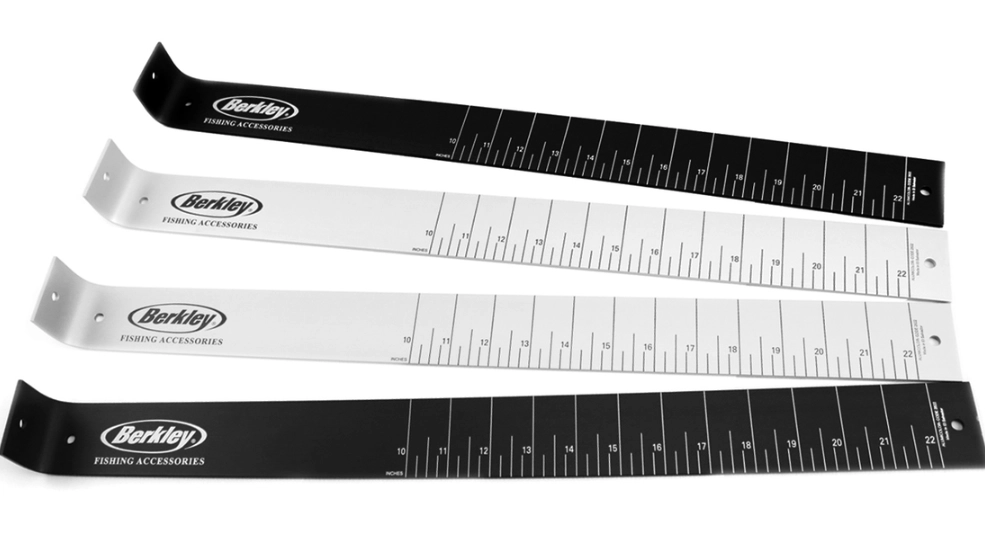
Maintenance? Yes, Your Ruler Needs Care Too
It's a piece of plastic or metal, how much care can it need? A bit, if you want it to last and stay accurate.
After every trip, especially in saltwater, rinse it with fresh water. Salt and fish slime are corrosive. Dry it off before storing. Don't leave it baking in the sun on your boat deck season after season. UV degradation is real.
Check the markings periodically. Are they fading? If it's a sticker-type, are the edges peeling? A ruler with unreadable numbers is worse than no ruler at all—it gives you false confidence.
For a sticky-back ruler that's failing, don't try to re-stick it with super glue. It'll be a bumpy mess. Peel it off, clean the surface thoroughly with rubbing alcohol, and apply a new one.
Answers to the Questions You're Actually Asking
Let's tackle some common stuff that pops up in forums and on the water.
"Are those digital laser measuring tools accurate for fish?" The ones meant for construction? No. They're designed for hard, flat walls, not the wet, curved, wiggling body of a fish. They'll give wildly inconsistent readings. Stick to physical contact rulers.
"Can I just use a tape measure from the hardware store?" You can, but it's not ideal. The metal tape can injure the fish, it's hard to manage alone, and the end hook isn't designed to butt a fish's mouth against. It's a last-resist tool.
"My ruler got rusty. Is it still accurate?" If the rust is just surface discoloration on the markings, maybe. If it's pitted and corroded, the surface is uneven, and the markings are gone. Toss it. Accuracy is gone.
"What's the best way to measure a really big, heavy fish alone?" This is tough. For truly huge fish (like big catfish or sturgeon), some anglers use a soft, flexible tape on the ground beside the fish, marking the nose and tail positions. The key is keeping the fish supported and in the water as much as possible. Consider a partner for fish that size—better for the fish and your measurement.
"Do I need a special ruler for fly fishing?" Not special, but portability is key. A short, rigid 18-inch ruler or a flexible tape in your vest is perfect for trout. Many net companies like Fishpond make nets with built-in rulers, which is a fantastic, hands-free solution for the fly angler.
Wrapping It Up: Don't Fish in the Dark
Look, after all this talk, it boils down to something simple. Fishing is a passion, a sport, and for many, a way to put food on the table. Introducing guesswork into the equation—especially when laws are involved—takes away from all of that. A reliable fishing ruler removes the guesswork.
It's not glamorous. No one will ooh and aah over your ruler like they will a new rod. But it might be the piece of gear that saves you from a fine, definitively wins you the bet with your friend, and gives you the honest satisfaction of knowing exactly what you caught.
My advice?
Get a decent, aluminum 36-inch board ruler for your home water or boat. Stick a quality adhesive ruler on your kayak or cooler. Toss a flexible tape in your backpack for adventures. That covers all bases for less than the cost of a mid-range lure. Then, just use it. Make it a habit. Lay that fish down, get the real number, and enjoy the clarity it brings to your fishing. You'll never go back to "about this big" again.