Ultimate Guide to Fishing Knots: How to Tie the Strongest Connections
Ever wondered which fishing knot is truly the strongest for your line? This complete guide breaks down the essential fishing knots every angler needs, from the simple Clinch to the powerful FG Knot. Learn step-by-step how to tie them, avoid common mistakes, and choose the perfect knot for bass, trout, saltwater, and more.
Let's be honest, we've all been there. You feel that massive tug, your rod bends double, adrenaline shoots through you – and then nothing. The line goes slack. You reel in to find a clean break, your lure and that monster fish gone. More often than not, the culprit isn't the line itself. It's the weak link. It's the knot.
I lost what was probably my personal best bass that way years ago, right at the boat. The memory still stings. The knot I'd tied a hundred times before just... gave up. That failure sent me down a rabbit hole. I started testing, breaking lines, and talking to guides and tournament anglers. What I learned changed my fishing completely. It wasn't about finding one magic fishing knot. It was about understanding which knot to use, when, and how to tie it perfectly every single time.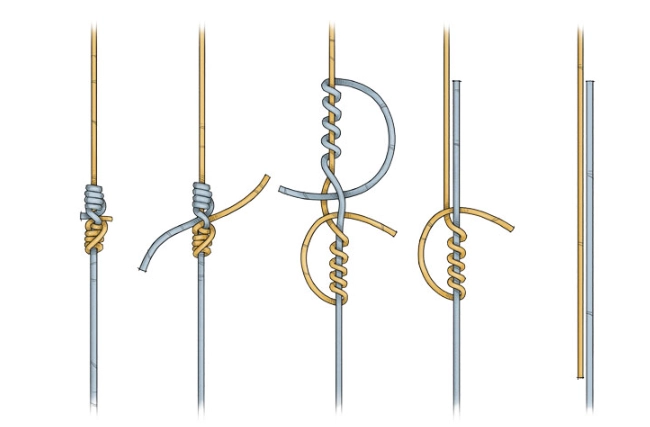
This guide is everything I wish I'd known back then. We're not just going to list knots. We're going to dig into why they work, where they fail, and how to make them bulletproof for your specific fishing. Forget the fluff. Let's get into the real, practical knowledge that keeps your line connected to the fish.
Why Your Knot Might Be Your Biggest Weakness (And How to Fix It)
You buy premium line, a great rod, sharp hooks. You spend all that money and effort. Then you connect it all with a sloppy knot you tie in the dark while your hands are cold. Makes no sense, right? A knot creates stress points, friction, and changes how the line distributes force. A poorly tied knot can reduce your line's strength by 50% or more. Think about that. Your 20-pound test line suddenly acts like 10-pound test.
The goal isn't 100% strength retention – that's nearly impossible. The goal is to get as close as possible, consistently. The right fishing knots, tied correctly, will give you confidence. You'll set the hook harder. You'll put more pressure on big fish. You'll lose fewer lures to snags. It's the most fundamental skill, and mastering it is free. It just takes a little knowledge and practice.
So where do you start?
The Five Foundational Fishing Knots You Absolutely Need to Know
You don't need to know fifty knots. That's overwhelming. You need a reliable toolbox. These five are the workhorses. They cover about 95% of all fishing situations, from freshwater panfish to offshore giants. Learn these first, learn them cold, and you're set.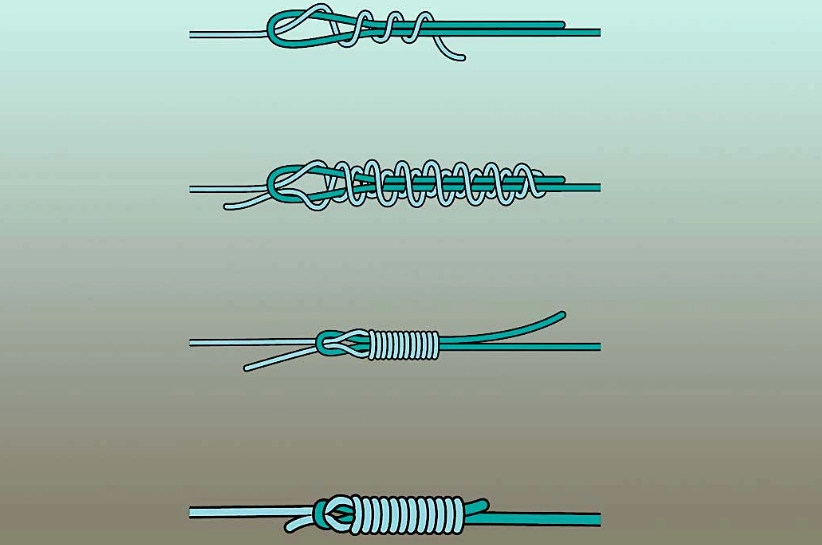
The Improved Clinch Knot: The Universal Workhorse
This is probably the first knot most anglers learn. And for good reason. It's simple, reliable for light to medium tackle, and works with monofilament and fluorocarbon. I use it all the time for tying on small hooks, jigs, and swivels when I'm using line under 12-pound test.
How to tie it: Pass the line through the hook eye, wrap it around the standing line 5-7 times, pass the tag end back through the small loop near the eye, then through the big loop you just created. Wet it with saliva (crucial step!), and pull tight. Trim the tag end.
Where it shines: Quick ties, beginner-friendly, great for mono and fluoro.
Where it fails: It can slip or cut itself on braided line. Not the best for heavy-duty applications.
My take: It's a classic for a reason, but it's not my go-to for anything critical anymore. There are stronger options.
The Palomar Knot: Arguably the Strongest & Simplest
If I had to teach someone one knot and one knot only, this would be it. The Palomar knot consistently scores 90-95% strength retention in tests. It's incredibly strong, easy to tie even in low light, and works with braid, mono, and fluoro. I've landed dozens of pike and bass on this knot without a single failure I can blame on the knot itself.
How to tie it: Double about 6 inches of line to form a loop. Pass the loop through the hook eye. Tie a simple overhand knot with the loop, letting the hook hang loose. Pass the loop over the hook. Pull on both the standing line and the tag end to tighten. Snug it down completely.
The genius of the Palomar is its simplicity. Fewer twists and turns mean fewer weak points. I use this for almost all my terminal tackle connections in freshwater. The only downside is you need a loop big enough to pass over your lure or hook, which can be tricky with large lures or thick wire hooks.
The Uni Knot (aka Duncan Loop): The Incredibly Versatile One
This knot is a Swiss Army knife. You can use it to tie line to hook, line to swivel, or even join two lines together (with a Double Uni). It forms a neat, strong connection that slides tight. Many saltwater anglers swear by it.
How to tie it: Pass the line through the eye, double back to form a loop parallel to the standing line. Wrap the tag end around both lines 5-6 times. Pass the tag end back through the loop near the eye. Pull on the tag end to snug the wraps, then pull the standing line to slide the knot tight against the eye.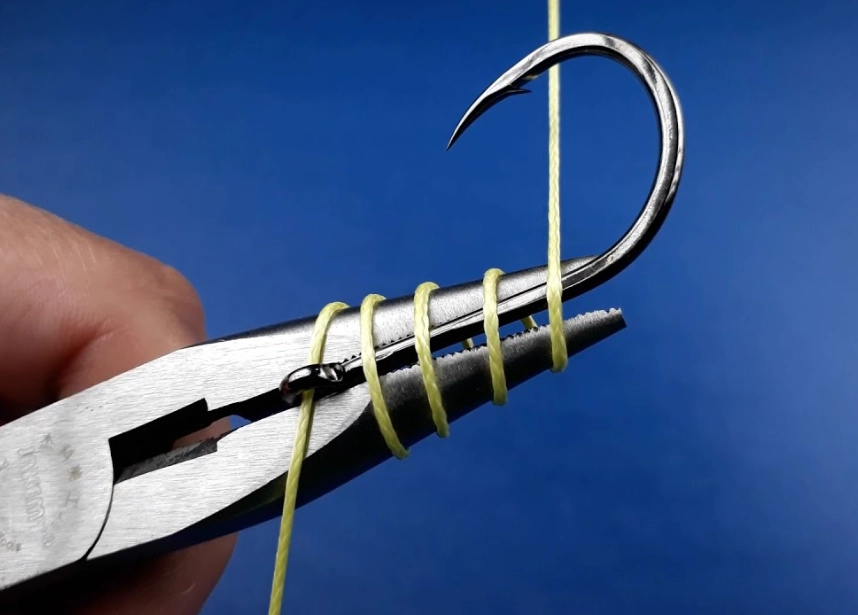
The FG Knot: The Braid-to-Leader King
This is the knot for modern anglers. When you're using super-sensitive, no-stretch braided main line and need a clear, abrasion-resistant fluorocarbon leader, the FG is the gold standard. It's slim, incredibly strong, and passes through rod guides smoothly. Yes, it looks complicated. It takes practice. But once you get it, it's a game-changer for finesse fishing, offshore trolling, or any situation where knot profile matters.
How to tie it (simplified): It's a series of half-hitches with the braid around the leader. You lay the braid and leader parallel, wrap the braid tightly around the leader many times (20+), then secure it with a series of locking knots. It's best learned by watching a video. The International Game Fish Association (IGFA) provides detailed knot diagrams for connections like this, which is a great resource for ensuring your knots are up to spec if you're chasing records.
I struggled with this one at first. My early attempts were messy and felt insecure. But after sitting down for an hour of deliberate practice, the muscle memory kicked in. Now I can tie a reliable FG in a rocking boat. The effort was worth it.
The Non-Slip Loop Knot (aka Rapala Knot)
Not every connection should be tight to the eye. For many lures—especially crankbaits, jerkbaits, and topwaters—a loop knot that allows the lure to swing freely creates more action and a more natural presentation. A tight knot can restrict movement. The Non-Slip Loop Knot creates a strong, non-closing loop.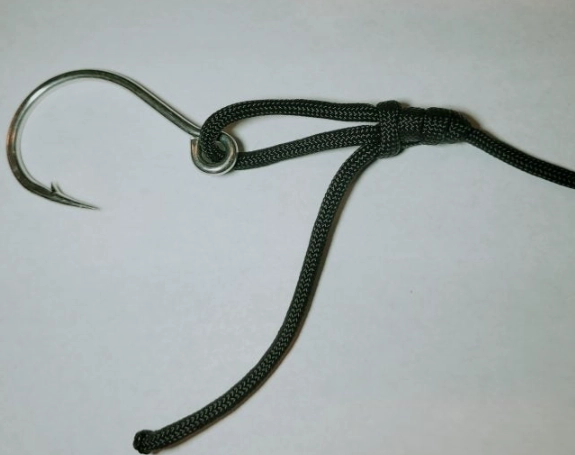
How to tie it: It's similar to the Improved Clinch, but you start by passing the line through the eye and then making an overhand knot with the tag end around the standing line before making your wraps. This creates the fixed loop.
So, how do you choose between them? Let's put them side-by-side.
| Knot Name | Best For Line Type | Primary Use | Strength Retention | Difficulty |
|---|---|---|---|---|
| Improved Clinch | Mono, Fluorocarbon | Hooks, Lures, Swivels (light-med) | ~80-85% | Easy |
| Palomar | All (Braid, Mono, Fluoro) | Hooks, Lures, Terminal Tackle | ~90-95% | Very Easy |
| Uni Knot | All (Braid, Mono, Fluoro) | Hooks, Swivels, Line-to-Line | ~85-90% | Medium |
| FG Knot | Braid to Leader | Connecting Braid to Fluoro/Mono Leader | ~90-95%+ | Hard |
| Non-Slip Loop | Mono, Fluorocarbon | Lures needing free action | ~80-85% | Medium |
Stepping Up Your Game: Advanced Fishing Knots for Specific Situations
Once you've mastered the core five, these next-level knots solve specific problems. You might not use them every day, but when you need them, they're invaluable.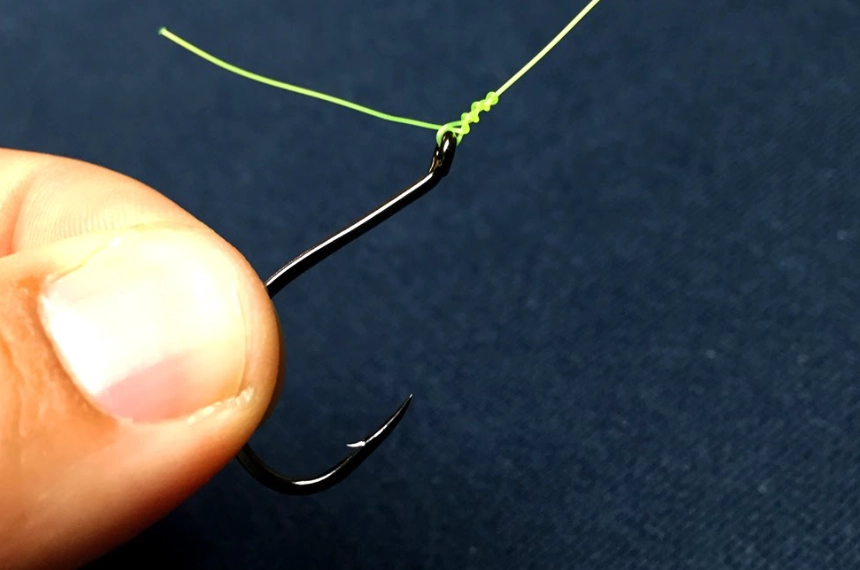
The Albright Special: A Simpler Braid-to-Leader Connection
The FG is fantastic, but sometimes you need a good braid-to-leader knot in a hurry, or in really rough conditions. The Albright Special is your answer. It's significantly easier and faster to tie than the FG. It's still strong and relatively slim. It's my backup knot if I'm in a pinch or my fingers are too cold for the delicate FG wraps.
The Snell Knot: For Straight-Shank Hooks
This is an old-school knot that's seeing a resurgence, especially among bass anglers using straight-shank flipping hooks or circle hooks. The line is tied to the hook *shank*, not the eye. The theory is that it provides a perfectly direct pull that drives the hook point upward with more force. Whether it's actually stronger is debated, but many serious anglers believe it improves hook-up ratios on heavy cover. It's worth trying if you're punching mats or fishing thick weeds.
The Double Uni Knot: Joining Two Lines of Similar Diameter
Sometimes you just need to connect two lines. Maybe you broke off and need to add a new leader, or you're building a custom leader system. The Double Uni is simply two Uni knots tied back-to-back on the two lines, then pulled together. It's strong and reliable for lines of similar thickness. For connecting lines of very different diameters (like heavy braid to light leader), the Albright or FG are better choices.
Okay, you know the knots. Now let's get them right.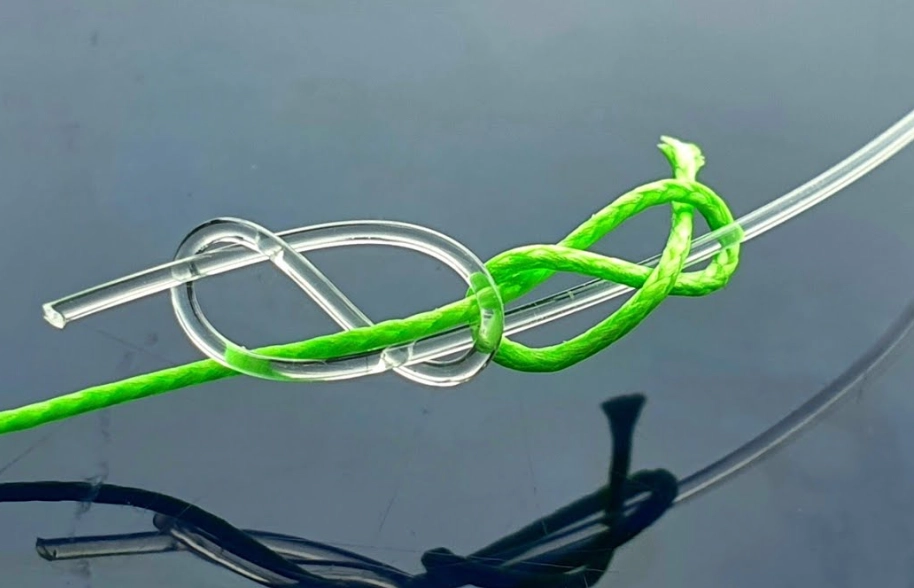
How to Choose the Right Fishing Knot: A Simple Decision Guide
Don't overthink it. Follow this logic tree when you're on the water.
What are you tying?
→ A hook or a lure directly to your main line? Use the Palomar (if the lure fits through the loop) or the Uni Knot. Default to Palomar for strength and simplicity.
→ A lure that needs to swim freely (crankbait, topwater)? Use the Non-Slip Loop Knot.
→ Braid main line to a fluorocarbon/mono leader? Use the FG Knot for ultimate performance, or the Albright Special for speed.
→ A swivel or snap? Use the Palomar or Improved Clinch.
→ Two lines together? Use the Double Uni (similar size) or the Albright (different size).
What line are you using?
→ Braided Line: Avoid the Improved Clinch. It will slip. Palomar, Uni, and FG are your friends.
→ Fluorocarbon: It's stiffer and more brittle. Always wet the knot thoroughly with water or saliva before tightening to reduce friction heat, which can weaken it. Slower, steady pressure when tightening.
→ Monofilament: The most forgiving. Almost any knot works, but stick to the strong ones.
The Top 5 Reasons Your Fishing Knots Fail (And How to Stop It)
I've made all these mistakes. Let's learn from them so you don't have to.
1. Not Wetting the Knot. This is the #1 beginner error. When you pull a knot tight, the friction generates intense heat. This can literally melt or weaken mono and fluoro, causing it to break at the knot. Always, always lick the knot or dip it in the water before the final pull. Braid is less susceptible, but it's still a good habit.
2. Rushing the Tightening Process. You're excited. The fish are biting. You yank the tag end and standing line with a quick, jerking motion. This can cause the wraps to cinch down unevenly, creating crossover points that cut into each other. Pull steadily and firmly. Use your hands to guide the wraps into place as they tighten.
3. Incorrect Number of Wraps. More wraps aren't always better. For knots like the Clinch or Uni, 5-7 wraps is the sweet spot. Too few can slip; too many can create a bulky knot that doesn't seat properly. Follow the recommended wraps for the knot.
4. Trimming the Tag End Too Short or Too Long. A tag end left too short can slip back through the knot under pressure. Too long, and it can catch weeds or interfere with lure action. Leave about 1/8 to 1/4 inch. For critical knots like the FG, I might leave a tiny bit more on the leader tag end for absolute security.
5. Using the Wrong Knot for the Line. As mentioned, the Improved Clinch and braid are a terrible match. The Uni is better, but the Palomar is best. Match the knot to the line's material. Berkley, a major line manufacturer, has excellent resources on their website about line properties and suitable knots, which is a great way to get manufacturer-specific advice.
Your Fishing Knots Questions, Answered
What is the single strongest fishing knot?
There's no single winner for all scenarios, but the Palomar Knot is often cited as the strongest for terminal tackle connections across all line types. For braid-to-leader connections, the FG Knot is the strength and slimness champion. Both consistently test above 90% strength retention when tied correctly.
Do I really need to learn different knots for braid vs. mono?
Yes, absolutely. Braid is slippery and has no stretch. Knots that rely on friction and cinching down (like the Improved Clinch) can fail on braid. Knots that trap the line within itself (like the Palomar) or use many wraps (like the FG) are essential for braid. The properties of your line are a fundamental part of choosing your fishing knots.
How often should I retie my knots?
More often than you think. Any time you get a significant snag and pull hard, retie. If you've caught a good fish, retie. If you've been casting for a few hours and the knot has been going through the guides, check it and likely retie. Abrasion from guides, structure, and even a fish's mouth weakens the line at the knot. A fresh knot is cheap insurance. I probably retie my main terminal knot 3-4 times during a full day of active fishing.
Can I use a fishing knot-tying tool?
Sure, tools like the Tie-Fast Knot Tyer or simple hook-tying tools can help, especially if you have dexterity issues or are fishing in extreme cold. I have one in my bag. But I believe you should know how to tie your key knots by hand first. Understanding the mechanics with your fingers makes you a better angler and ensures you can fix a tool-tied knot if something looks off.
Where can I find official, reliable knot-tying instructions?
Beyond this guide, seek out sources that have a reputation to uphold. The International Game Fish Association (IGFA) maintains official knot rules and diagrams for world record claims. Their site is an authoritative source. Major fishing brands like Berkley or Scientific Anglers also provide excellent, clear tutorials because their reputation depends on your success with their line.
Is there a knot that never slips?
No knot is 100% slip-proof if tied poorly or on the wrong line. However, knots like the Palomar and the properly locked FG Knot are as close as it gets. The "slip" is often a result of the error, not the knot design itself.
Final Thoughts: It's All About Practice
The best fishing knots in the world are useless if you can't tie them under pressure. So practice. Not on the water when the fish are biting. Practice at home. Keep a spool of old line and some hooks or nails at your desk. Watch TV and tie knots. Muscle memory is real. The goal is to get to the point where your hands do the work without your brain having to think through each step.
Start with the Palomar. Then the Uni. Then maybe the FG. Master one before moving to the next. Pay attention to the details—wetting the line, steady tightening, proper tag length.
This knowledge is power. It's the difference between a story about "the one that got away" and a photo with the one that didn't. Your knot is the final, critical link. Make it strong.