The Ultimate Guide to River Fishing: Tips, Gear, and Where to Catch More Fish
Ever wondered why some anglers consistently catch more fish in rivers? This ultimate guide breaks down everything from choosing the right gear and reading the water to mastering techniques for bass, trout, and catfish. Learn how to find hotspots, adapt to conditions, and turn your next river fishing trip into a success.
Let's be honest. Standing on the bank of a river, watching the water flow by, can feel a world away from casting into a calm, predictable lake. Rivers move. They have moods. One day it's a gentle murmur over stones, the next it's a brown, roaring torrent after a storm. That complexity, that constant change, is exactly what makes river fishing so addictive and, let's face it, sometimes frustrating. But when you crack the code, when you figure out where the fish are hiding in that moving puzzle, there's nothing quite like it. The fight of a fish using the current against you is pure, raw angling. This guide is about getting you to that point more often.
I remember my first serious attempt at river fishing for smallmouth bass. I had all my lake gear, tried the same lures, and got skunked. Completely. The river just laughed at me. It took a patient old-timer on the bank pointing out a subtle seam in the current, a place where fast water met slow, for the penny to drop. The fish weren't just in the river; they were positioned because of the river. That's the mindset shift.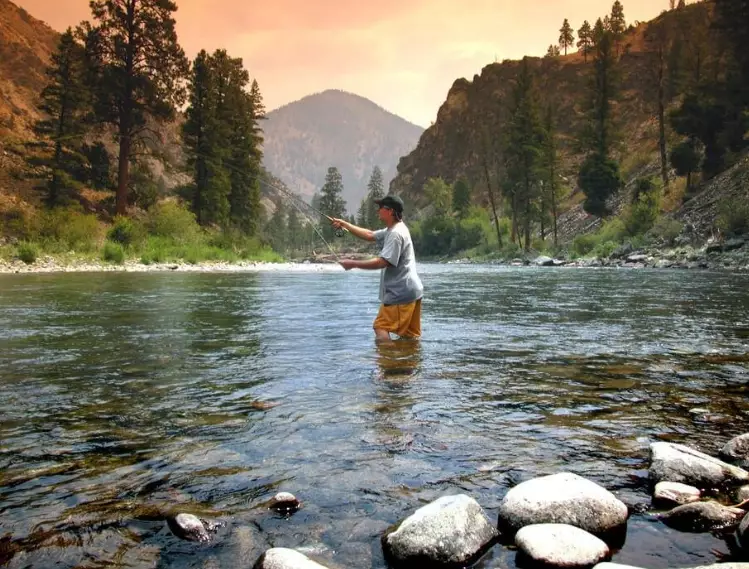
Why River Fishing? The Allure of Flowing Water
You might ask, why bother with the challenge? Lakes are easier to read. Well, yes and no. Rivers offer a few things static bodies of water can't match. For one, they're natural highways. Baitfish, insects, and nutrients are constantly being washed downstream, creating a conveyor belt of food. Predators know this and set up shop at convenient rest stops. This often makes river fish more aggressive and predictable in their feeding patterns once you find their holding spot.
Access is another huge plus. You don't need a boat for a lot of great river fishing. A pair of waders or even just some sturdy boots can get you into prime spots. There's also the sheer variety. In a single stretch of river, you might find deep, slow pools perfect for catfish, fast riffles harboring trout, and undercut banks hiding big bass. It's like several different fisheries rolled into one.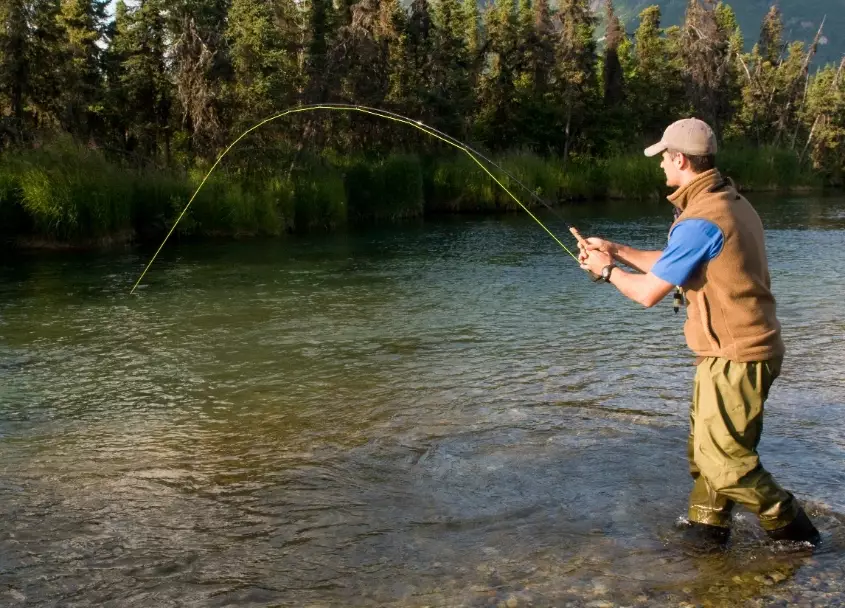
Gearing Up: What You Actually Need for River Fishing
You can spend a fortune, but you don't need to. Let's break down the essentials, separating the must-haves from the nice-to-haves. The wrong gear for river fishing can make your day miserable, while the right setup feels like an extension of your arm.
The Rod and Reel Combo
For versatility, a medium-power, fast-action spinning rod around 7 feet long is the Swiss Army knife of river fishing. It can handle a variety of lures and weights, and the length helps with line control in the current. Pair it with a 2500 or 3000 size reel spooled with 8-12 pound braid as a mainline, with a fluorocarbon leader. Why braid? No stretch. You need to feel every tap in the current, and braid transmits that perfectly. The fluoro leader is less visible to fish in the clear water you often find in rivers.
Baitcasters have their place, especially for pitching jigs or crankbaits along banks from a boat, but for wading or bank fishing where you might need to make quick, varied casts, spinning gear is more forgiving. I made the mistake of starting with a heavy baitcasting setup meant for flipping mats in lakes. Trying to cast a light jerkbait across current was a bird's-nest disaster waiting to happen.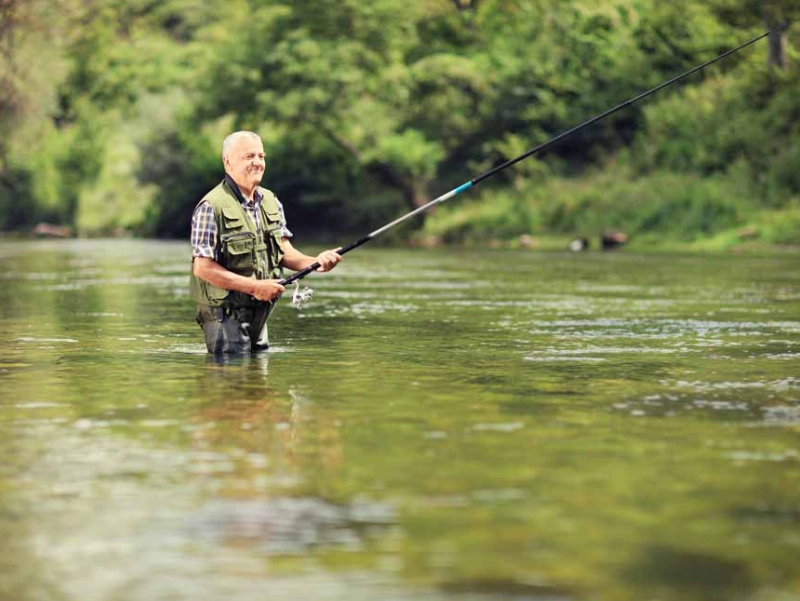
Line and Terminal Tackle
This is where many go wrong. In a river, your terminal tackle needs to be stronger than in a lake. You're not just fighting a fish; you're fighting the water force dragging your line over rocks and logs. Upping your line strength by a few pounds is cheap insurance. Always, always check your line for nicks after a snag or a catch.
You'll go through more weights and hooks. Get a good selection of bullet weights, split shot, and egg sinkers. The current will steal them. It's a tax you pay. For hooks, I'm a fan of extra-strong, chemically sharpened hooks in a range of sizes. A fish in current hits hard and can straighten a cheap hook. Don't ask me how I know.
Clothing and Safety
This isn't just about comfort; it's about not becoming a statistic. If you're wading, a good pair of waders with a felt-soled or studded rubber boot is non-negotiable. River rocks are slippery. Wading boots should fit snugly over your wader socks. A wading belt, cinched tight around your waist outside the waders, can prevent them from filling with water if you take a tumble.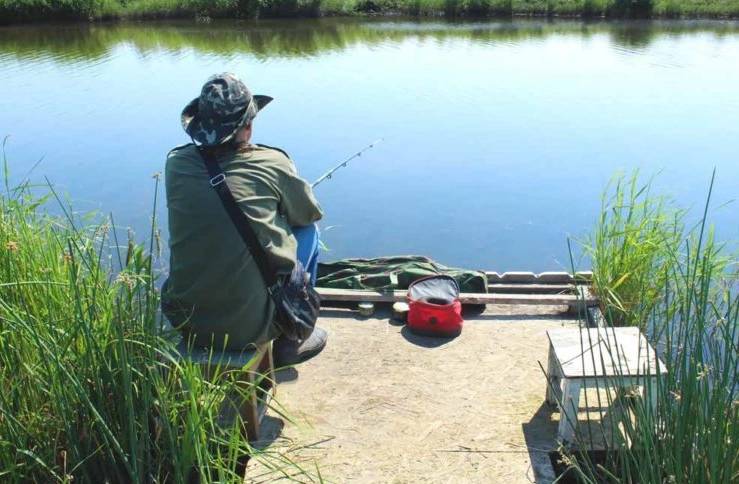
Think about sun protection and layers. A river valley can be cool in the morning and blazing hot by noon. A moisture-wicking base layer, a vest with lots of pockets, and a wide-brimmed hat are my go-tos. And polarized sunglasses. These aren't a fashion statement for river fishing; they're a tool. They cut the glare on the water's surface, letting you see rocks, drop-offs, and sometimes even fish. The first time you spot a trout holding in a current seam through polarized lenses, it feels like you've gained a superpower.
Reading the River: Finding Fish in Moving Water
This is the core skill. Forget casting randomly. You need to read the water like a map. Fish in rivers are energy conservers. They want to be where they can get food with minimal effort, protected from the full force of the current, and safe from predators.
Look for these key structures:
- Current Seams: This is where fast water meets slow water. Look for lines of bubbles or debris flowing downstream. The edge of that line is a highway lane for fish. Bait gets funneled there, and predators sit in the slower water right next to it, darting out for meals. Cast upstream of the seam and let your lure drift down along it.
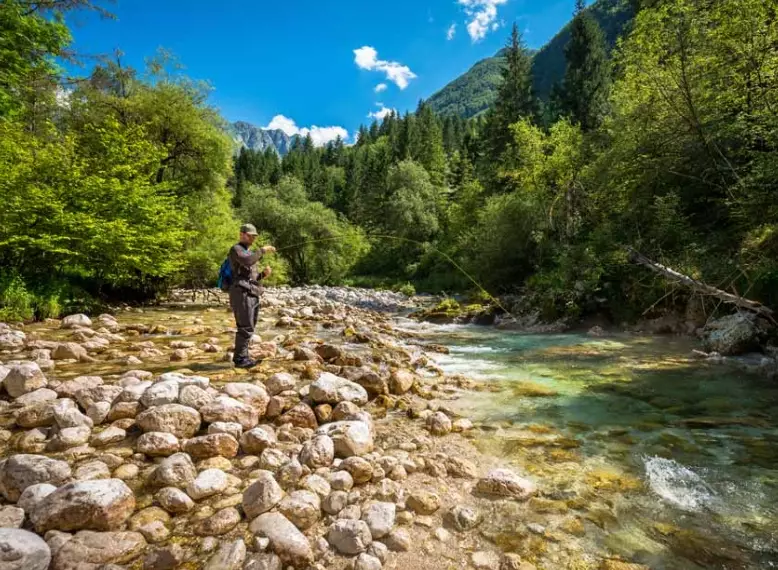
- Pools: Deeper, slower areas, often after a riffle or run. These are resting areas and home to larger fish. In summer, they offer cooler water and oxygen. Fish the head (where the fast water enters), the tail (where it shallows up and exits), and along any deep banks.
- Riffles: Shallow, fast, broken water over gravel or rocks. This water is highly oxygenated and is a bug factory, making it prime trout and smallmouth territory. Fish the edges and the pockets of slightly slower water behind larger rocks.
- Undercut Banks: The current erodes the bank below the waterline, creating a cave. This is prime real estate for big bass, catfish, and walleye. It's shade, cover, and an ambush point all in one. Pitch your lure tight to the bank and let it fall.
- Wood and Rock Piles: Any significant obstruction in the current creates an eddy—a spot where the water flows upstream or in a circle behind the object. These are fish magnets. Cast into the eddy or just upstream of the object.
One trick I use is to just watch the surface for a few minutes before making a cast. Look for dimples (rising fish), swirls, or baitfish skittering. The river will often tell you where to start.
Target Species and How to Catch Them
Different fish prefer different parts of the river. Here’s a quick rundown of the most popular river fishing targets and how to approach them.
| Species | Preferred Habitat | Best Baits/Lures | Key Technique |
|---|---|---|---|
| Smallmouth Bass | Rocks, gravel, current seams, eddies behind boulders. | Tubes, crankbaits, jerkbaits, topwater poppers, live crayfish. | Cast upstream, work lure downstream with the current. Bounce jigs off rocks. |
| Trout (Rainbow/Brown) | Cold, oxygenated water in riffles, runs, deep pools, undercut banks. | Inline spinners, small spoons, nymphs & dry flies (fly fishing), live worms under a float. | Dead-drifting presentations (no unnatural drag) are crucial. Match the hatch if flies are present. |
| Catfish (Channel/Flathead) | Deep, slow pools, logjams, outside bends with depth. | Cut bait (shad, skipjack), live bluegill, chicken liver, prepared stink baits. | Bottom fishing with a sinker. Let it sit. Night fishing is often most productive. |
| Walleye | Deep holes, tailwaters below dams, current breaks along sand/gravel points. | Jigs tipped with minnows, crankbaits, live minnows on a slip-sinker rig. | Slow presentation near the bottom. Often most active at dawn, dusk, or in stained water. |
| Panfish (Bluegill, Crappie) | Backwaters, slack water near current, around docks and wood. | Small jigs, live worms, tiny spinners, crickets. | Light tackle. Often found in schools, so if you catch one, there are more. |
A Deeper Dive on Bass and Trout
Since smallmouth and trout are the holy grail for many river anglers, let's get more specific. For river smallmouth, think crayfish and baitfish. A 3.5-inch green pumpkin tube jig, rigged with an internal weight, is arguably the most effective river smallmouth lure ever invented. It mimics a crayfish perfectly. Hop it along the bottom in current seams. In summer, topwater fishing over rocky flats at dawn can be explosive.
For trout in rivers, understanding drift is everything. Whether you're using a spinner or a fly, any lure moving faster or slower than the current it's in looks unnatural. You need a “dead drift.” This often means mending your line—flipping the upstream belly of your line onto the water to prevent the current from grabbing it and speeding up your lure. It's a finesse game. The Trout Unlimited website is a fantastic resource for conservation-minded techniques and understanding trout behavior on a deeper level.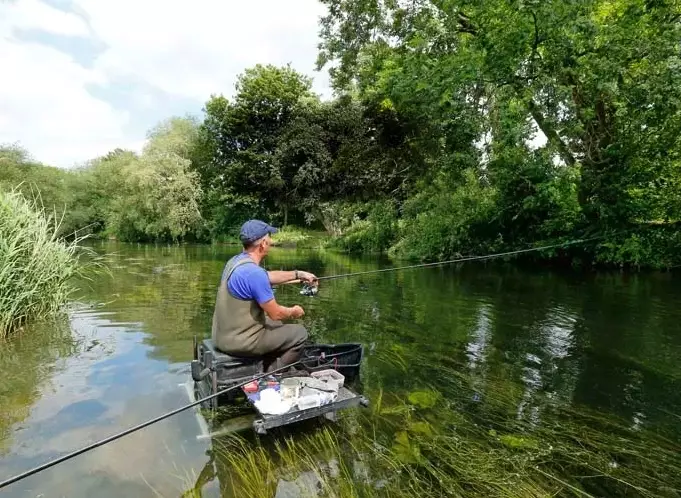
Techniques That Work: Beyond Just Casting
Your retrieve in a river is different. Here are three core techniques:
- The Downstream Drift: The most natural presentation. Cast upstream or across and let the current carry your bait or lure downstream with no retrieve, or a very slow one. This works for everything from a worm for trout to a jerkbait for bass. It presents the lure in a way the fish see food every day.
- Swimming Against the Current: Cast downstream and reel upstream, making the lure swim against the flow. This can trigger reaction strikes from aggressive fish, as it mimics a baitfish struggling hard.
- Vertical Jigging: In a boat or while wading a deep pool, dropping a jig or spoon straight down and working it vertically. Excellent for walleye, catfish, and suspended bass in deep holes.
One of my personal favorite river fishing techniques for bass is “pounding the banks” from a kayak. I'll float downstream, casting a spinnerbait or squarebill crankbait right into the bank, letting it deflect off rocks and wood. The key is being quiet and covering water. You're not fishing the whole river; you're fishing the prime 10% of it—the edges.
Safety, Ethics, and Conservation
We have to talk about this. Rivers are fragile ecosystems. A good river angler is a steward.
First, know the regulations. These aren't suggestions. They're science-based rules to protect fish populations. This includes size limits, daily creel (catch) limits, and seasonal closures. Some rivers are catch-and-release only for certain species. Always check the current regulations from your state's wildlife agency. The U.S. Fish & Wildlife Service provides a portal to state agencies, but always verify locally.
Second, practice catch and release properly if you're not keeping a fish to eat. Use barbless hooks or crush the barbs. It makes release infinitely easier and causes less damage. Keep the fish in the water as much as possible. If you must lift it for a photo, support its weight horizontally, don't hang it vertically by the jaw (this can damage internal organs), and be quick about it. Have needle-nose pliers ready to remove the hook gently.
Third, leave no trace. Pack out all your trash, including discarded fishing line, which is deadly to wildlife. Don't trample vegetation on the banks. Respect private property and use public access points.
Sustainable river fishing means we get to keep doing this. I've seen spots get loved to death because people didn't follow these simple principles. It's a real bummer.
Answering Your River Fishing Questions
Let's tackle some of the common things anglers search for when thinking about river fishing.
What is the best time of day for river fishing?
Early morning and late evening are almost always prime. The light is low, insect activity is often high, and fish move into shallower feeding areas. However, don't discount the middle of the day, especially in deeper pools or on overcast days. In summer, the low-light periods are critical as the midday sun can make fish sluggish.
How does water level and clarity affect river fishing?
Massively. After heavy rain, rivers get high, fast, and muddy. Fish move tight to cover (banks, logs) and rely more on vibration and scent. This is a great time for bulky, noisy lures like spinnerbaits or jigs with strong-smelling trailers, or for bait fishing. In low, clear conditions, fish are spooky. You need lighter line, longer casts, and more natural presentations. Stealth is key.
Can I eat fish from the river?
Generally, yes, and many are delicious (fresh trout over a campfire? Unbeatable). But, you must check your state's fish consumption advisories. Some waterways have warnings due to mercury or PCB contamination, especially for larger, older predator fish. These advisories are usually based on species, size, and specific water body. It's public health info, not a criticism of fishing.
Do I need a fishing license for river fishing?
Yes, absolutely. In all public waters in the U.S. and most countries, a valid fishing license is required for anyone over a certain age (usually 16). The funds from these licenses are what pay for fisheries management, habitat restoration, and public access—all the things that make your trip possible. It's the most important piece of gear you'll buy. You can typically get one online from your state's Department of Natural Resources (DNR) or equivalent.
What's the one piece of advice you'd give a beginner?
Start small. Don't try to conquer a huge, famous river right away. Find a smaller creek or tributary. The water is easier to read, the structures are more obvious, and you can often catch plenty of panfish or smaller bass to build confidence. The principles you learn there—reading current, identifying seams—scale up to any river. And talk to people. Most anglers at a local bait shop or on the river are happy to share a tip or two about what's working.
River fishing isn't a mystery. It's a logic problem set by nature. It asks you to slow down, observe, and think. Some days the river wins. But on the days you put it all together—when you read the water right, make the perfect cast, and feel that thump—there's no better feeling in fishing. It connects you to the water in a way that's just... deeper. Now get out there, be safe, and tight lines.