The Ultimate Guide to Salmon Fishing: Gear, Techniques & Best Times
Ever wondered how to catch more salmon? This ultimate guide covers everything from choosing the right gear and mastering techniques to finding the best fishing spots and seasons. Get expert tips and honest advice to plan your next successful salmon fishing trip.
Let's be honest. There's nothing quite like the heart-pounding tug of a salmon on the line. It's a mix of raw power and pure excitement that keeps anglers coming back to rivers and coastlines year after year. But if you're new to salmon fishing, or even if you've had a few frustrating trips with little to show for it, the whole thing can feel overwhelming. Which rod? What lure? Where do you even go? I remember my first few attempts vividly—more time spent untangling line than actually fishing. It was humbling, to say the least.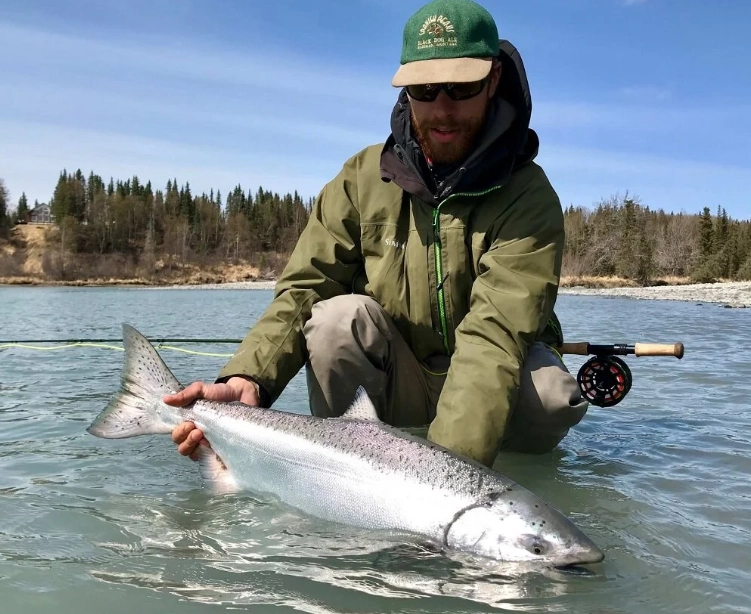
This guide is what I wish I'd had back then. It's not a dry manual. It's a collection of hard-earned knowledge, practical tips, and a few opinions (I'm not a fan of overly complicated rigs, for instance) from someone who's spent countless hours, in all kinds of weather, trying to figure this out. We'll cut through the noise and get straight to what works.
Gearing Up: Your Salmon Fishing Toolkit
You can't build a house without tools, and you can't reliably hook salmon without the right gear. But here's the thing—you don't need to break the bank. I've seen guys with thousand-dollar setups get outfished by someone with a sensible, well-chosen combo. Let's break down the essentials.
The Rod and Reel: Your Main Weapons
This is the heart of your setup. Get it wrong, and you're fighting your equipment more than the fish.
For river fishing, especially with lures or flies, a medium-heavy to heavy action rod between 8.5 and 10 feet is the sweet spot. You need the backbone to steer a powerful fish away from snags. A longer rod gives you better line control for mending, which is crucial. Pair it with a sturdy spinning reel (size 3000-4000) or a baitcasting reel if you're more experienced. The reel must have a smooth, reliable drag system. A sticky drag is the number one cause of lost fish, trust me.
For boat-based salmon fishing, like trolling in the Great Lakes or off the Pacific coast, shorter, heavier rods (7 to 8.5 feet) are common. They're designed to sit in rod holders and handle downriggers or planer boards. Here, a line-counter reel becomes incredibly valuable for repeating successful depths.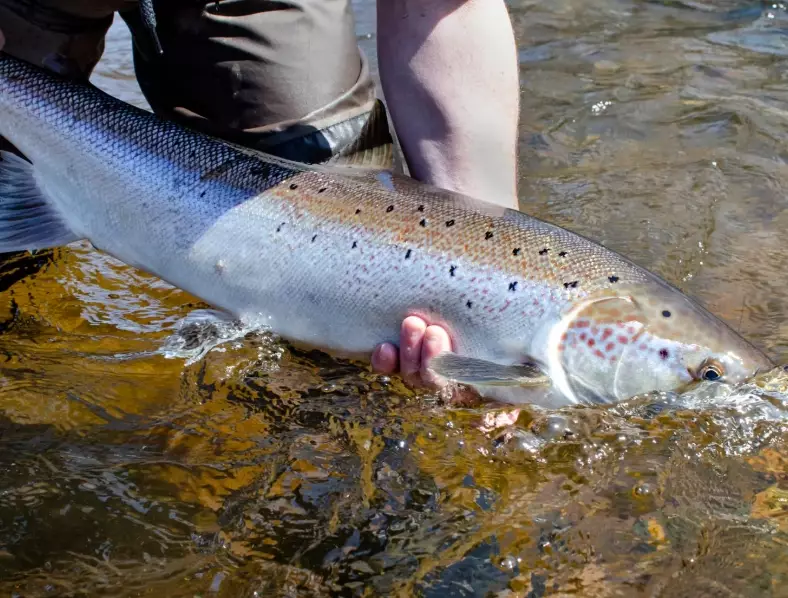
Quick Rod & Reel Checklist:
- River/Backtrolling: 9-10 ft, Medium-Heavy power, Fast action. Spinning reel (4000 series) with 20-30 lb braid.
- Bank Fishing: 8.5-9.5 ft, Medium-Heavy power. Longer rod helps with casting distance and control.
- Great Lakes Trolling: 8-8.5 ft, Medium-Heavy power. Baitcasting or line-counter reel with 12-20 lb monofilament or wire line.
- Drag: TEST IT before you go. It should pull out smoothly, not in jerks.
Line, Leaders, and the Critical Connection
Line choice sparks debate. Braided line is my go-to for most salmon fishing applications because it has no stretch, so you feel every tick and headshake. Its thin diameter also means you can spool more of it. But that no-stretch quality is a double-edged sword—it can lead to pulled hooks if you're too aggressive. That's where a leader comes in.
I always use a fluorocarbon or monofilament leader. Fluorocarbon is less visible underwater, which matters for line-shy salmon in clear rivers. Mono has more stretch and shock absorption, which can be a savior. Leader strength depends on the situation: 12-15 lb for clear water and wary fish, 20-30 lb near snaggy bottoms or for big Chinooks.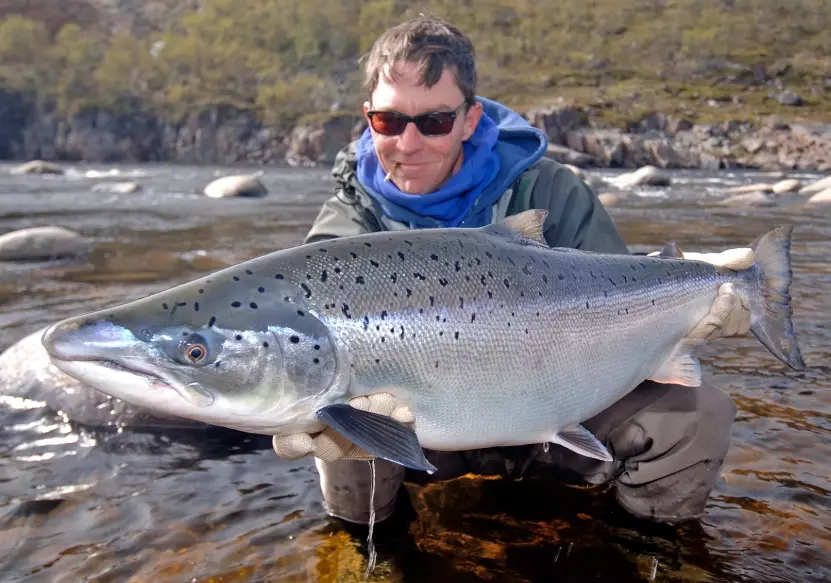
The knot connecting your main line to your leader is a potential failure point. Practice the FG knot or a simple Uni-to-Uni until it's second nature.
Terminal Tackle: Hooks, Weights, and More
This is where your setup meets the water. For salmon, hooks need to be strong and sharp. I prefer octopus-style hooks in sizes 2 to 2/0 for bait, and strong treble hooks for lures (check local regulations, as some areas mandate single, barbless hooks).
Weights are non-negotiable for getting your presentation down to the fish. Sliding egg sinkers ("slinkies") in 1/2 to 1 oz are perfect for drift fishing, as they reduce snags. For plunking from shore, pyramid sinkers hold the bottom best.
Swivels are your friends. A good quality barrel swivel between your main line and leader prevents line twist, especially when using spinners or bait that spins in the current.
Mastering Salmon Fishing Techniques
Gear is one thing. Knowing what to do with it is another. Successful salmon fishing means matching your technique to the water and the fish's behavior.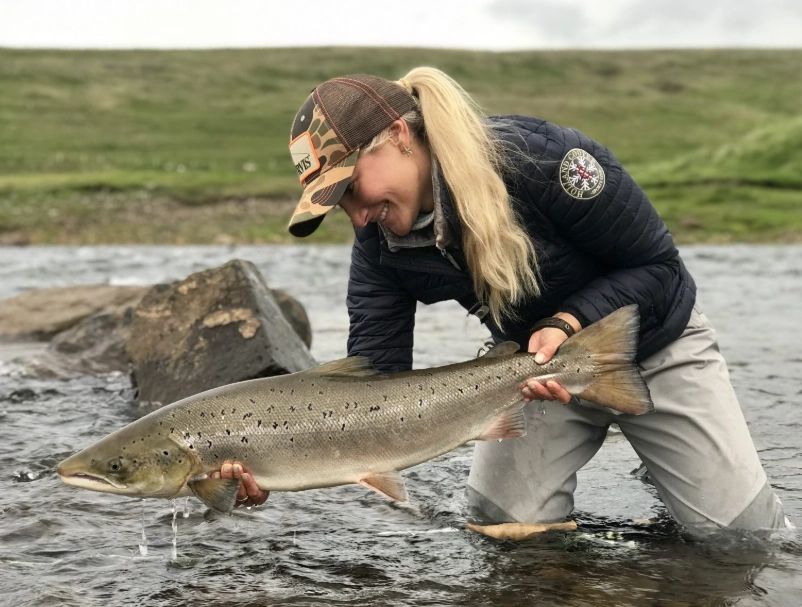
Drift Fishing: The River Angler's Bread and Butter
This is arguably the most effective river technique. The goal is to present your bait or lure so it drifts naturally along the bottom, right in front of a holding salmon. You use just enough weight to tick the bottom occasionally—"click, click"—as you drift it through a run.
Roe (salmon eggs) is the classic bait, cured or fresh. Sand shrimp are deadly in some systems. A simple setup is a sliding sinker, bead, swivel, then a 2-3 foot leader to a hook baited with a cluster of eggs. Cast upstream at a 45-degree angle and let it drift down, keeping your line tight to feel the bite.
The bite isn't always a yank. Often, it's just a subtle "tap tap" or your line simply stops drifting. Set the hook!
Trolling: Covering Water to Find Fish
When salmon are scattered in big water—a lake or the open sea—trolling is king. You drag lures or bait behind a moving boat, covering miles to intercept fish. Depth control is everything. This is where downriggers, diving planers, or lead-core line come in, getting your lures down 30, 60, even 100 feet deep where the salmon are holding.
Popular lures include spoons (like the classic "Krocodile"), plug-cut herring, and artificial flies trailed behind a dodger or flasher. The flasher creates vibration and flash to attract salmon from a distance, then they see your lure.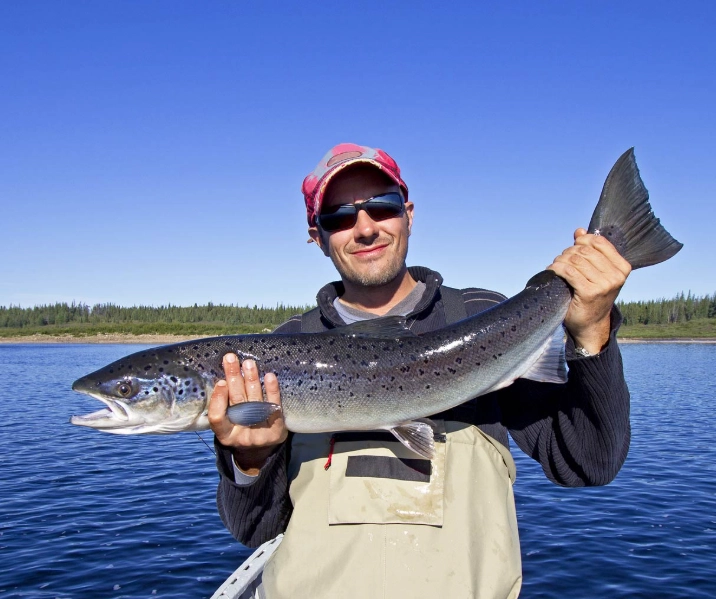
Other Key Methods
Backtrolling/Bouncing: A boat technique where you point the motor upstream and use it to slow your drift down the river, keeping your presentation in the strike zone longer than a simple drift.
Plunking: The ultimate in patience fishing. You cast a heavy weight and a bait (like a Spin-N-Glo or roe) into a deep hole from shore, set the rod in a holder, and wait. It's social, relaxed, and can be very productive in slower, deeper water.
Fly Fishing: An art form in itself. Swinging large, streamer-like flies (Intruders, Leeches) across and down current is the primary method. It's incredibly visual and active when a salmon turns and takes the fly.
Now, what about actually getting the salmon to bite?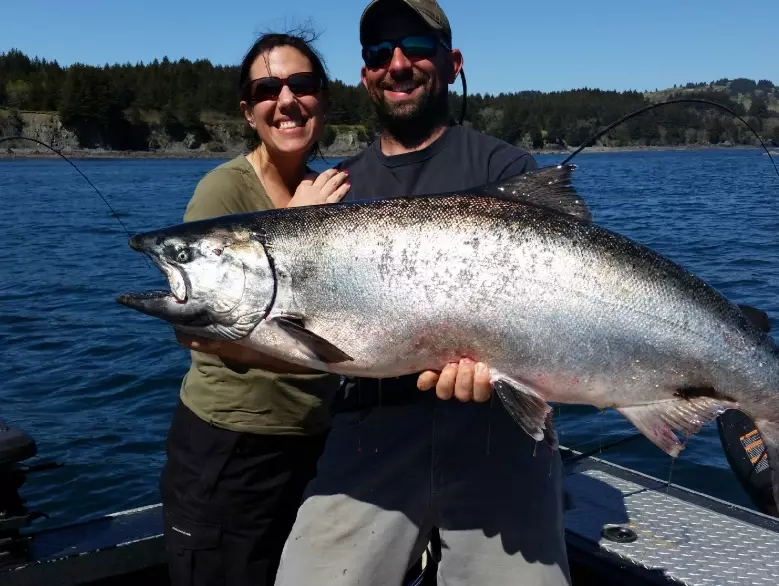
When and Where: Timing and Location Are Everything
You can have perfect gear and technique, but if you're not in the right place at the right time, you're just practicing your casting. Understanding salmon runs is critical.
| Species | Primary Run Timing (Northern Hemisphere) | Key Characteristics & Fishing Notes |
|---|---|---|
| Chinook (King) | Spring through Fall (peaks vary) | Largest species. Prefers deeper, cooler water. Often found near river mouths and deep holes early in runs. Responds well to large plugs, cut bait, and herring. |
| Coho (Silver) | Late Summer to Late Fall | Acrobatic and aggressive. Often found in shallower water than Chinook. Loves bright spoons, spinners, and flies. A great species for beginners due to its willingness to bite. |
| Sockeye (Red) | Summer | Primarily plankton feeders in the ocean, making them notoriously tricky to catch in saltwater. In rivers, they will sometimes bite flies or small lures out of aggression. Often a fishery with very specific regulations. |
| Pink (Humpy) | Odd-numbered years in many systems (e.g., 2023, 2025) | Runs in massive numbers every other year. Smaller, but eager to bite small bright lures, jigs, and flies. Provides fantastic action during run years. |
| Chum (Dog) | Late Fall | Runs late, often in cold, nasty weather. Very strong fighters. Can be caught with bright, garish flies and lures in estuaries and lower rivers. |
Water conditions are a huge factor. After a big rain, rivers rise and turn murky. Fish push upstream but can be harder to locate. A falling, clearing river is often the absolute best time for salmon fishing—fish are settled in holding spots and more willing to bite. You can check streamflow data from sources like the USGS Water Data to plan your trip.
Finding the fish in a river means reading the water. Look for:
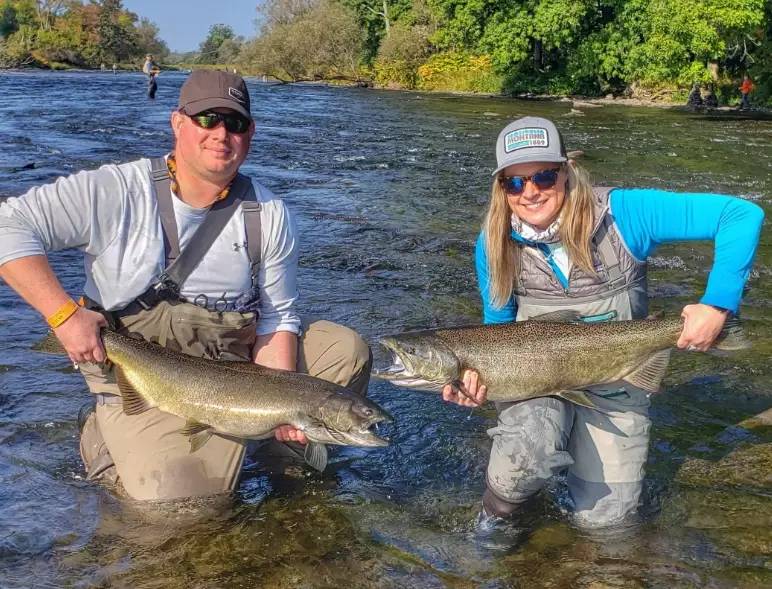
- Seams: Where fast and slow water meet. Salmon rest in the slow side and dart into the fast lane to feed.
- Pools: Deeper, slower water at the bend of a river or below a rapid. Prime holding water.
- Tailouts: The shallow, faster water at the end of a pool. Fish often stage here before moving upstream.
- Cover: Logjams, boulders, and undercut banks. Salmon love security.
Frequently Asked Questions (And Real Answers)
Let's tackle some of the common head-scratchers I hear all the time.
What is the best bait for salmon fishing?
There's no single "best," but cured salmon roe (eggs) is the universal contender, especially in rivers. Its scent and appearance are irresistible. In saltwater or the Great Lakes, cut-plug herring or anchovy is hard to beat. But don't sleep on artificials—spoons, spinners, and plugs catch tons of fish and can be more durable and less messy.
What time of day is best for salmon fishing?
Low-light periods—dawn and dusk—are traditionally prime time. Salmon are often more active and willing to move for a lure. However, don't pack up at 10 a.m. During peak runs, especially in stained water, they bite all day. I've caught some of my biggest fish under a bright midday sun in a deep, cool hole.
Do I need a boat for salmon fishing?
Absolutely not. Some of the most productive salmon fishing happens from shore, especially at river mouths, off piers, or in accessible river runs. Bank fishing for salmon is a massive part of the culture. A boat gives you mobility and access to more water, but it's not a requirement to get started.
How do I find good salmon fishing spots near me?
Start with your state's fish and wildlife website. They often have stocking reports, run timing forecasts, and even lists of popular access points. Local fishing forums and social media groups can be goldmines of recent info, but take reports with a grain of salt. Your best bet is often visiting a local tackle shop. Buy some gear, be friendly, and ask for advice. They know what's happening right now.
Why am I not catching any salmon?
We've all been there. The usual suspects are:
1. You're not in the right depth. Your offering is likely too high in the water column. Get it deeper. Add more weight.
2. You're not where the fish are. You might be fishing beautiful water that's empty. Move around more. Cover different types of holding water.
3. Your presentation is unnatural. If drift fishing, your bait is dragging on the bottom or swinging up too fast. Aim for a natural, dragging-free drift.
4. The fish just aren't biting. Sometimes, due to water temperature, pressure, or stage of the run, they shut down. It happens. That's why it's called fishing, not catching.
How do I handle and release salmon safely?
If you're practicing catch-and-release, it's a duty. Keep the fish in the water as much as possible. Use wet hands or a rubberized net to handle it. Avoid touching the gills. If you need a photo, lift it quickly, support its belly, and get it back in the water. For a tired fish, hold it upright in moving water until it swims away strongly. Resources like FishBio's handling guidelines offer excellent science-based advice.
Speaking of responsibility, let's touch on that quickly.
A Quick Word on Ethics and Conservation
Salmon populations face real challenges—habitat loss, climate change, and more. As anglers, we have to be part of the solution. That means following regulations to the letter, handling fish with care, and respecting the resource. Keep only what you'll use, and consider releasing the big, fertile spawners. It also means picking up your trash—and maybe even someone else's. We're guests in their world. Organizations like the American Sportfishing Association work on conservation policy, and staying informed helps.
The future of salmon fishing depends on the fish being there.
So, there you have it. A deep dive into the world of salmon fishing, from the gear in your hands to the fish in the river. It's a pursuit with a steep but incredibly rewarding learning curve. Start simple, focus on the fundamentals of presentation and location, and pay attention to what the water and the fish are telling you. Most importantly, get out there. Time on the water is the one piece of gear no one can sell you, and it's the most valuable of all.
Now go get your line wet. Tight lines.